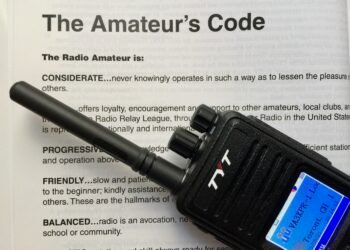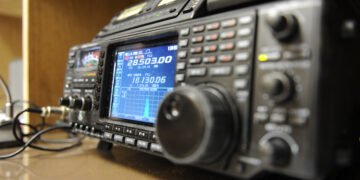




At EvoHam, we take product reviews seriously because ham radio operators rely on trustworthy information before investing in gear that connects them to the world. Our approach to how we test and review products reflects hours of hands-on testing, real-world use, and rigorous evaluation by experienced operators who understand the nuances of digital voice technology.
Our Mission: Trust Over Influence
EvoHam’s goal is simple: help hams make smarter buying decisions.
We don’t accept editorial input from manufacturers or advertisers. While we may receive sample units for evaluation or use affiliate links to support our work, our editorial decisions are always independent. A positive rating must be earned through performance – not promotion.
Our Testing Philosophy
Each product review begins with a clear question: Does this make the amateur radio experience better?
We assess that through a combination of lab-style measurements and field testing in real-world scenarios – from urban repeaters to rural simplex setups. We focus on what matters to operators:
- Ease of Programming – can you get on the air without frustration?
- Audio Clarity – both transmit and receive.
- RF Performance – signal stability, range, and selectivity.
- Digital-Mode Reliability – DMR, Yaesu Fusion, D-STAR, P25, NXDN, FreeDV or M17 compatibility.
- Build Quality – durability, ergonomics, and battery life in real use.
Hands-On Testing Process
Every product is evaluated using a consistent framework:
- Unboxing & First Impressions – we note packaging, included accessories, and build quality.
- Setup & Programming – we test factory software, third-party tools, and codeplug import/export.
- Feature Testing – from APRS to GPS, we confirm each advertised capability works as claimed.
- Performance Benchmarks – transmit power, receive sensitivity, audio response, and heat management.
- Field Use – testing under everyday ham conditions: mobile, portable, and base operations.
- Long-Term Evaluation – whenever possible, we revisit products after weeks or months of use.
Our reviewers are licensed amateurs who understand the technical side of the hobby and who actively use this equipment on-air.
Our Rating Criteria
We use a five-star scale to rate each product, supported by qualitative analysis in the review text. The rating reflects the overall experience – not just specs on paper.
| Rating | Meaning |
|---|---|
| ⭐⭐⭐⭐⭐ | Exceptional – a top performer worth every dollar. |
| ⭐⭐⭐⭐☆ | Very Good – strong value with minor trade-offs. |
| ⭐⭐⭐☆☆ | Average – solid but limited appeal or small flaws. |
| ⭐⭐☆☆☆ | Below Expectations – functional, but disappointing. |
| ⭐☆☆☆☆ | Not Recommended – poor performance or quality issues. |
We also include a “Pro Tip” or “Best For” note in many reviews, helping readers quickly identify which operators will benefit most from a given radio or accessory.
Affiliate Disclosure
Some of our reviews contain affiliate links to retailers or distributors. If you click these links and make a purchase, EvoHam may earn a small commission at no additional cost to you. This helps fund our testing, hosting, and editorial work, but it never affects how we score or recommend products.
For full details, see our Affiliate Disclosure Policy.
Editorial Integrity & Updates
We never accept payment for positive coverage. Sponsored posts are clearly labeled as “Sponsored” or “Partner Content.” If a product’s firmware, performance, or market position changes over time, we update our reviews accordingly to ensure accuracy.
Our credibility is our reputation and we protect it with every review we publish.
You Might Also Like
- DMR for Beginners: A Step-by-Step Guide for New Hams
- DMR vs Fusion vs D-Star: How to Choose the Right Digital Ham Radio Mode
- D-STAR for Beginners: A Step-by-Step Guide for New Hams
Some links in this story are affiliate links. If you choose to buy through them, EvoHam may earn a small commission – at no extra cost to you. It helps support more stories like this.