



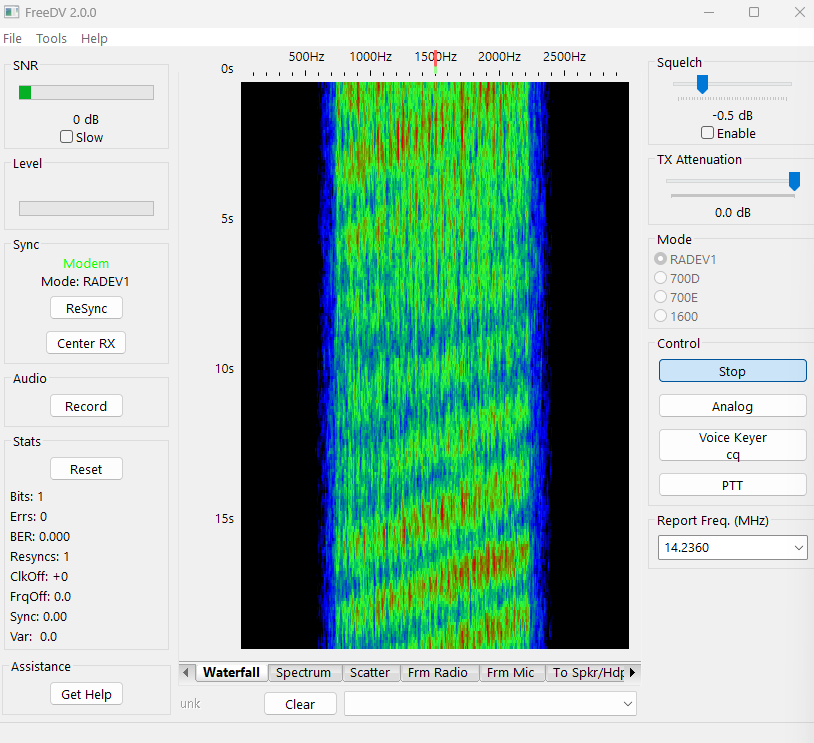

FreeDV 2.0.2 Now Available
FreeDV, the open-source digital voice mode designed for HF communications, has released version 2.0.2, bringing several refinements to audio quality, user experience, and hardware compatibility. The update — announced on October 1, 2025 – marks another step forward for this grassroots alternative to proprietary codecs such as AMBE used in D-STAR, DMR, and Yaesu System Fusion.
Developed by David Rowe VK5DGR and a global team of contributors, FreeDV continues to demonstrate that high-quality digital voice on HF can be achieved without expensive licenses or locked-down hardware.
What’s New in FreeDV 2.0.2
According to the release notes and early user reports, version 2.0.2 introduces:
- Improved speech intelligibility using enhanced Codec2 parameter tuning and adaptive noise reduction.
- Simplified audio device setup, reducing configuration errors between radios, sound cards, and SDR interfaces.
- Better cross-platform stability, particularly on Windows 11 and recent macOS versions.
- Refined modem performance in poor HF conditions, with fewer dropouts and faster recovery after fades.
- Updated documentation and example configurations to help first-time users get on the air more quickly.
Together, these updates aim to make FreeDV easier for average operators to install and operate while improving the “voice feel” that earlier versions sometimes lacked.
Showcased at Pacificon 2025
FreeDV will take center stage at Pacificon 2025, one of North America’s premier amateur-radio conventions, where Rowe and contributors will demonstrate real-time QSOs using the latest builds. Expect live comparisons between traditional SSB and FreeDV modes, along with a look at experimental “neural voice” research that could inform future releases.
How FreeDV Compares
Unlike D-STAR, DMR, or System Fusion, which rely on the proprietary AMBE codec, FreeDV uses Codec2, an open-source low-bitrate speech codec engineered specifically for radio communications. It runs on modest hardware and even integrates with SDR transceivers such as FlexRadio, Hermes-Lite, and newer Icom rigs with sound-card interfaces.
While HF conditions limit bandwidth compared to VHF/UHF digital systems, FreeDV’s strength lies in its transparency and adaptability: anyone can inspect, modify, or build upon the code. For hams who value experimentation, that openness is a major draw.
User Feedback So Far
Early testers on the FreeDV mailing list and Reddit report noticeable clarity improvements in weak-signal environments, especially when comparing 2.0.2 to older 1.x builds. Operators also praised the simplified audio configuration, which had previously been a barrier for newcomers.
Some users, however, note that the software still requires careful level adjustment and that setup remains less plug-and-play than most VHF digital modes. Even so, community sentiment is positive — many call this the most stable FreeDV release to date.
The Bigger Picture
FreeDV continues to evolve as the open alternative for HF digital voice, standing alongside modern VHF/UHF systems as proof that innovation in amateur radio doesn’t need to come from manufacturers alone. With neural-codec research (like RADE) on the horizon, the line between HF and VHF digital voice is beginning to blur, and FreeDV 2.0.2 shows how open collaboration can keep pace with commercial systems.
Quick Facts
| Release | FreeDV 2.0.2 (October 1, 2025) |
|---|---|
| Developer | David Rowe (VK5DGR) & contributors |
| Platforms | Windows, macOS, Linux |
| Codec | Codec2 (open-source) |
| Use Case | Digital voice over HF (1.8–30 MHz) |
| Event | Showcased at Pacificon 2025 |
| Website | FreeDV.org |
| Download | GitHub Releases |
Pro Tip for Hams
If you’ve never tried digital voice on HF, FreeDV 2.0.2 is a good place to start. Pair it with an SDR or sound-card-equipped HF transceiver and experience how open-source innovation is reshaping amateur communication – one contact at a time.
Related Reads on EvoHam:
- DMR for Beginners: A Step-by-Step Guide for New Hams
- DMR vs Fusion vs D-Star: How to Choose the Right Digital Ham Radio Mode
- What Is Codec2 and Why It Matters for Ham Radio