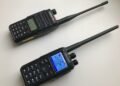






On November 4, 2025, the M17 Project team shared new technical progress on their prototype handheld transceiver, the M17 LinHT Handheld (Revision A). The update included a spectrum plot of a clean M17 signal at 433.475 MHz, amplified through a GRF5604 RF power stage, achieving a clear milestone toward a complete, portable M17-capable radio.
The M17 LinHT Handheld is designed as an open-hardware, open-software device that supports the M17 digital voice protocol natively, built around the Codec2 voice codec and open firmware tools. The project was also featured at OpenAlt 2025 in Brno, Czech Republic, where Vlastimil OK5VAS presented the latest advancements and invited developers to contribute to testing and design feedback.
Quick Facts: M17 LinHT Handheld (Rev. A)
| Frequency Tested | 433.475 MHz (UHF) |
|---|---|
| Amplifier Module | GRF5604 RF PA |
| Protocol | M17 Digital Voice (Codec2) |
| Hardware Status | Revision A prototype under RF testing |
| Developer | M17 Project team, OK5VAS and contributors |
Why This Matters
M17 represents the only fully open-source digital voice protocol in amateur radio with transparent specifications, unencumbered codecs, and community-driven development. Unlike DMR or D-STAR, which rely on commercial standards or proprietary voice codecs, M17 encourages experimentation and interoperability without vendor lock-in.
The LinHT handheld, once complete, could become the first purpose-built, open M17 radio available to hams – a milestone comparable to the early D-STAR transceivers of the 2000s or the first commercial DMR handhelds adapted for ham use.
Rev B Hardware Revealed
Shortly after sharing the Revision A progress report, the M17 Project team released an early look at the LinHT Rev B hardware design. The new PCB layout, designed by Vlastimil OK5VAS, shows continued refinement of the handheld’s internal architecture, including updated RF sections, reorganized component placement, and improvements aimed at signal cleanliness and manufacturability.
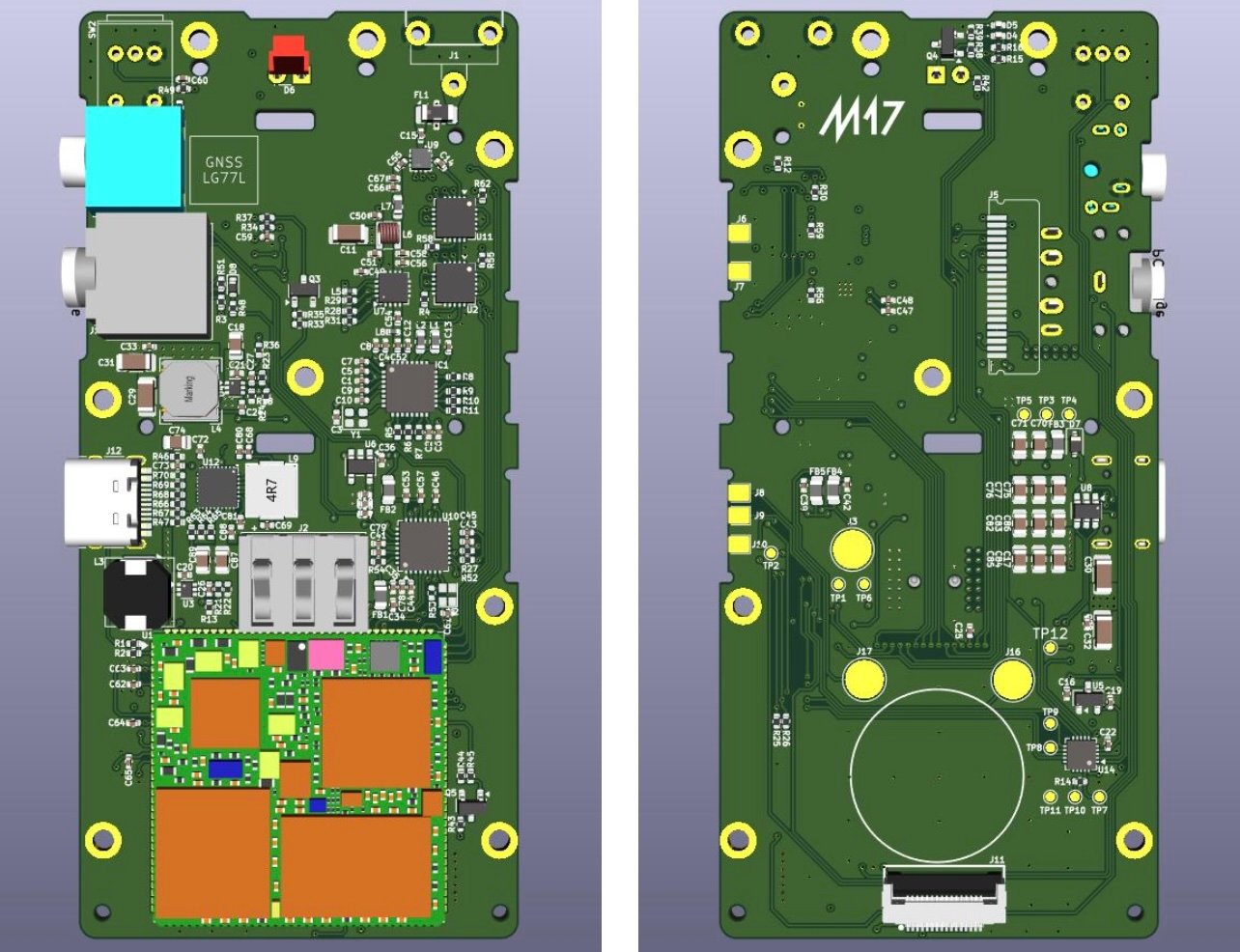
The Rev B board is still a work in progress, but its release demonstrates the rapid pace of development behind the M17 LinHT Handheld. As the project moves closer to a fully functional prototype, the team emphasizes that community support and donations continue to drive the project forward – helping turn an entirely open-source digital voice handheld from concept into reality.
What Is M17 Anyway?
Launched in 2019, M17 is an open-source digital voice protocol created by a global team of amateur radio developers who wanted a modern, fully transparent alternative to proprietary systems like DMR, P25, and D-STAR.
Unlike most commercial digital modes, M17 uses the patent-free Codec2 voice codec and publishes its specifications, firmware, and hardware designs openly for anyone to study, build, or modify. The project has grown rapidly thanks to its strong hacker–maker community, experimental flexibility, and focus on keeping amateur radio innovation accessible. For hams new to the mode, see the full M17 for Beginners guide.
Looking Ahead
With steady progress on the LinHT handheld and a growing global community, M17 remains a key part of amateur radio’s digital evolution. Whether or not it becomes a mainstream mode, it’s already proving that innovation in ham radio still thrives on open collaboration.
Stay tuned to EvoHam’s News section for aggregated updates across all major modes – DMR, D-STAR, NXDN, P25, M17, and FreeDV, so you can stay ahead of the curve in the world of modern amateur communication.