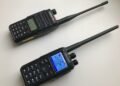






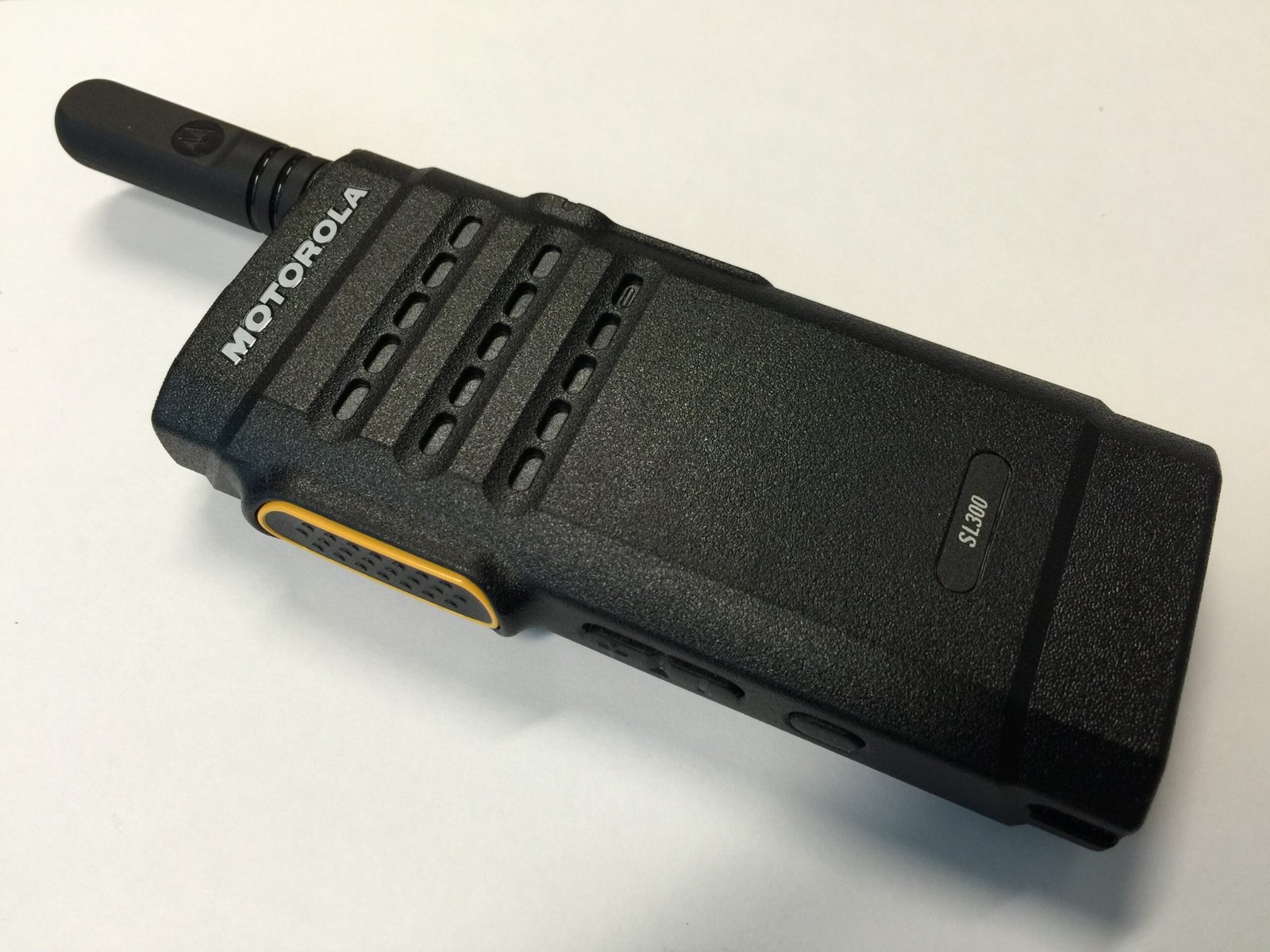

Compact, durable, and deceptively powerful for its size, the Motorola SL300 remains one of the slimmest professional-grade DMR handhelds ever made. Aimed at commercial and light-duty users, it also appeals to hams seeking a pocket-sized radio that can handle everyday DMR or analog FM use. While discontinued, the SL300 still offers excellent build quality, loud audio, and trademark Motorola reliability for operators who value portability over maximum transmit power.
1 Quick Facts About the Motorola SL300
| Band Coverage | UHF (403–470 MHz) or VHF (136–174 MHz) |
|---|---|
| Modes | DMR Tier II (digital) & analog FM |
| Output Power | 3 W (UHF) / 2 W (VHF) |
| Display | 19×5 matrix LED (under protective lens) |
| Audio Output | ≈ 500 mW speaker output |
| Channels & Zones | 99 channels / 2 zones |
| Programming | Motorola CPS 2.0 (micro-USB) |
| Antenna | Proprietary compact connector (stubby antenna included) |
| Battery | 3.7 V / 2,300 mAh Li-ion (PMNN4468A) |
| Water/Dust Rating | IP54 / MIL-STD-810 C–G |
| Connectivity | Micro-USB for charging & programming |
| Dimensions (W×H×D) | 55 × 113 × 22 mm (≈ 169 g / 6 oz) |
| Typical Price (2025) | $150–250 USD used / discontinued new |
2 Pros and Cons at a Glance
| Pros | Cons |
|---|---|
| Ultra-slim and lightweight design (shirt-pocket size) | Limited display with minimal information |
| Loud, full-bodied audio for its class | No Bluetooth or Wi-Fi connectivity |
| Rugged IP54 build with MIL-STD-810 specs | Proprietary antenna connector limits flexibility |
| Dual-mode DMR + FM operation | Requires paid CPS license to program |
| USB programming and charging (no special cable needed) | Small buttons hard to operate with gloves |
3 2025 Update & Firmware Notes
Status: Discontinued but still supported by Motorola MOTOTRBO CPS 2.0 (v2.130 and later). Firmware updates up to R02.10.10 are available via Motorola Online.
Compatibility: The SL300 shares accessories and programming conventions with the newer SL3500e and SL3000e models, though it lacks Bluetooth and Wi-Fi found in the updated “e” series.
Used-Market Tip: Confirm the model supports DMR Tier II (Conventional). Some fleet units were locked to Capacity Plus or restricted configurations.
4 Who It’s For
- Hams who want a slim, professional-grade DMR radio for daily or travel use.
- Operators using hotspots or repeaters within a few kilometres/miles.
- Motorola collectors seeking a minimalist MOTOTRBO design.
- Anyone needing a durable radio with loud audio in a pocket-friendly form factor.
5 Introduction
Released around 2014, the Motorola MOTOTRBO SL300 was designed to bring MOTOTRBO performance into the most compact form factor possible. At under an inch thick, it became the “executive” model for light-duty users who didn’t need full-power output or a keypad. Despite its age, it remains a favourite among hams and service professionals who prize Motorola reliability in a minimalist body.
6 Design & Build Quality
The SL300’s industrial design reflects Motorola’s push toward smartphone-like ergonomics. Its rectangular frame, rubberized side buttons, and flush LED display create a sleek yet sturdy look. The body is solid, meeting IP54 dust/water protection and MIL-STD-810 environmental standards.
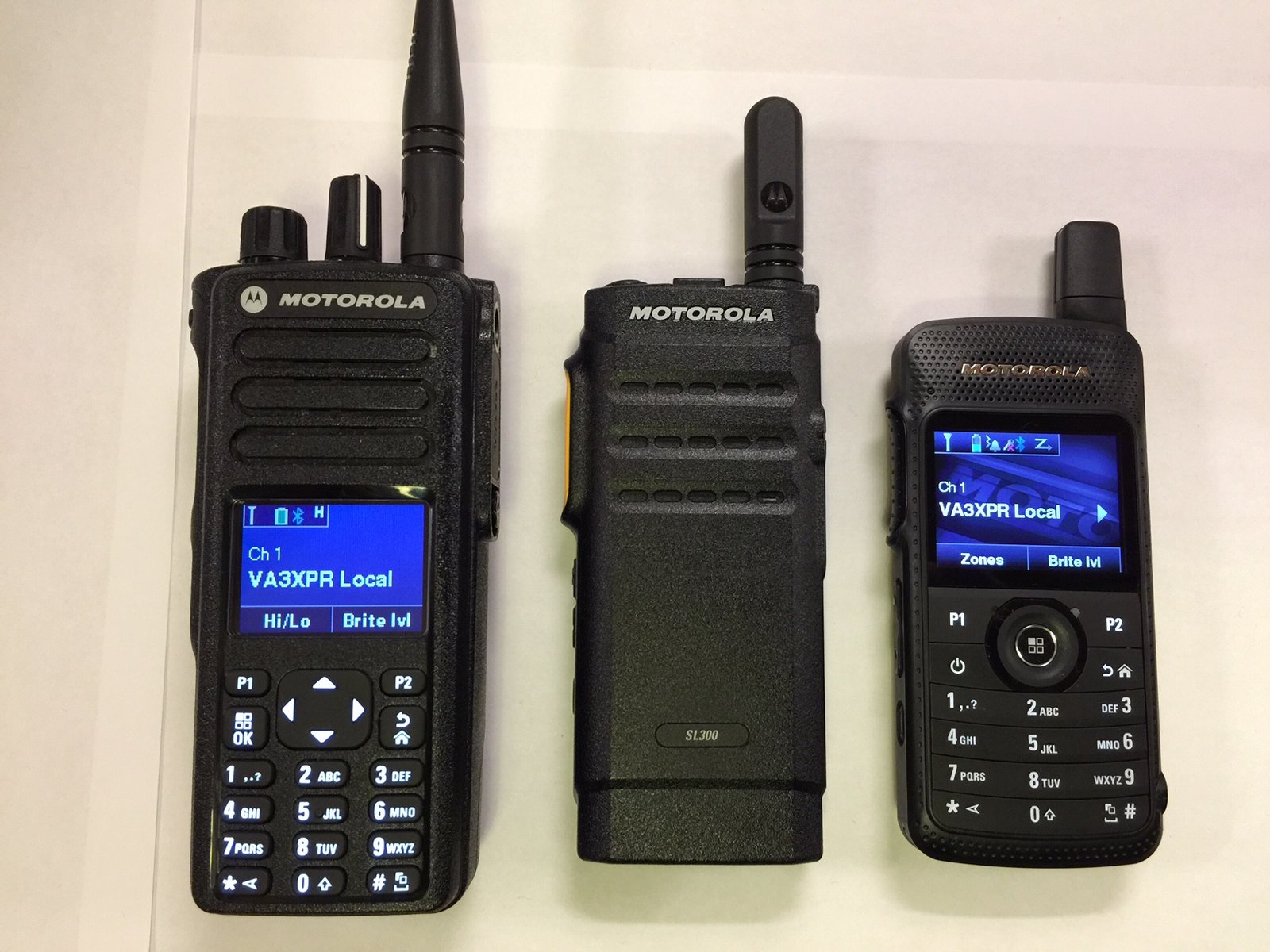
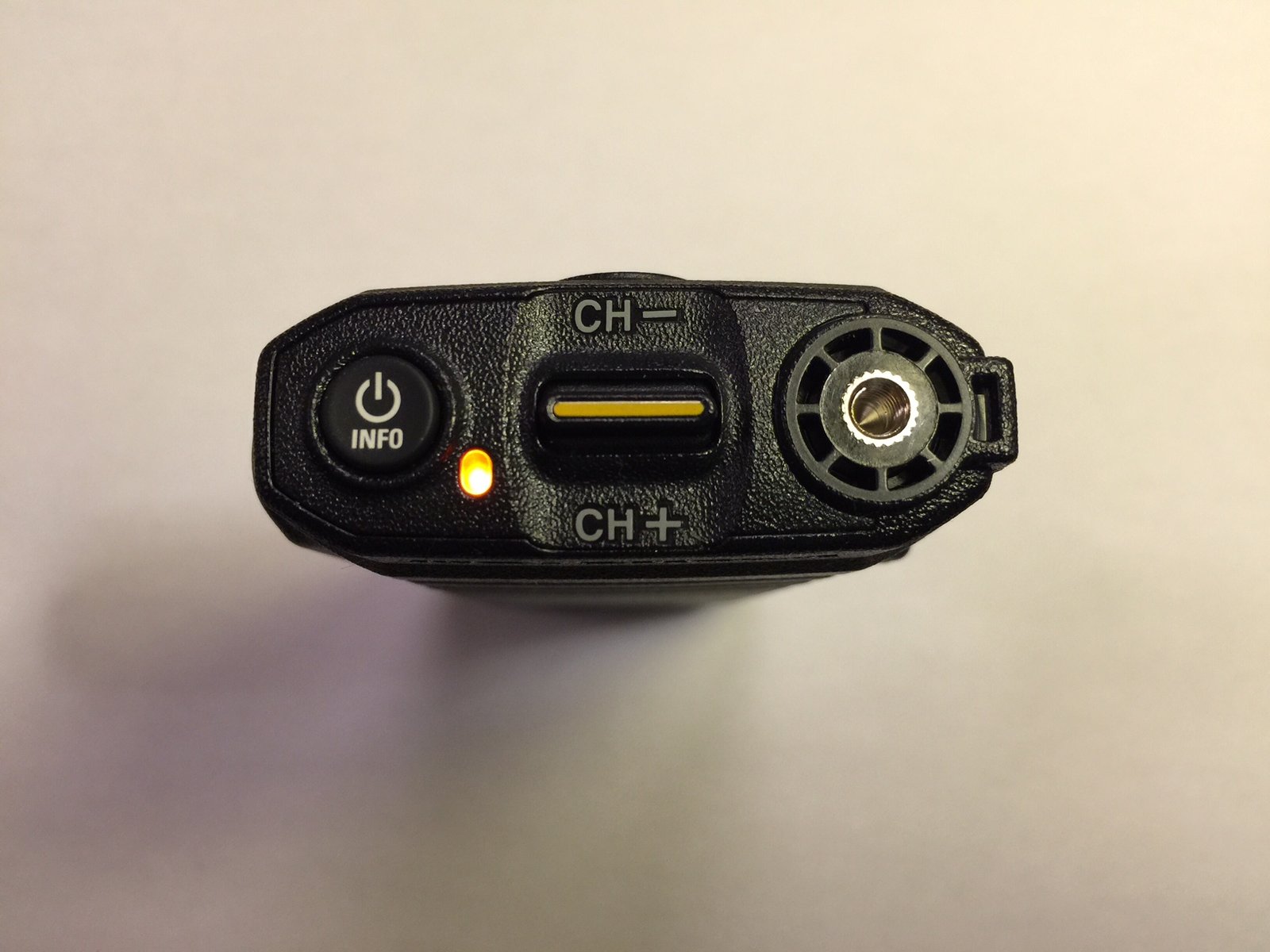
Buttons are compact and responsive but not ideal for gloved operation. The radio uses no rotary knobs; instead, a side volume rocker and top channel toggle replace traditional controls.
7 Display & Indicators
Motorola’s matrix LED “Range Max” display remains one of the SL300’s signature features. Hidden beneath the radio’s housing, it uses a grid of LEDs to show the channel, zone, volume, and battery status – all protected by a rugged outer shell.
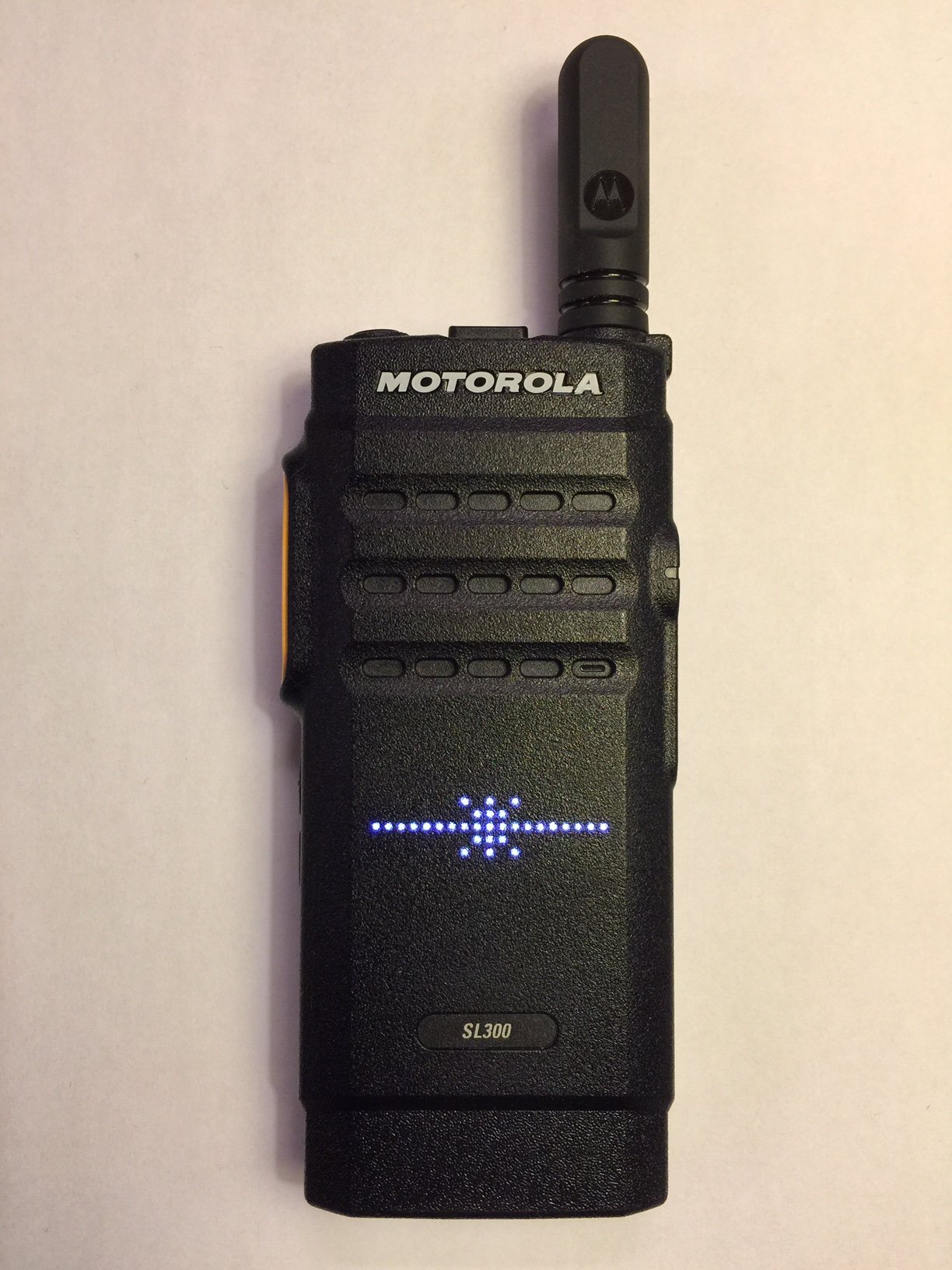
However, it lacks finer indicators such as signal strength or contact ID. When scrolling through channels, it briefly shows the number (e.g. CH1) before displaying the name, making rapid navigation through 99 channels a bit tedious.
A single tri-colour LED atop the radio provides quick status:
- Green: Receive (flashing) or transmit (solid)
- Orange: Scanning active
8 Audio Performance
Despite its size, the SL300 delivers surprisingly rich and loud audio (rated at 500 mW). The speaker emphasizes mid-bass frequencies, giving it a full, warm tone. Voice clarity is excellent for both DMR and analog FM use, and microphone audio reports are strong right out of the box.
Unlike its higher-end siblings, the SL300 lacks Bluetooth audio, so all accessories connect via the side port.
9 RF & Antenna Performance
Transmit power is fixed at 3 W (UHF) or 2 W (VHF). Range performance is comparable to other 2–3 W portables, especially with Motorola’s “Range Max” antenna design. The proprietary miniature antenna connector is the main drawback – adapting it for external antennas or aftermarket whips is difficult.
10 Battery, Charging & Accessories
The included 3.7 V / 2,300 mAh Li-ion battery provides roughly 10–14 hours of use in DMR mode, slightly less in FM. Charging and programming are both handled via micro-USB – a convenience that eliminates the need for specialized cables.
Included in Box (original kit):
- Motorola SL300 radio (UHF or VHF)
- 3.7 V / 2,300 mAh Li-ion battery (PMNN4468A)
- Stubby antenna
- Belt clip (PMLN7190)
- Micro-USB wall charger (25009298001)
Optional accessories (available new or used in 2025):
- Desktop rapid charger (PMLN7109)
- High-capacity battery (PMNN4468A)
- Audio accessories via 2-pin side connector
11 Programming & Software
Programming the SL300 requires Motorola MOTOTRBO CPS 2.0, which supports both USB programming and firmware updates.
Note (2025): CPS 2.0 now requires a paid Motorola Online subscription. The older CPS v16.x remains functional but is no longer distributed officially. A free entitlement key (EID) is required to enable 25 kHz analog FM operation for traditional ham repeaters.
While CPS 2.0 offers excellent configuration control, it can be overwhelming for new users and expensive for individuals. Most hams source pre-configured codeplugs or share templates within clubs to ease the setup process.
12 Alternatives to Consider
- Motorola SL3500e: Successor model with improved display, Bluetooth, and USB-C charging.
- Anytone D878UV II Plus: Dual-band analog + DMR handheld with GPS and APRS support.
- Hytera PD365: Compact DMR/FM radio with removable antenna and similar form factor.
13 Final Verdict
The Motorola MOTOTRBO SL300 may not be the newest radio in 2025, but it remains a well-engineered and highly portable choice for hams and professionals alike. Its pocketable design, loud audio, and USB convenience make it ideal for hotspot or urban use. The limited display, proprietary antenna, and lack of Bluetooth are its main trade-offs, but for those seeking a no-nonsense, rugged Motorola experience in a shirt-pocket form, the SL300 still delivers.
14 You Might Also Like
- Motorola MOTOTRBO SL7550 Review (2025): Business-Class Slim DMR
- Hytera TD580 Review (2025): Rugged Commercial DMR Toughness
- DMR for Beginners: How to Get Started in Digital Voice
Some links in this article are affiliate links. If you purchase through them, EvoHam may earn a small commission – at no extra cost to you. Your support helps keep EvoHam creating independent ham radio reviews and guides for the amateur radio community.
The Review
Motorola SL300
A slim, durable DMR/FM handheld with clear audio, rugged build, and pocket-sized convenience. The Motorola SL300 trades advanced features for portability and reliability - ideal for hams seeking a compact, no-nonsense radio.
PROS
- Ultra-slim, lightweight design (shirt-pocket size)
- Loud, clear 500 mW audio output
- Rugged IP54 & MIL-STD-810 construction
- Dual-mode DMR + analog FM operation
- USB charging & programming (no special cable)
CONS
- Limited matrix LED display
- No Bluetooth or GPS connectivity
- Requires paid CPS 2.0 subscription
- Proprietary antenna & accessory connectors
- Discontinued; limited new parts availability
Review Breakdown
-
Build Quality – Slim but rugged IP54 body with solid fit and finish
-
Audio Quality – Loud 500 mW speaker; full, clear transmit audio
-
Display & Controls – Limited matrix LED display, non-backlit buttons
-
Ease of Programming – CPS 2.0 only; reliable but costly setup
-
Battery Life – Around 10–14 hrs per charge; micro-USB convenience
-
Features & Connectivity – Dual-mode DMR/FM; lacks Bluetooth or GPS
-
Value for Money – Solid used-market value for a rugged Motorola handheld