





If you’ve recently searched for information about the LinHT radio, you’re not alone. LinHT has started appearing in amateur radio and software-defined radio (SDR) discussions, often described as an open-source, Linux-based, software-defined handheld radio.
That combination naturally raises questions – especially for hams who are newer to digital voice and are still getting comfortable with concepts like SDR, codecs, and experimental radio platforms.
This beginner guide explains what the LinHT actually is, why it’s generating interest, and how it fits into the broader ham radio landscape, without assuming prior SDR or Linux experience.
1 What Is LinHT?
At its core, LinHT is an experimental handheld radio project built around SDR and a Linux operating system.
Most traditional handheld radios rely on fixed hardware and locked firmware. LinHT takes a very different approach: it treats the radio more like a small computer that happens to transmit and receive RF.
LinHT is being developed within the M17 community and is supported by the M17 Foundation, reflecting a broader focus on open-source experimentation and flexible digital voice platforms rather than a finished consumer product.

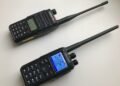
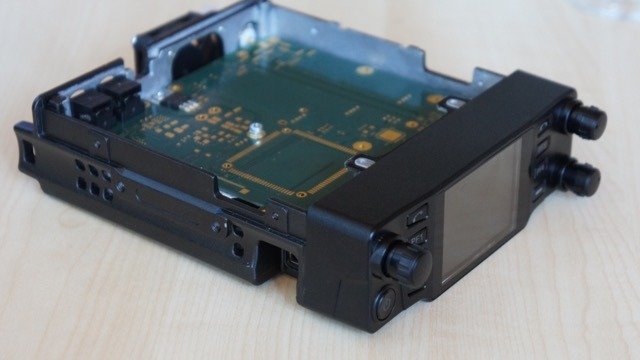
A close-up view of the LinHT handheld SDR radio prototype, showing the Linux-based system running on the device display. Photo credit: M17 Project
Instead of hardwiring radio behavior into proprietary firmware, LinHT performs much of its signal processing in software. That software runs on Linux and can be modified, replaced, or extended by the user.
LinHT is being developed as an open, experimental project rather than a finished commercial product. Both the hardware design and the software stack are evolving together, with an emphasis on flexibility, experimentation, and community involvement rather than polished features or ease of use (with development details documented on the project wiki).
This flexibility is what makes LinHT interesting – and also what makes it very different from everyday handheld radios.
2 Why LinHT Feels So Different from a Normal Handheld
Most hams are familiar with handheld radios that behave like appliances. You turn them on, select a channel or talkgroup, and operate within a well-defined set of features.
LinHT doesn’t quite work that way.
Because it’s built around SDR principles, much of what a traditional radio does in dedicated hardware is handled in software instead. This allows for experimentation, but it also means the experience is less polished and less predictable.

A simple way to think about it is this:
A traditional handheld radio is like a calculator.
LinHT is more like a laptop with an antenna.
Both are useful – just for very different reasons.
3 Is LinHT a Digital Voice Radio?
This is one of the most common points of confusion.
LinHT is not a digital voice mode, and it’s not a ready-made digital voice handheld like DMR, Yaesu Fusion, or D-STAR radios.
Instead, LinHT is a radio platform. Digital voice modes – such as DMR, P25, NXDN, D-STAR, M17, or FreeDV, are separate technologies that might be implemented in software on platforms like LinHT, depending on development effort and hardware capability.

While the current LinHT design is a handheld radio, the underlying concept is not limited to a single form factor. In principle, the same software-defined approach could be adapted to other radio types – such as mobile or base radios, or to different frequency ranges, including HF in the future, depending on how the project evolves.
Understanding this distinction helps set realistic expectations, especially for hams who are new to digital voice.
4 Why Digital Voice Hams Are Paying Attention
Even though LinHT isn’t a plug-and-play digital voice radio, it has attracted attention from people involved in experimental and open-source radio projects.
The interest isn’t just technical – it’s philosophical.

LinHT represents an approach where:
- The radio is not locked to a single manufacturer
- New ideas can be tested quickly
- Experimental modes don’t require commercial approval
- The community plays a central role in development
For hams curious about the future of digital voice and SDR experimentation, that makes LinHT worth watching.
5 How LinHT Works (Without Getting Too Technical)
You don’t need to understand DSP math to grasp the basic idea behind LinHT.
When a signal arrives at the antenna, it’s converted into digital data by SDR hardware. From there, Linux-based software performs tasks like filtering, demodulation, decoding, and audio handling.
When transmitting, the process happens in reverse – software generates the signal, and the hardware converts it back into RF.

The key takeaway is simple:
With LinHT, software defines the radio, not the other way around.
6 Is LinHT Beginner Friendly?
In the traditional sense, no.
LinHT is not designed to be someone’s first handheld radio, or even their first digital voice radio. It assumes curiosity, patience, and a willingness to experiment – and sometimes to troubleshoot features that are still evolving.
That said, beginners can still benefit from understanding LinHT, because it illustrates how modern radios are increasingly shaped by software rather than fixed hardware.
7 What LinHT Is (and Isn’t) Trying to Be
It’s important to be clear about LinHT’s role.
LinHT is not trying to replace everyday handheld radios used for repeaters, nets, or emergency communications. It’s not trying to compete with polished commercial products.
Instead, LinHT explores ideas. And exploration, by definition, comes with rough edges.
8 Licensing and Operating Responsibility
Because LinHT behaves more like a general-purpose SDR than a certified radio, the responsibility for legal operation rests with the operator.
That includes staying within licensed amateur bands, using appropriate power levels, and ensuring emissions are clean. Unlike most commercial radios, LinHT does not enforce these limits automatically.
9 Why LinHT Still Matters
Even if you never plan to use a LinHT radio, projects like this play an important role in amateur radio.

They test new ideas, challenge assumptions, and often influence future designs – sometimes years later. Many features we now take for granted in modern radios began as experimental or open-source projects.
LinHT fits squarely into that tradition.
10 A Look at Past All-Digital Radio Efforts
Ambitious, all-digital radio concepts are not new in amateur radio. Over the past decade, several experimental and commercial projects have explored the idea of highly flexible, software-defined radios, often with different goals, architectures, and tradeoffs.
One early effort was the Whitebox project by Chris Testa and Bruce Perens, which explored SDR-based architectures for open radio experimentation. While not a handheld device, it influenced broader thinking around open and software-centric radio platforms.
In 2019, Bruce Perens launched the HT of the Future project, an ambitious attempt to define a modern, open handheld SDR architecture. Although it did not progress into a widely adopted platform, it helped frame many of the technical and usability questions that projects like LinHT are now addressing.
Another example is the KV4P HT, which takes a different approach by pairing an Android smartphone with a radio front end. Rather than being a fully self-contained handheld SDR, it relies on the phone for user interface and processing.
Commercially, the ComJot is sometimes described as a portable SDR radio running Android. However, it appears to offer limited openness for SDR experimentation and does not strongly align with open-source development goals.
Within the M17 community itself, there were also earlier portable SDR efforts, including the OpenHT project and at least one prior experimental handheld design. These initiatives provided valuable lessons that helped shape expectations and inform later designs.
A more widely known example outside the M17 ecosystem was the New Radio initiative announced in 2016, which generated significant interest but ultimately did not progress into a widely available, finished platform.
This history is worth keeping in mind when evaluating projects like LinHT. Experimental radio platforms often explore important ideas, even if not every concept reaches maturity or broad adoption. Seen in this context, LinHT represents the latest and most integrated attempt to create a truly open, experimental, handheld SDR platform – one informed by both past successes and past limitations.
11 Frequently Asked Questions About LinHT
What is LinHT?
LinHT is an experimental Linux-based software-defined radio (SDR) handheld. It uses a Linux operating system and open-source software to perform many radio functions in software rather than fixed firmware.
Is LinHT a digital voice radio?
No. LinHT is not a digital voice mode and not a ready-made digital voice handheld. It is a radio platform that could potentially support digital voice modes through software development.
What digital voice modes will LinHT support?
LinHT is a radio platform, not a digital voice mode. Which digital voice modes it can support depends on software development and hardware capability as the project evolves. In principle, software-defined platforms like LinHT can experiment with a range of digital voice technologies, including M17, FreeDV, DMR, P25, NXDN, or D-STAR, but any such support should be considered experimental, not guaranteed, and not a promise of long-term availability.
Is LinHT related to the M17 Project?
Yes. LinHT is a project developed within the M17 community and is supported by the M17 Foundation. While there is no such thing as an “official” M17 radio, LinHT already supports the M17 digital voice mode and was one of the first platforms used to implement and validate it.
Can LinHT replace a normal handheld radio?
No. LinHT is not intended to replace everyday handheld radios. Traditional radios remain far better suited for reliable, routine operation.
Is LinHT open source?
Yes. LinHT follows an open-source development model, with software and documentation intended to be developed publicly and collaboratively.
Is LinHT legal to use on amateur bands?
LinHT itself is neither legal nor illegal. The operator is responsible for ensuring that transmissions stay within licensed bands, use appropriate power levels, and meet emission requirements.
Is LinHT available to buy?
LinHT should be considered experimental and limited in availability. It is not a mass-produced commercial radio, and there is no publicly announced timeline for when or if it will become widely available. As with many experimental radio projects, development progress and availability may change over time.
12 Continue Learning and Exploring LinHT
LinHT is still evolving, and much of what we learn about it comes from open discussion, design exploration, and shared experimentation within the amateur radio community.
If you’re following the development of LinHT or exploring its design goals, and you’re curious how others are thinking about hardware concepts, firmware direction, audio characteristics, or potential future on-air use, the EvoHam Community provides a place to compare ideas and learn alongside other experimenters.
Visit the EvoHam Community’s M17 section to follow ongoing discussion, share observations, and contribute to the broader conversation around open digital voice development.
13 Final Thoughts
LinHT isn’t a radio you choose because it’s simple or convenient. It’s a radio you pay attention to because it asks an interesting question:
What happens when a handheld radio is treated like an open, programmable computer instead of a sealed appliance?
For hams curious about SDR, digital voice experimentation, and the future of open radio platforms, LinHT is worth watching – even if it’s not something you’ll use every day.

14 Related Reading on EvoHam
- M17 for Beginners: A Step-by-Step Guide for New Hams
- FreeDV for Beginners: Get Started with Digital Voice on HF
- Ham Radio Digital Voice Terminology Explained for Beginners
Thanks to Steve Stroh, N8GNJ of Zero Retries, for helpful background and clarification on LinHT and the M17 Project.
Some links in this story are affiliate links. If you choose to buy through them, EvoHam may earn a small commission – at no extra cost to you. It helps support more stories like this.