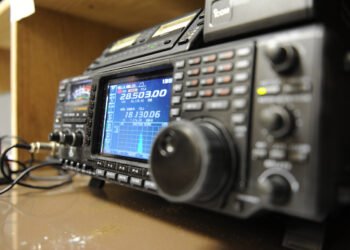




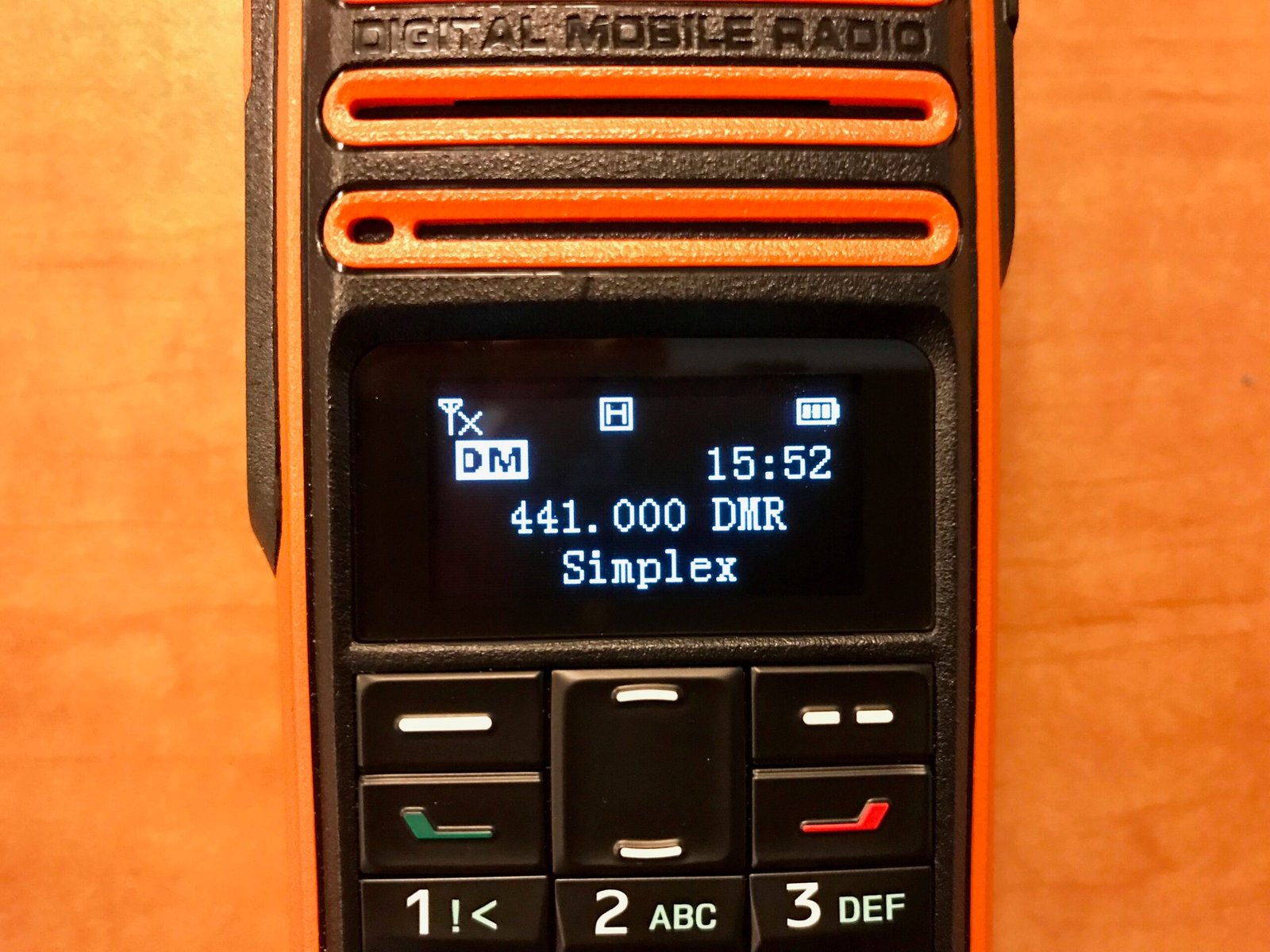

Although most DMR contacts today use repeaters or hotspots, DMR simplex frequencies remain an important operating option. Simplex allows two DMR radios to communicate directly on the same frequency and time slot, without relying on repeaters, networks, or the Internet.
This page lists commonly used DMR simplex frequencies by International Amateur Radio Union (IARU) region, along with local band-plan notes to help you program your radio correctly and operate within regional conventions.
What Are DMR Simplex Frequencies?
In standard DMR operation, a handheld or mobile radio typically communicates through a repeater, which relays signals to other stations or into a linked network such as BrandMeister. DMR simplex operation bypasses this infrastructure entirely. Radios transmit and receive directly on the same frequency and time slot, similar in concept to traditional analog simplex channels like 146.520 MHz FM.
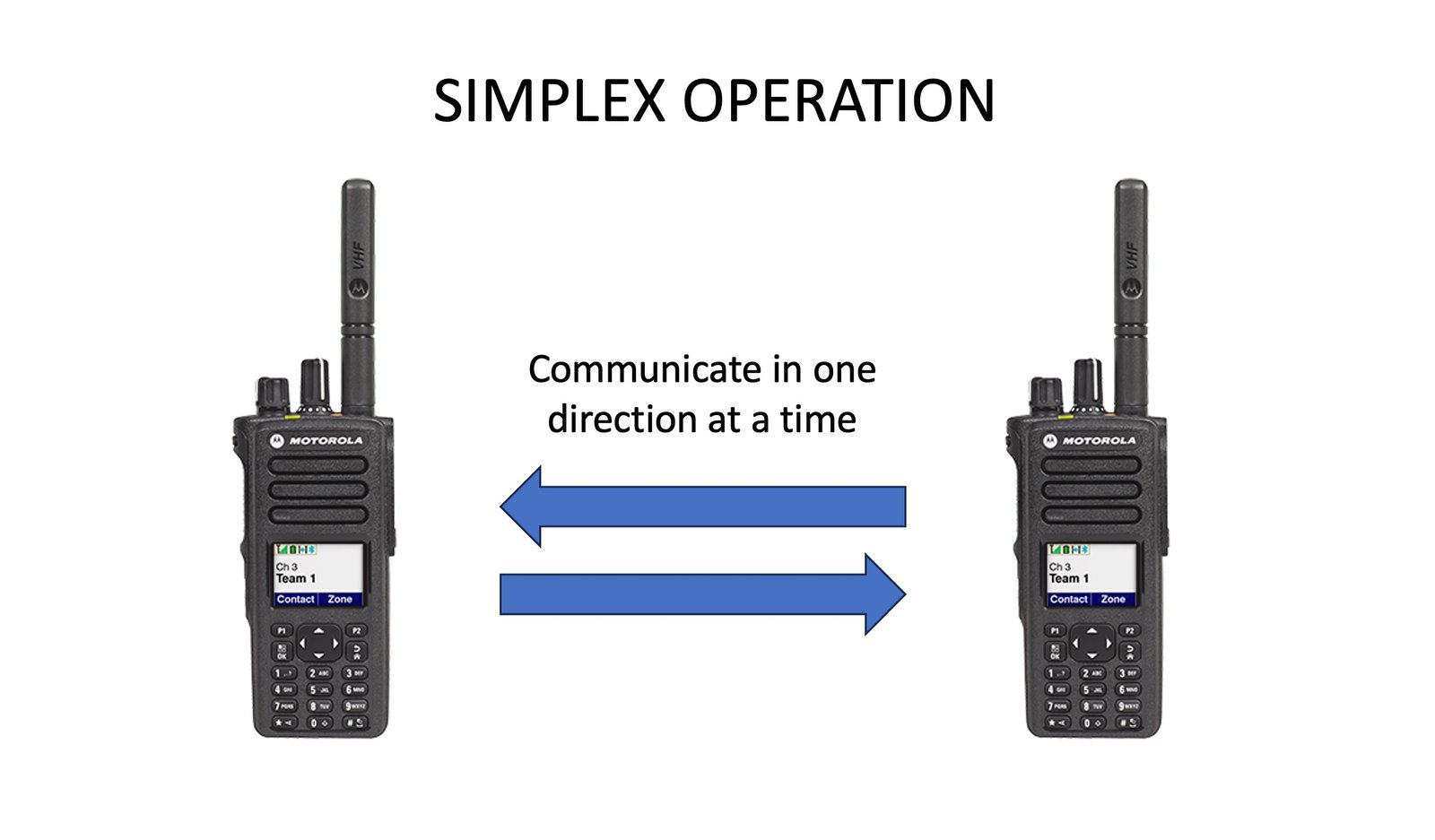
Because there is no repeater to extend coverage, simplex range depends on terrain, antenna height, and output power. Its advantage is resilience: communication remains possible even when repeaters or network links are unavailable.
Typical settings for most DMR simplex channels:
- Color Code (CC): 1
- Timeslot (TS): 1 (unless otherwise noted)
- Talkgroup (TG): 99
These defaults allow two operators to program their radios consistently and establish simplex QSOs quickly.
DMR Simplex Frequencies by IARU Region
Below are the most-commonly used DMR simplex frequencies listed region by region. Always confirm your country’s national band plan before use.
IARU Region 1: Europe, Africa & Middle East
| Freq. | CC | TS | TG | Notes |
|---|---|---|---|---|
| 50.6300 | 1 | 1 | 99 | 2 |
| 50.6300 | 1 | 1 | 9 | 2 (UK) |
| 144.6125 | 1 | 1 | 9 | 2 (UK) |
| 145.3750 | 1 | 1 | 99 | 2 |
| 433.4500 | 1 | 1 | 99 | 2 |
| 438.6125 | 1 | 1 | 9 | 2 (UK) |
| 1297.7250 | 1 | 1 | 99 | 2 |
| 1297.7250 | 1 | 1 | 9 | 2 (UK) |
Notes:
- Calling frequency for DMR
- Calling frequency for all digital voice modes (DMR, Yaesu Fusion, D-STAR, etc.)
- Proposed calling frequency
- Special events calling frequency
IARU Region 2: North & South America
| Freq. | CC | TS | TG | Notes |
|---|---|---|---|---|
| 50.6300 | 1 | 1 | 99 | 2, 3 |
| 145.5100 | 1 | 1 | 99 | 1 |
| 145.7900 | 1 | 1 | 99 | 1 |
| 223.4000 | 1 | 1 | 99 | 2, 3 |
| 441.0000 | 1 | 1 | 99 | 1 |
| 446.5000 | 1 | 1 | 99 | 1 |
| 446.0750 | 1 | 1 | 99 | 1, 4 |
| 902.1250 | 1 | 1 | 99 | 2, 3 |
| 1297.7250 | 1 | 1 | 99 | 2, 3 |
Notes:
- Calling frequency for DMR
- Calling frequency for all digital voice modes (DMR, Yaesu Fusion, D-STAR, etc.)
- Proposed calling frequency
- Special events calling frequency
IARU Region 3: Asia-Pacific
| Freq. | CC | TS | TG | Notes* |
|---|---|---|---|---|
| 144.6750 | 1 | 1 | 99 | 2 (NZ) |
| 144.8000 | 1 | 1 | 99 | 2 (AU) |
| 145.3000 | 1 | 1 | 99 | 2 (JP) |
| 432.8000 | 1 | 1 | 99 | 2 (NZ) |
| 433.3000 | 1 | 1 | 99 | 2 (JP) |
| 439.2000 | 1 | 1 | 99 | 2 (AU) |
| 925.8000 | 1 | 1 | 99 | 2 (NZ) |
Notes:
- Calling frequency for DMR
- Calling frequency for all digital voice modes (DMR, Yaesu Fusion, D-STAR, etc.)
- Proposed calling frequency
- Special events calling frequency
Pro Tip: Always confirm that these frequencies are permitted by your regional band-plan before use, especially in shared segments near repeater inputs.
You Might Also Like
- DMR for Beginners: A Step-by-Step Guide for New Hams
- RF Coverage Maps: Create Like a Pro in 3 Easy Steps
- What Is BrandMeister DMR? How Hams Connect Worldwide
Some links in this story are affiliate links. If you choose to buy through them, EvoHam may earn a small commission – at no extra cost to you. It helps support more stories like this.