





The International Space Station (ISS): a $150 billion, cutting-edge laboratory orbiting Earth at 28,000 km/h.
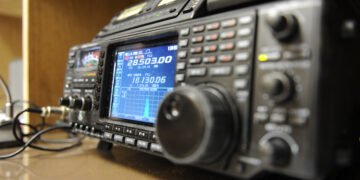
Its primary amateur radio system? A simple analog FM transceiver.
Why does the most advanced spacecraft ever built still rely on traditional analog FM – while every modern digital voice mode remains Earth‑bound? The answer reveals something fundamental about ARISS (Amateur Radio on the International Space Station): its mission prioritizes global accessibility, educational reach, operational reliability, and absolute simplicity.
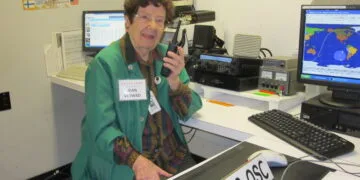
Most hams have seen the photos – astronauts floating in the Cupola, wearing headsets, talking with classrooms and radio operators as the ISS sweeps overhead. It feels futuristic, high‑tech, and almost otherworldly.
But here’s the surprising truth: Every one of those contacts is made using traditional analog FM – not any form of digital voice. No D-STAR. No DMR. No Yaesu Fusion. No P25 or NXDN. No M17. Not even experimental digital voice modes. So why, in an era where digital voice is part of everyday amateur radio on Earth, does ISS digital voice still not exist for crewed operations?
This editorial explores what radio systems the ISS actually uses today, why digital voice hasn’t yet made the leap to crewed spaceflight, and what opportunities may lie ahead on the next generation of orbital platforms.
1 What the ISS Actually Uses Today
Despite how futuristic ISS operations appear, the amateur radio station aboard the ISS remains intentionally simple, built around reliability, accessibility, and ease of use for astronauts and the global ham community.

Here’s a breakdown of the current ham operations on the ISS:
- Analog FM voice used for general voice downlink and ARISS school contacts (145.800 MHz simplex)
- APRS packet at 1200 baud (145.825 MHz simplex)
- Periodic SSTV events using analog FM-based imaging (145.800 MHz simplex)
- Occasional VHF/UHF cross-band analog FM repeater operation (uplink 145.990 MHz with 67 Hz tone, downlink 437.800 MHz)
Taken together, these modes reflect a deliberate design trade-off: prioritizing reliability, accessibility, and operational simplicity over adopting newer – but more complex, digital alternatives.
| Criterion | Analog FM | Digital Voice |
|---|---|---|
| Reliability in orbit | ★★★★★ | ★★☆☆☆ |
| Tolerance to Doppler shift | ★★★★★ | ★★☆☆☆ |
| Ease of operation for crew | ★★★★★ | ★★☆☆☆ |
| Global accessibility for listeners | ★★★★★ | ★☆☆☆☆ |
| Configuration & setup complexity | ★★★★★ (low) | ★★☆☆☆ (higher) |
| Support / certification risk | ★★★★★ (low) | ★★☆☆☆ (higher) |

These modes are simple, accessible, robust, and compatible with virtually every ham on Earth, which is exactly why they’re used.
Note: Specific ISS amateur radio frequencies (including SSTV and cross-band repeater uplink/downlink pairs) are determined on a mission-by-mission basis and may change depending on crew schedules, equipment configurations, and ARISS planning. Always refer to ARISS current status resources for the most up-to-date operational frequencies.
2 Why ISS Digital Voice Isn’t Used (Yet)
Even though digital voice has become a normal part of everyday ham radio on Earth, bringing it into orbit is far from straightforward. The ISS isn’t just another mountaintop repeater site – it’s a complex international laboratory where every subsystem must meet strict safety requirements.
It also needs to remain simple enough for non-radio-specialist astronauts to operate and accessible to listeners around the world. When viewed through that lens, the continued use of analog FM makes perfect sense.

Several other technical and operational constraints also explain why digital voice has never been adopted aboard the ISS. These challenges aren’t theoretical – they’re practical realities of operating radio equipment on a crewed spacecraft.
At a high level, the key factors are:
- Doppler shift impacts caused by orbital velocity
- Accessibility requirements for global educational outreach
- Operational simplicity for time-limited astronauts
- Digital-mode compatibility and ecosystem fragmentation
- Engineering priorities focused on reliability over experimentation
Each of these on its own presents a challenge. Taken together, they strongly favour analog FM – a mode that is forgiving, universal, and exceptionally reliable under real-world orbital conditions.
The most fundamental of these constraints is Doppler shift.
1. Doppler Shift Impacts Digital Signals More Severely
To a ham on the ground, Doppler shift is a mild adjustment. To a digital mode, it can be catastrophic. As the ISS hurtles across the sky at over 28,000 km/h, its relative frequency shift on VHF can sweep nearly ±3 kHz during a single pass.
For analog FM, this simply results in a gradual change in audio pitch that the human ear easily tolerates. But many digital voice modes operate within channel bandwidths on the order of 6.25 to 12.5 kHz, and rely on precise carrier frequency alignment and symbol timing. A Doppler shift of several kilohertz can push the signal outside the decoder’s acquisition range, causing loss of synchronization, corrupted frames, or complete audio dropouts.

Before digital voice could ever be used from orbit, either ground stations and onboard equipment would need automated, real-time Doppler correction far beyond what most hams currently use – or digital voice modes would need to evolve into waveforms and codecs that are inherently more tolerant of rapid Doppler shifts.
2. Accessibility Matters
One of ARISS’s core principles is that ISS downlinks should be receivable by anyone with a simple, non-specialized analog FM receiver. While licensed ham operators set up and run the school contacts, many people in the coverage footprint – families, classrooms, hobbyists, and the general public, often listen in using scanners or inexpensive receive-only equipment like SDR dongles.

If the ISS transmitted using a digital voice mode, the number of people able to listen would drop dramatically.
Most digital-capable radios are more expensive, require specific programming, and often lock users into a particular manufacturer or protocol. Outside of dedicated hobbyists, very few people have the equipment – or the technical setup, to decode digital voice signals.

Switching to digital voice could effectively exclude the vast majority of casual listeners, schools, and public observers who use simple analog FM receivers to hear ISS passes today. As a result, this could undermine ARISS’s goal of broad, accessible, educational outreach.
3. Operational Simplicity and Recovery Predictability
Astronauts have extremely limited time, and amateur radio is only a tiny part of their daily schedule. In principle, a digital voice mode could be preconfigured and ready to use on the ISS – engineers could easily load a digital voice channel into the radio and instruct the crew to “select Channel 3.”
The challenge isn’t normal operation – it’s recovery after a fault.
Analog FM recovers instantly after any reset – the radio comes back in the same mode, ready to use. Digital voice isn’t like that. Even with simplex operation, digital modes depend on specific configuration settings, and most digital voice capable radios require computer programming to restore those settings if anything gets cleared or corrupted.
On the ISS, where crew time is limited and equipment must be immediately usable, even a small configuration issue could take the system offline until specialists can guide the crew through a fix. That risk makes analog FM the far safer choice – at least currently.
4. Compatibility Fragmentation
On Earth, digital voice is divided across several mutually incompatible standards. Even in simple simplex operation, each digital voice mode uses its own modulation, framing, and codec – meaning a radio that can decode one mode cannot decode another.

Examples of mode-specific characteristics include:
- DMR – requires Color Code, Talkgroup, and Timeslot in simplex
- Yaesu Fusion (C4FM) – simple to use in simplex, but not compatible with other digital voice systems
- P25 – requires a NAC code and uses its own IMBE/AMBE vocoder
- D-STAR – uses AMBE with its own protocol framing and callsign structure
- M17 / FreeDV – use the open-source Codec2 vocoder, incompatible with any AMBE-based system
Because every digital voice mode is its own ecosystem, selecting any one of them for an ISS downlink would exclude the vast majority of listeners. As such, analog FM remains the only truly universal, brand-agnostic, globally receivable option.
5. Engineering Priorities Drive Everything
The ISS amateur radio station follows the same engineering philosophy as every other subsystem aboard the station, which is to:
- maximize reliability,
- minimize complexity,
- avoid unnecessary failure points,
- and ensure global accessibility.
In addition, ARISS exists to support:
- Education – enabling students to speak with astronauts
- Outreach – inspiring future scientists and engineers
- Reliability – ensuring every contact works the first time
- Inclusivity – allowing anyone with an FM radio to listen
Given these engineering requirements and the ARISS mission framework, no digital voice system today satisfies all of these constraints to the same level that analog FM does.
As such, digital voice simply isn’t the right fit yet, but with future codecs, smarter Doppler handling, and more flexible hardware, that could eventually change.
3 Digital Voice Modes That Could Work from Orbit
Even though digital voice hasn’t yet taken flight aboard the ISS, several modes have promising characteristics that could make them viable for future orbital experiments. None are ready for deployment today, but each represents a different vision of what spaceborne digital voice might one day become. Below, we look not just at the technical features, but at why each mode is (or isn’t) suited for space operations.
M17 (Open-Source Digital Voice)
M17 stands out because it wasn’t built to serve a corporate ecosystem – it was built to serve the amateur community. As a fully open-source protocol with a vibrant developer base, it offers freedom from proprietary codecs and licensing barriers.
What makes M17 especially compelling for space use is its adaptability. Because both the protocol and its Codec2 vocoder are open, the community could theoretically tailor or optimize them for the unique challenges of orbit, including Doppler shift, weak signals, and rapid link variation. Its relatively low hardware overhead and modular design make it one of the most natural candidates for future experimentation aboard the ISS or its successors.
The main limitation today is hardware availability. Only a small number of radios and development boards currently support M17 natively, which means it is not yet ready for widespread deployment. But the protocol’s open design makes it ideal for future space missions or equipment refresh cycles, especially as more hardware matures and becomes commercially available.
FreeDV (Neural-Codecs & Low-SNR Excellence)
FreeDV has always been about one thing: getting usable digital voice through when conditions are poor. And if there’s any environment that punishes weak-signal performance, it’s the rapidly changing geometry of an orbital pass.
With the advent of new neural-network-based codecs, FreeDV is now capable of producing remarkably clean audio at astonishingly low bitrates. This makes it especially attractive for space-to-ground links where Doppler, fading, and rapid SNR swings are the norm.
In many ways, FreeDV represents the “weak-signal frontier” of digital voice, and that’s exactly what space operation demands.
D-STAR & Yaesu Fusion
D-STAR and Yaesu Fusion have earned their place in amateur radio: they are commercially supported, widely deployed, and well understood. For space use, their biggest strength is this maturity.
It’s also worth noting that D-STAR already has real heritage in space, thanks to several amateur CubeSats that carried D-STAR payloads. Most notably, the D-STAR One series of CubeSats demonstrated digital-voice and data capability in orbit – an important proof-of-concept for DV beyond Earth. In early 2019, two D-STAR–equipped CubeSats were deployed, marking a key milestone: digital-voice protocols can operate successfully in small-satellite missions, even if they haven’t yet appeared on larger crewed platforms like the ISS.

However, the leap from CubeSat experimentation to crewed‑station operations is significant. The ISS requires absolute reliability for educational events, and must support global accessibility – constraints CubeSats do not face. D‑STAR and Yaesu Fusion also rely on older AMBE codecs that are less tolerant of rapidly changing space‑to‑ground link conditions.
Still, if a future mission wanted a “plug‑and‑play” digital voice system with predictable behaviour, these legacy modes could theoretically play a role – though they remain less likely contenders compared to more flexible or open‑source technologies.
DMR & P25 Phase II (TDMA), and NXDN (FDMA)
These modes dominate public safety and commercial radio for good reason: they’re rugged, capable, and efficient. But those strengths don’t translate well to space.
For DMR and P25 Phase II, TDMA timing relies on relatively stable frequency and symbol alignment. In an orbital environment, rapid Doppler shifts and continuously changing propagation delay during a single pass can make reliable decoding difficult.
NXDN, while FDMA-based and more tolerant of Doppler, still relies on AMBE vocoders and proprietary framing. It remains incompatible with other digital voice ecosystems, and its configuration requirements and commercial focus make it poorly suited for educational, publicly accessible downlinks.
Ultimately:
- TDMA timing (DMR, P25 II) is vulnerable to rapid orbital Doppler
- NXDN (FDMA) avoids TDMA issues but still carries proprietary vocoder and interoperability limitations
- All three are designed for land-based mobile networks, not open space downlinks
As such, these modes are unlikely to ever fly aboard an ISS-class amateur station.
4 What Digital Voice from the ISS Could Enable
Here’s where we move from analysis into futurecasting – imagining how digital voice could expand, enrich, and modernize the space-to-ground experience. While analog FM remains the most inclusive option for worldwide outreach, digital voice holds enormous potential to create deeper engagement, smarter communication links, and entirely new educational opportunities.
1. High-Quality Duplex Communication
Imagine an ARISS school contact where voices don’t collide or get clipped – where students and astronauts can converse naturally in real time – like smartphone video call. Digital full-duplex capability, supported by advanced error-correction algorithms, could make this possible. Instead of the classic “over… over…” cadence, conversations could feel more like a video call: fluid, responsive, and immersive.
2. Embedded Metadata Transmission
Digital voice modes can carry data alongside audio – something analog FM simply can’t do. This opens the door to a richer educational experience. With digital voice, a single transmission could include:
- Callsign & operator info sent automatically
- Time-stamps for classroom activities
- Mission telemetry such as orbital altitude or spacecraft velocity
- Small educational data packets tied to STEM lessons
Picture a classroom asking a question while simultaneously receiving a burst of mission metrics or an update about the astronaut’s current experiment. Digital voice could transform contacts from conversations into interactive learning sessions.
3. Orbit-Friendly Codecs
Future open-source codecs – particularly neural-network-based ones, could be optimized specifically for space. These codecs could dynamically adapt to:
- rapid Doppler swings
- fast changes in signal strength during a pass
Such codecs would outperform anything used terrestrially and could even influence future commercial or scientific spacecraft communication standards.
4. Public Testbeds for Open Digital Modes
A digital voice payload on a space station could become a global innovation platform. Modes like M17 or FreeDV could be tested in real orbital conditions, providing developers and researchers with data they could never gather on Earth.
The first space-borne digital voice QSO – especially using an open, community-driven mode, would ignite enormous interest, similar to how the earliest OSCAR satellites sparked decades of amateur radio advancement.
5. Efficient Use of Limited Astronaut Time
Astronaut schedules aboard the ISS are tightly structured, and ARISS events must fit into narrow windows. While digital voice wouldn’t eliminate the need for live interactions, it could make the supporting workflow around those contacts more efficient and reliable.
Digital voice systems could provide:
- More efficient use of each pass – DV’s built-in error correction and higher intelligibility at low SNR could reduce the “repeats” needed during marginal passes, allowing more student questions to fit into a single orbital window.
- Integrated voice + data streams – Digital modes can embed metadata – such as timestamps, spacecraft parameters, or educational data, within the same downlink as voice, reducing the operational burden of separate systems.
- Improved logging and event documentation – Digital frames inherently include timing and identity information, simplifying post-contact analysis and making it easier for educators to tie the contact into STEM curriculum.
- More predictable audio quality for mission planners – Because DV degrades more gracefully near the edge of coverage, planners can rely on more consistent performance across different ground stations, minimizing last-minute troubleshooting.
These capabilities wouldn’t replace the live analog FM voice contacts that define ARISS outreach today, but they could streamline the workflow around those events – making each scheduled pass more efficient and enabling richer educational opportunities alongside traditional analog voice.
If a future digital voice system ever reached the reliability, accessibility, and simplicity required for human spaceflight operations, analog FM would naturally shift into a universal backup role, with digital voice carrying most routine outreach traffic. That transition isn’t possible with current technology, but it remains a realistic long-term pathway as codecs, Doppler-handling techniques, and space-qualified hardware evolve.
5 The Future: Will We Ever Get Digital Voice from Space?
Digital voice has already reached space, but only in limited and experimental ways. Several amateur CubeSats have successfully carried D-STAR payloads, proving that digital voice protocols can operate beyond Earth. But these missions did not involve human voice contacts, ARISS-style school events, or broad public outreach – they were small, automated demonstrations.

Where digital voice has not appeared is on crewed platforms like the ISS. And while limited experimentation is always possible, the window for major system changes is rapidly closing. With the ISS planned for retirement around 2030, the operational cost, certification effort, and schedule complexity involved in deploying and maintaining a new digital voice system make it highly unlikely to ever replace the established analog FM configuration.
That means the real future of digital voice in space likely belongs not to the ISS, but to the platforms that come next:
- Commercial space stations (Axiom Station, Starlab, Orbital Reef)
- Privately funded orbital labs
- Advanced amateur-built CubeSats with digital voice payloads
- Future ARISS hardware deployed on post-ISS stations
Digital voice in space is no longer a matter of if – it’s a question of where and when the next major step will occur.
My prediction? The first true space-to-ground human digital-voice contact – the kind students can hear live, like today’s analog FM ARISS events, is most likely to come from an M17 or FreeDV payload on a future commercial or community-driven station.
When that moment arrives, it will mark a historic milestone: the beginning of the next era of amateur radio in space.
6 Final Thoughts
The idea of digital voice from the ISS is appealing and persistent, but ultimately impractical today. The ISS relies entirely on analog FM for accessibility, reliability, and educational impact.
But the potential for digital voice in space is enormous. Whether through M17, FreeDV, or a next‑generation codec not yet invented, the first real digital-voice contact from orbit would mark a new frontier for amateur radio.
Until then, analog FM remains the universal language between Earth and orbit.