



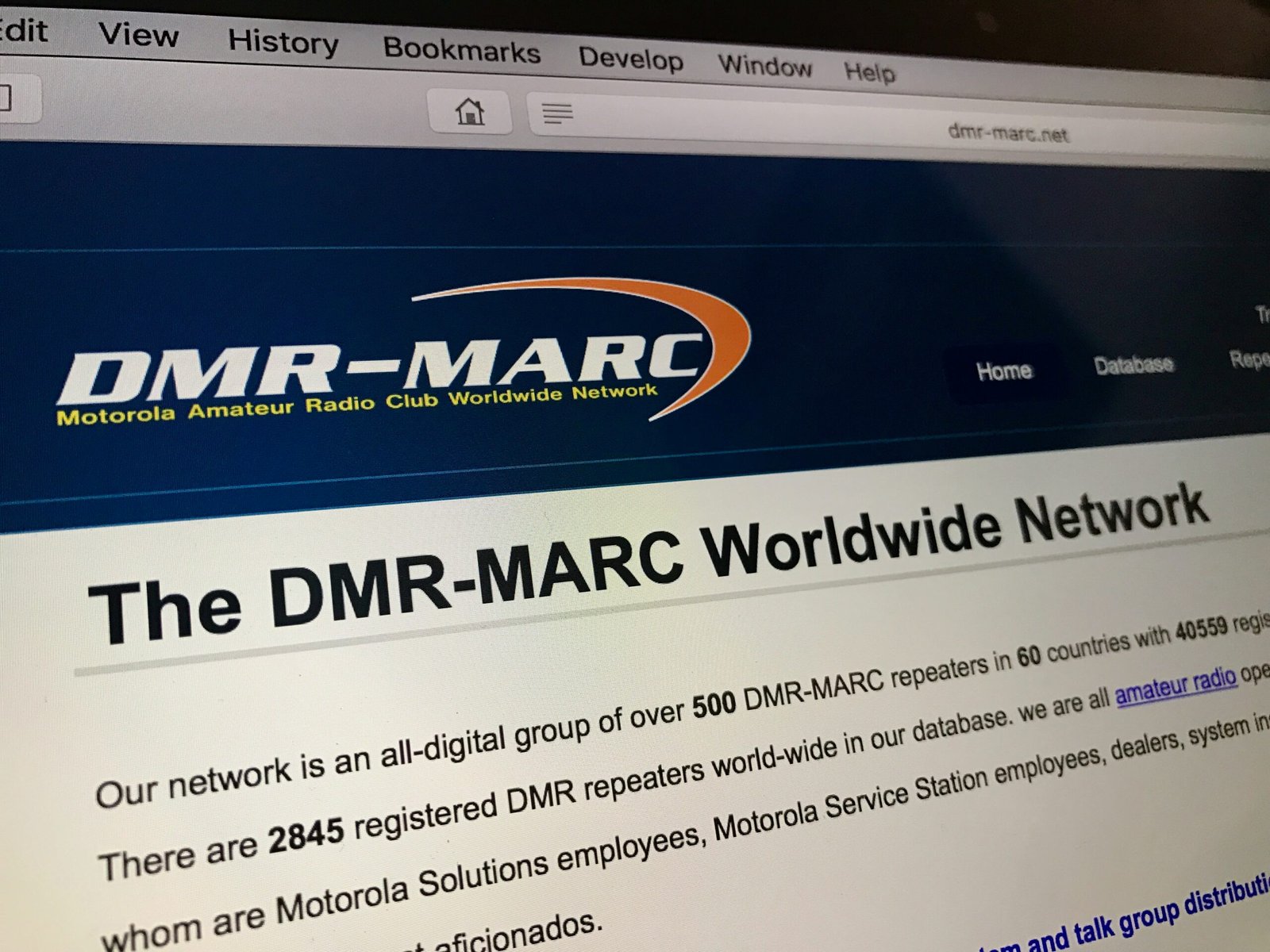

Before BrandMeister became the global open network we know today, there was DMR-MARC – the original worldwide DMR backbone that brought digital voice to the amateur bands. Created by Motorola engineers and early adopters, it linked hundreds of repeaters across continents to form the first truly international digital network for hams. This guide explains how DMR-MARC began, how it works, and why it still matters in amateur radio’s digital evolution.
1 Overview of the DMR-MARC Network
If you’ve ever programmed a DMR radio, chances are you’ve seen talkgroups that trace their roots to DMR-MARC – short for the Digital Mobile Radio – Motorola Amateur Radio Club.
Launched in the early 2010s by Motorola engineers who were also active hams, DMR-MARC became the first coordinated, worldwide DMR network for amateur use. It proved that a commercial digital standard originally designed for business communications could be repurposed to link amateur repeaters across countries and continents with crisp, reliable audio.
From the beginning, DMR-MARC emphasized structured network design and dependable performance.
Built on the C-Bridge linking system developed by Rayfield Communications, the network interconnected Motorola MOTOTRBO repeaters into one coordinated global backbone. This allowed operators to key up a talkgroup in Toronto and be heard in Tokyo – often with lower latency and higher clarity than traditional HF propagation could deliver.
2 From Motorola Club to Global Network
The story of DMR-MARC begins inside Motorola’s own amateur radio community. In the late 2000s, several engineers began experimenting with the company’s professional DMR equipment on amateur frequencies.
Their success inspired the creation of a coordinated network – one that would allow any licensed ham with access to a DMR repeater to communicate worldwide.
By 2012, the DMR-MARC network had spread from North America to Europe and Asia, becoming the de-facto standard for early DMR repeater linking.
Its structured approach ensured interoperability between regions, and its administrators coordinated talkgroup assignments globally to prevent conflicts.
For many years, if you talked on Talkgroup 1 Worldwide or Talkgroup 3 North America, you were talking on DMR-MARC.
3 How the DMR-MARC Network Works
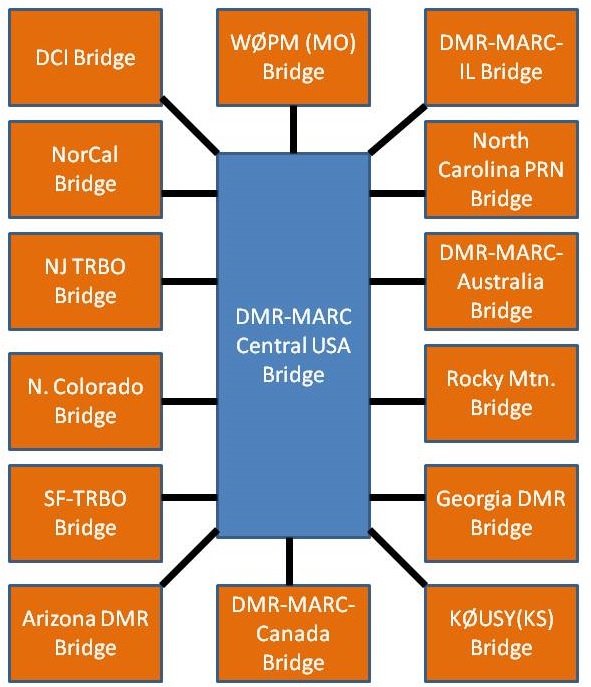
At its core, DMR-MARC is a network of interconnected C-Bridge servers that route voice and data between Motorola-based repeaters. Each repeater connects to a regional bridge, which in turn links to others to form a worldwide mesh.
Unlike BrandMeister, DMR-MARC does not allow direct personal hotspot connections – it’s a repeater-to-repeater system, emphasizing RF-based access and coordinated network control.
Each DMR-MARC repeater operates two time slots:
- Time Slot 1 (TS1): Typically used for wide-area and international talkgroups.
- Time Slot 2 (TS2): Reserved for local and regional traffic.
The network uses Color Codes (analogous to CTCSS tones) to identify repeaters and maintain proper channel access. With a standard talkgroup plan, operators can program their radios knowing exactly which time slot and talkgroup combination to use anywhere in the world.
4 DMR-MARC Talkgroups You Should Know
Talkgroups are the lifeblood of DMR-MARC, providing organized channels for worldwide, national, and local communications. Here are some of the most widely used groups on the network:
| Talkgrp | Name | Use | Notes |
|---|---|---|---|
| 1 | Worldwide | Global calling | Main international TG. |
| 2 | Europe | Regional calling | Used across EU region. |
| 3 | North America | Regional calling | Main TG for U.S. & Canada. |
| 13 | Worldwide English | International | English-language worldwide TG. |
| 302 | Canada | National | Main Canadian TG. |
| 3100 | USA Nationwide | National | Primary U.S. calling TG. |
| 235 | UK | National | Common UK-wide TG. |
| 262 | Germany | National | German-language TG. |
| 9990 | Parrot | Audio test | Playback your own transmission. |
These talkgroups are coordinated across regions to ensure consistent usage. While DMR-MARC repeaters don’t support dynamic linking like BrandMeister, the benefit is predictability: you always know which talkgroups are active and where they lead.
5 What Makes DMR-MARC Different
DMR-MARC was built around a few simple principles – structure, reliability, and consistency. While newer networks like BrandMeister offer more flexibility, DMR-MARC remains valued for its disciplined architecture and rock-solid performance.
The key advantages of the DMR-MARC network include:
- Structured management: Regional coordinators oversee repeater linking and talkgroup routing.
- Commercial-grade infrastructure: Built on Motorola’s proven C-Bridge platform for high reliability.
- Defined talkgroups: Global consistency for nets and events.
- RF-only access: Encourages repeater use and radio-to-radio communication.
- Stable performance: Predictable routing and low network latency.
6 DMR-MARC in Canada and Beyond
In Canada, DMR-MARC Canada maintains a robust repeater network linking provinces from coast to coast. Talkgroup 302 serves as the national calling channel, with regional and local talkgroups on Time Slot 2 for areas such as Ontario, Quebec, and the Atlantic provinces. Similar networks operate under the DMR-MARC banner in Europe, South America, and Asia, each following the same coordinated framework.
Today, many DMR-MARC repeaters also bridge selectively to BrandMeister or TGIF networks, creating a hybrid environment that combines DMR-MARC’s stability with the flexibility of newer systems.
7 Getting Connected
To use the DMR-MARC Network, you’ll need access to a participating repeater in your area – personal hotspots are not supported. Each regional coordinator manages access and routing, ensuring system reliability.
- Register for a DMR ID: Every user must have a unique ID at RadioID.net.
- Find a DMR-MARC Repeater: Browse the repeater directory at RadioID.net.
- Program Your Radio: Add the required talkgroups, color codes, and time slots as shown in your repeater’s notes.
8 Quick Facts
| Network Name | DMR-MARC Network |
|---|---|
| Scope | Global (repeater-based) |
| Founded | Early 2010s |
| Technology | DMR (C-Bridge / Motorola) |
| Access | Repeaters only (no hotspots) |
| Popular Talkgroups | 1, 3, 13, 302, 3100, 235, 262 |
| Website | dmr-marc.net |
| Typical Time Slot Use | TS1 = Wide-area, TS2 = Local |
| Registration | RadioID.net |
9 In Summary
The DMR-MARC network laid the foundation for modern digital amateur communication. By adapting commercial DMR infrastructure to the ham community, it proved that digital voice could reliably unite hams across continents. Even as newer networks like BrandMeister emerged, DMR-MARC remains a benchmark for stability, organization, and technical excellence.
From Chicago to Cape Town, London to Lima – DMR-MARC continues to connect operators worldwide, carrying on the original spirit of digital radio experimentation that started it all.
10 Related Reading on EvoHam
- DMR for Beginners: A Step-by-Step Guide for New Hams
- DMR vs Fusion vs D-Star: How to Choose the Right Digital Ham Radio Mode
- What Is BrandMeister DMR? How Hams Connect Worldwide
Some links in this article are affiliate links. If you purchase through them, EvoHam may earn a small commission – at no extra cost to you. Your support helps us keep creating detailed ham radio guides, reviews, and resources for the amateur radio community.