




Curious about the shift from analog FM to modern digital modes? This quick guide breaks down the key differences between analog vs. digital voice in ham radio – from how each mode carries your audio to what it means for coverage, sound quality, features, and everyday operating. Whether you’re new to the hobby or thinking about upgrading your rig, here’s what every ham should know before choosing a mode.
When most of us picture ham radio, we imagine the warm hiss of an analog signal or the comforting crackle of FM voice on a handheld. But over the past two decades, a quiet revolution has been reshaping amateur radio communications: digital voice.
For most of amateur radio’s history, voice communication meant one thing: analog. From the early days of AM to the rise of FM repeaters and single sideband (SSB) on HF, we’ve been speaking to each other as modulated waves, our voices carried over the air much as they were spoken.
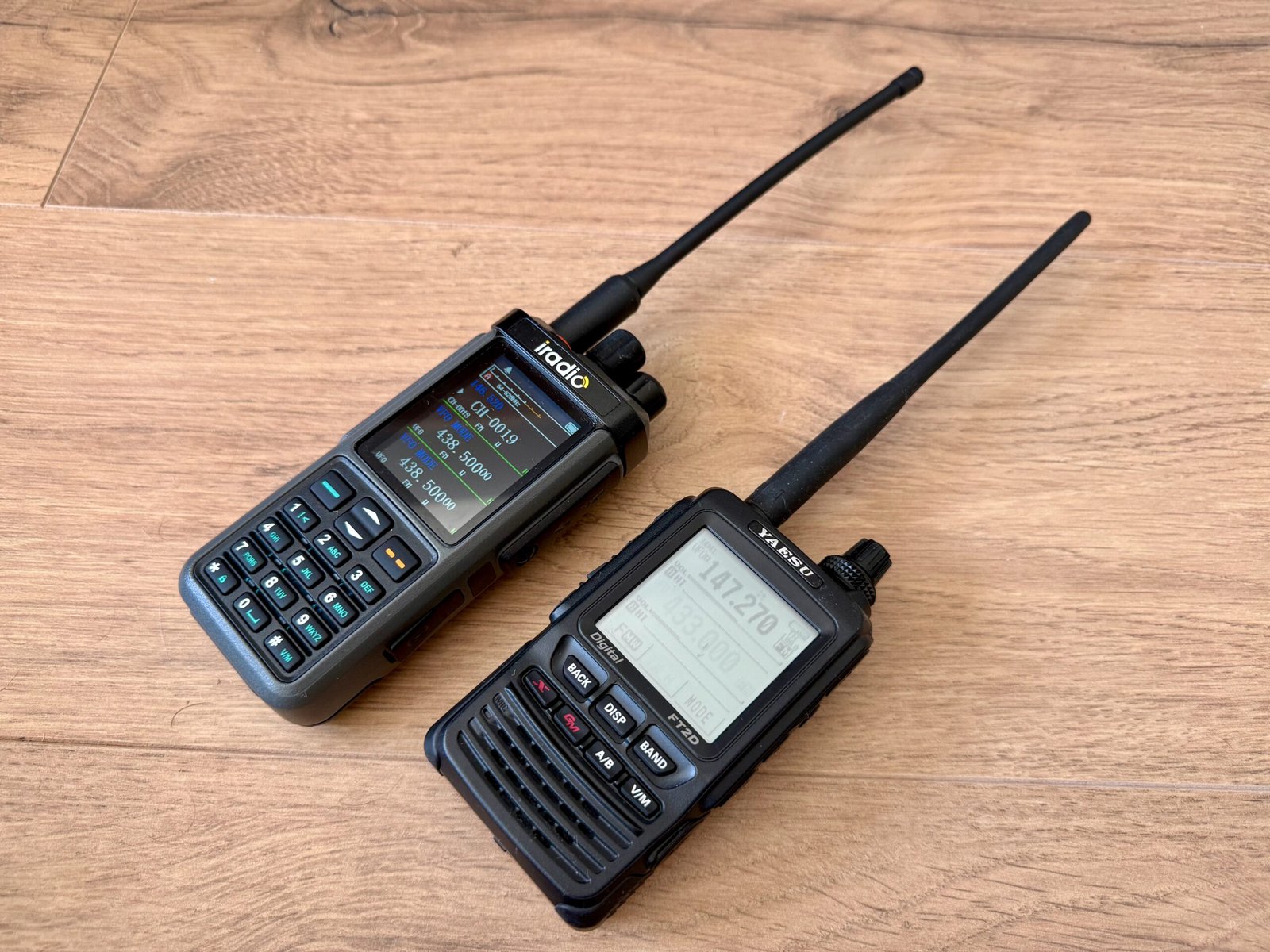
That began to change in the late 1990s and early 2000s with the arrival of digital voice (DV) technologies – first in commercial and public-safety radio, then gradually in the amateur bands. Today, if you browse the catalog of any ham radio retailer, you’ll find DMR, D-STAR, Yaesu System Fusion (commonly called “Fusion”) radios, sitting right beside traditional FM handhelds.
For new licensees, this can be confusing. Even seasoned operators sometimes wonder whether they should stick with the tried-and-true analog rigs or make the leap into the digital world. Understanding the fundamental differences between the two is the key to making the right choice for your operating style.
1 Analog vs Digital Voice: A Tale of Two Signals
The first difference lies in how your voice gets from the microphone to the antenna.
With analog voice, the process is direct and almost elegant in its simplicity: your microphone converts your voice into an electrical signal, and that signal modulates the carrier wave – FM, AM, or SSB, so what goes out over the air is essentially your original waveform.
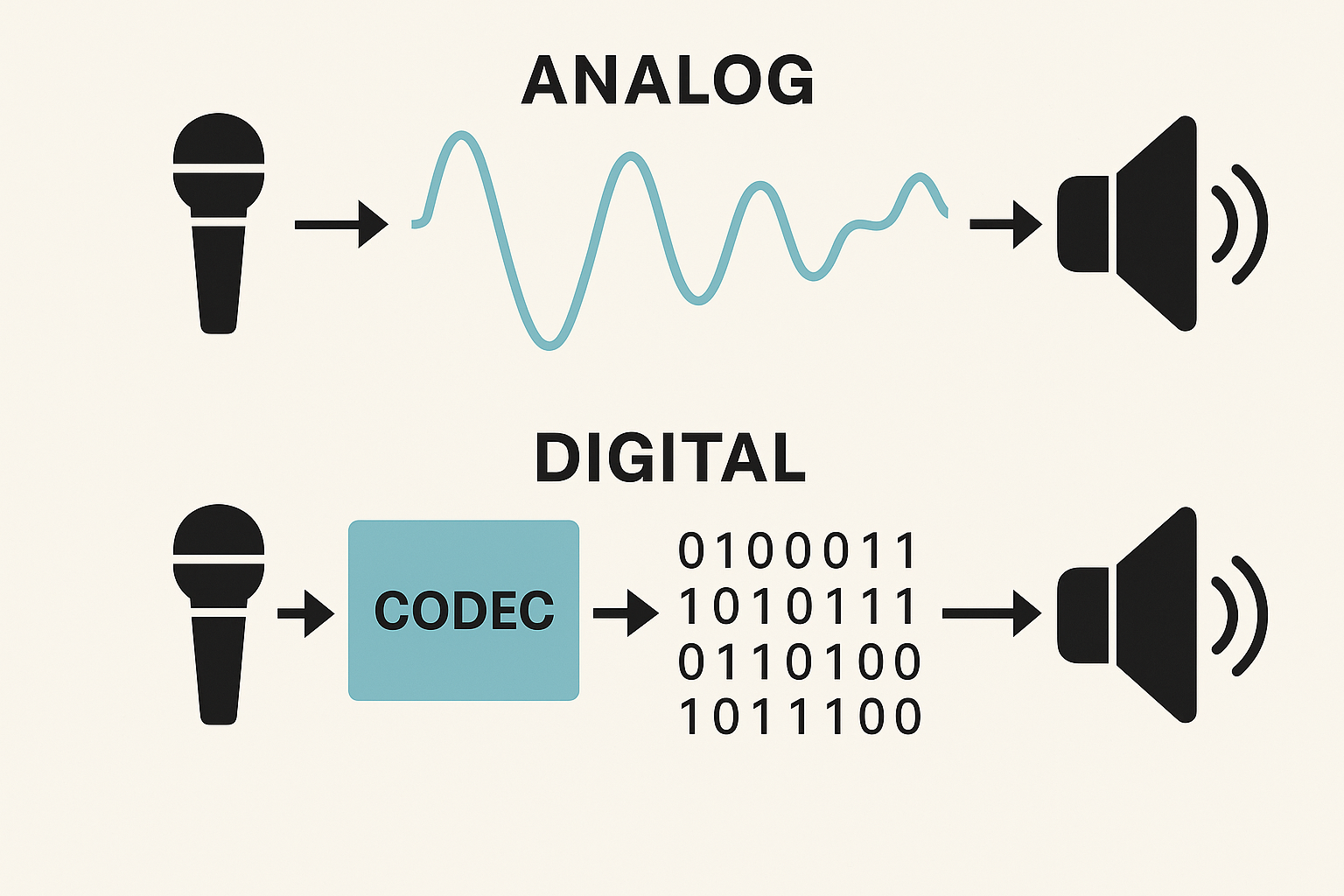
Digital voice adds a crucial step. Before hitting the airwaves, your speech is digitized – compressed by a codec (like AMBE) into a stream of 1s and 0s. That stream is then transmitted using a digital modulation scheme such as 4-FSK.
You might think of analog as speaking into a telephone from the 1950s, and digital as making a call over Zoom: your voice is turned into data before being sent along.
2 How It Sounds at the Other End
If you’ve ever chased a weak analog signal on a VHF repeater, you know how it fades, more hiss, more static, sometimes scratchy but still understandable. Analog degrades gradually, often allowing you to copy a call sign or message even when the signal is faint.
Digital behaves very differently. Within range of a strong signal, it can sound impressively clear and noise-free, almost as if the person is standing next to you. But as the signal weakens, the clarity doesn’t fade; instead, it falls off a cliff – dropping out entirely or turning into the robotic “R2-D2” garble that many hams have heard at the fringe of coverage.
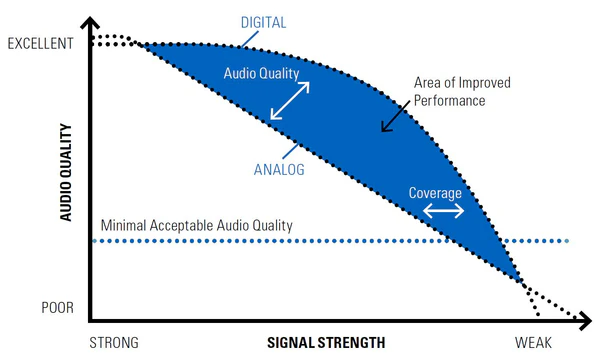
Another subtle but important difference is audio character. Most digital modes use voice compression codecs to save bandwidth – DMR in particular is known for its heavy compression. While the QSO may be crystal clear and free of hiss, the audio often sounds a little “processed,” less natural and not as true to the speaker’s real voice compared to FM.
This makes digital sound better most of the time in strong-signal areas, but in weak-signal situations, analog still has the edge.
3 Coverage and Connectivity
On simplex or local repeater channels, analog and digital follow the same laws of physics: they’re both limited by line-of-sight propagation and antenna height. But the way they behave at the edge of that coverage differs because of the audio characteristics just described.
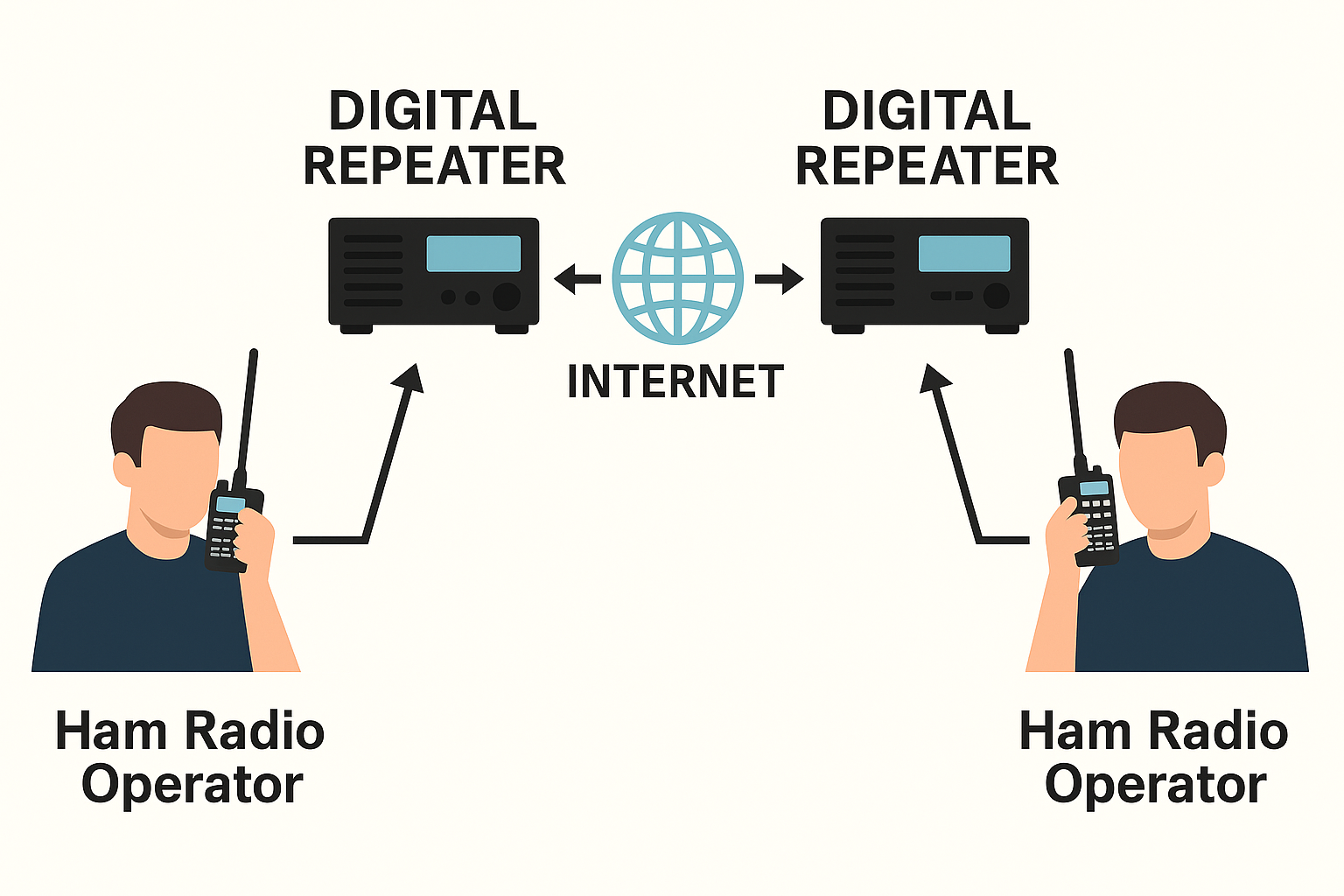
Where digital shines is in networked repeaters. A single DMR, D-STAR, or Fusion repeater can link into wide-area or worldwide systems through the internet, letting a handheld in a small town reach operators across the globe. Analog repeaters generally remain local unless tied into a separate voice-over-IP system like Echolink, IRLP or AllStar.
4 Beyond Voice: Extra Features
Perhaps the most exciting thing about digital voice modes is that they carry more than just audio. Most DV systems embed small bursts of data right alongside your speech.
That data can automatically send your call sign, or let your radio show who’s transmitting without the need for manual voice ID. Many DV radios also support GPS location sharing, short text messages, and even group communication through talkgroups, reflectors, or rooms – features that simply don’t exist in traditional analog FM without extra hardware.
5 The Compatibility Challenge
One of the reasons analog remains the universal fallback is its interoperability. Any two FM handhelds on the same frequency can talk to each other.
Digital voice is more fragmented. A DMR radio can’t talk directly to a D-STAR or System Fusion radio unless they’re connected through special cross-mode gateways. That’s why many hams decide which digital mode to use based on what local repeaters or clubs support.
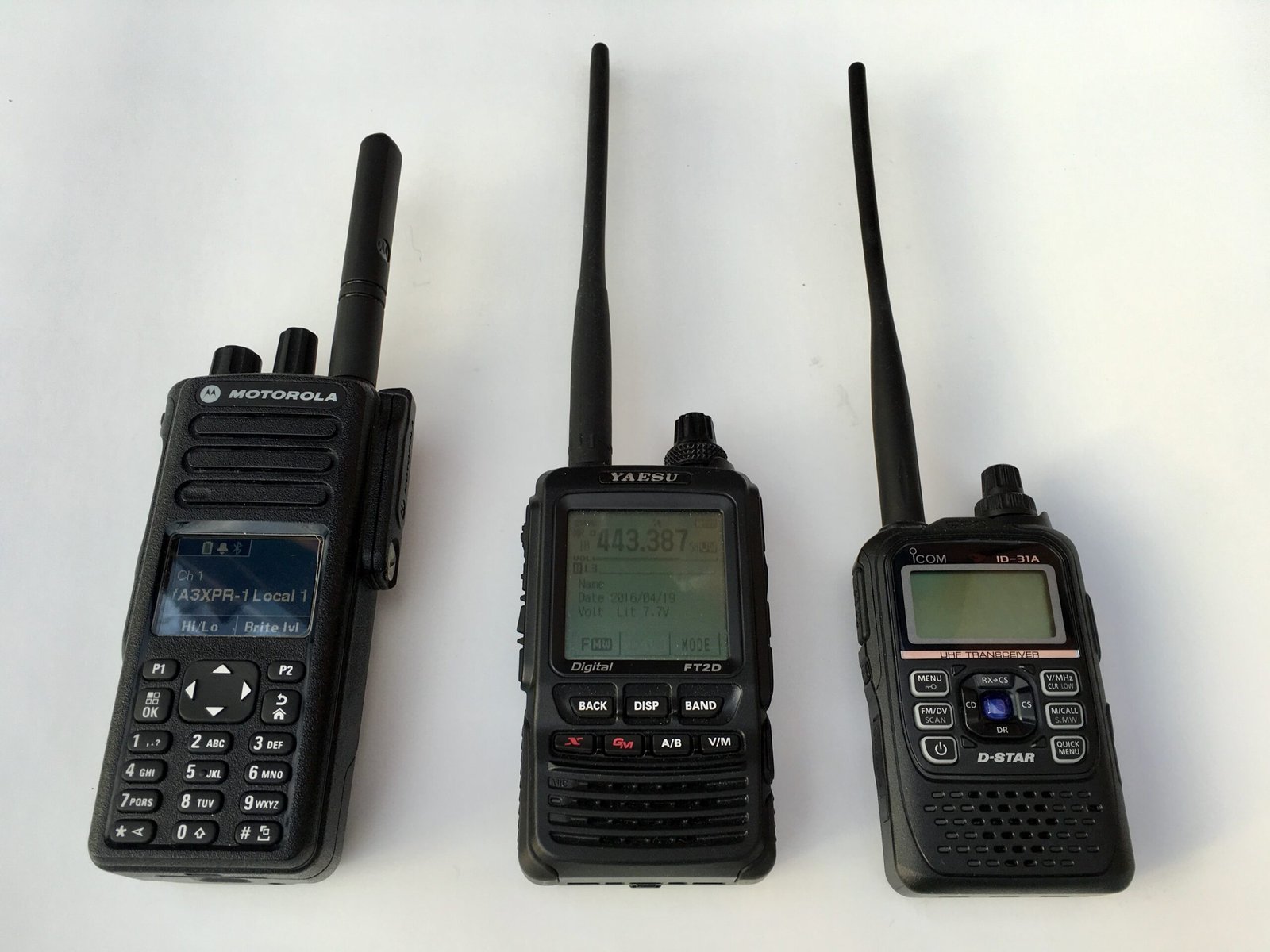
Fortunately, most modern digital ham radios also include FM capability. That means you don’t have to pick one mode over the other – you can use the same handheld or mobile rig to join your local FM repeater nets, then switch over to digital talkgroups or reflectors when you want to explore linked networks. This dual-mode flexibility makes it easier to experiment with digital voice while still staying connected to the analog backbone of your local ham community.
In an emergency, that universal compatibility and graceful degradation of analog often makes it the more reliable choice.
6 Cost and Gear Considerations
A basic analog FM handheld can be had for as little as $30–$50 USD, making it the most affordable entry into amateur voice communication.
Digital radios, by contrast, typically cost more: budget DMR handhelds start around $80–$150 USD, mid-range System Fusion or D-STAR mobiles around $200–$400 USD, and high-end multi-mode rigs often exceed $500 USD. Digital also adds some complexity, as most radios require programming software and a cable to set up contacts, talkgroups, or reflectors.
One thing to consider when comparing price to usefulness: many traditional analog FM repeaters are quiet these days as more hams have migrated to digital networks. By contrast, digital repeaters and personal hotspots can tap into worldwide talkgroups and reflectors, where there’s nearly always activity to listen to or join. For many operators, this extra activity justifies spending a little more on a digital-capable rig.
7 Picking the Right Tool for the Job
So which should you choose? The answer depends on your goals:
- If you value straightforward operation, go with analog FM. It’s easy to use, universally compatible, and still the standard on many local repeaters and simplex channels.
- If you’re new to the hobby, curious about new technology, choose a digital-capable radio. You’ll unlock features and global connectivity that analog can’t offer, while still being able to use FM for local contacts.
- If you’re involved in emergency communications, keep at least one analog FM rig in your go-bag. Simple gear is often the most resilient when infrastructure is down.
Ultimately, the best radio is the one that keeps you active on the air – whether that’s a budget-friendly FM handheld, a feature-rich digital rig, or both. Of course, you can never have too many radios!
8 Final Thoughts
Rather than seeing analog and digital as rivals, it’s better to think of them as complementary tools in your ham shack. Analog offers universality and reliability, while digital brings clearer audio, powerful networking, and extra data features when infrastructure is available.
For many operators, the smartest choice is to have at least one of each. But if you’re just starting out, let your local repeater scene guide your decision. What’s supported in your area will often determine which mode is most valuable to you.
9 Related Reading on EvoHam
- DMR for Beginners: A Step-by-Step Guide for New Hams
- DMR vs Fusion vs D-Star: How to Choose the Right Digital Ham Radio Mode
- D-STAR for Beginners: A Step-by-Step Guide for New Hams
Some links in this story are affiliate links. If you choose to buy through them, EvoHam may earn a small commission – at no extra cost to you. It helps support more stories like this.