• About EvoHam
  • Contact Us
Evoham.com
  • Home
  • News
    • All
    • D-STAR News
    • DMR News
    • Equipment News
    • FreeDV News
    • M17 News
    • Operating News
    • Yaesu Fusion News
    Laptop screen showing the EvoHam.com website open in a web browser, highlighting the site’s launch.

    EvoHam.com Is Live – And We’re Just Getting Started

    Smartphone displaying SmartSDR waterfall and spectrum view, illustrating early FreeDV 2.1.0 SmartSDR support.

    FreeDV 2.1.0 Release Adds SmartSDR Support

    Prototype M17 LinHT Handheld on a test bench connected to RF test equipment during development.

    M17 LinHT Handheld: Open-Source Radio Progress Update

    NEW RADIO, DMR, D-STAR, C4FM, System Fusion, mobile, radio, ham radio, amateur radio, VA3XPR, dual-band, multi-mode, FM, chassis

    New Radio (2016): Multimode Ham Radio for DMR, D-STAR & C4FM

    FreeDV 2.0.2 user interface showing the RADEV1 digital voice modem and live HF signal waterfall.

    FreeDV 2.0.2 Release: Open-Source HF Digital Voice Update

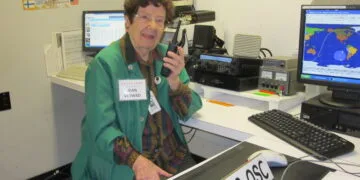
    Jean Moffett, VE3WAD, operating a Digital Mobile Radio (DMR) setup at the Ontario Science Centre amateur radio station, demonstrating the technology to visitors.

    Ontario Science Centre Revolutionizes Ham Radio with DMR

    • DMR News
    • Yaesu Fusion News
    • D-STAR News
    • Equipment News
    • Operating News
    • FreeDV News
    • M17 News
    • P25 News
  • Reviews
    • All
    • DMR Reviews
    • Mobile Radio Reviews
    • P25 Reviews
    • Portable Radio Reviews
    • Yaesu Fusion Reviews
    Hytera PD782 UHF DMR handheld showing colour LCD display and keypad

    Hytera PD782 Review (2025): Rugged Mid-Tier DMR Radio

    Yaesu FT2DR review - dual-band C4FM Fusion handheld radio showing touchscreen display

    Yaesu FT2DR Review (2025): Still Worth It Today?

    TYT MD-380 DMR handheld radio showing its colour LCD display and keypad.

    TYT MD-380 Review (2025): A DMR Classic Revisited

    Front view of the Motorola SL300 DMR radio showing its slim design and matrix LED display.

    Motorola SL300 Review (2025): Pocket-Sized DMR Performance

    Motorola XPR7550 IS DMR handheld radio showing blue Intrinsically Safe housing and colour LCD display

    Motorola XPR7550 IS Review (2025): Intrinsically Safe DMR

    Motorola SL7550 UHF DMR handheld radio showing colour LCD screen and keypad layout

    Motorola SL7550 Review (2025): Ultra-Slim DMR Handheld

    • DMR
    • Yaesu Fusion
    • D-STAR
    • P25
    • NXDN
    • Portable Radios
    • Mobile Radios
    • Hotspots
    • Repeaters
  • Guides
    • All
    • D-STAR Guides
    • DMR Guides
    • Experimental & SDR Radio Guides
    • FreeDV Guides
    • M17 Guides
    • NXDN Guides
    • Operating Guides
    • P25 Guides
    • Repeater Guides
    • TETRA Guides
    • Yaesu Fusion Guides
    NA5B WebSDR interface with HF waterfall display, illustrating what users see when listening to FreeDV using a FreeDV WebSDR. Photo credit: NA5B

    FreeDV WebSDR: Listen to FreeDV Online Without an HF Radio

    Prototype LinHT Linux-based SDR handheld radio displayed with members of the development team. Photo credit: CQ DL / DARC

    LinHT for Beginners: A Linux-Based Experimental SDR Radio

    TETRA ham radio example of a Motorola MTP8000Ex Series TETRA portable radio used aboard a German navy vessel

    TETRA Ham Radio: A Beginner’s Guide

    Yaesu System Fusion radio being programmed, illustrating ham radio digital voice terminology and digital mode setup

    Ham Radio Digital Voice Terminology Explained for Beginners

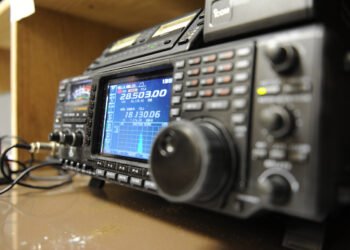
    HF radio displaying an SSB spectrum, used for operating FreeDV Frequencies on amateur HF bands. U.S. Air Force photo by Airman 1st Class Omari Bernard.

    FreeDV Frequencies (HF): Where to Call on 20m, 40m & 80m

    Yaesu FT-950 HF transceiver tuned for digital voice operation using FreeDV, shown as the hero image for the FreeDV for Beginners guide.

    FreeDV for Beginners: How to Use Digital Voice on HF

    • DMR Guides
    • FreeDV Guides
    • Operating Guides
    • YAESU FUSION
    • D-STAR
    • P25
    • M17 Guides
    • NXDN
    • Destination Guides
    • Repeater Guides
    • Software & Programming Guides
  • Resources
    • All
    • DMR Resources
    • Firmware Resources
    • FreeDV Resources
    • Mapping Software
    • Programming Software Resources
    • RF Tools
    • Simplex Frequency Resources
    HF radio displaying an SSB spectrum, used for operating FreeDV Frequencies on amateur HF bands. U.S. Air Force photo by Airman 1st Class Omari Bernard.

    FreeDV Frequencies (HF): Where to Call on 20m, 40m & 80m

    Baofeng DM32UV and AnyTone AT-D878UVII Plus handheld radios beside a laptop running DMR Programming Software.

    DMR Programming Software and Firmware for Ham Radios

    Hytera TD580 DMR handheld radio showing 441.000 MHz DMR simplex frequency on its display for ham radio use.

    DMR Simplex Frequencies Explained: CCs, Talkgroups & Use

    RF coverage map showing predicted signal strength and coverage area from a central transmitter location created with Radio Mobile Online.

    How to Create RF Coverage Maps Using Radio Mobile

    • DMR Resources
    • Yaesu Fusion Resources
    • D-STAR Resources
    • NXDN Resources
    • P25 Resources
  • Editorial
    A laptop showing the EvoHam Community ham radio digital voice forum with categories for FreeDV, DMR and Yaesu System Fusion.

    Join the EvoHam Community: A Ham Radio Digital Voice Forum

    International Space Station orbiting above Earth at sunrise, illustrating the context for the ISS digital voice discussion. Photo by ESA.

    ISS Digital Voice: Why It Isn’t Here Yet – and What’s Next

    Digital voice handheld radio sitting on top of the original Radio Amateur’s Code document.

    The Modern Radio Amateur’s Code

    Don Trynor VA3XFT working on EvoHam ham radio digital voice content at a laptop with a DMR handheld radio on the table.

    Why EvoHam Exists – A New Home for Ham Radio Digital Voice

  • Community
No Result
View All Result
  • Home
  • News
    • All
    • D-STAR News
    • DMR News
    • Equipment News
    • FreeDV News
    • M17 News
    • Operating News
    • Yaesu Fusion News
    Laptop screen showing the EvoHam.com website open in a web browser, highlighting the site’s launch.

    EvoHam.com Is Live – And We’re Just Getting Started

    Smartphone displaying SmartSDR waterfall and spectrum view, illustrating early FreeDV 2.1.0 SmartSDR support.

    FreeDV 2.1.0 Release Adds SmartSDR Support

    Prototype M17 LinHT Handheld on a test bench connected to RF test equipment during development.

    M17 LinHT Handheld: Open-Source Radio Progress Update

    NEW RADIO, DMR, D-STAR, C4FM, System Fusion, mobile, radio, ham radio, amateur radio, VA3XPR, dual-band, multi-mode, FM, chassis

    New Radio (2016): Multimode Ham Radio for DMR, D-STAR & C4FM

    FreeDV 2.0.2 user interface showing the RADEV1 digital voice modem and live HF signal waterfall.

    FreeDV 2.0.2 Release: Open-Source HF Digital Voice Update

    Jean Moffett, VE3WAD, operating a Digital Mobile Radio (DMR) setup at the Ontario Science Centre amateur radio station, demonstrating the technology to visitors.

    Ontario Science Centre Revolutionizes Ham Radio with DMR

    • DMR News
    • Yaesu Fusion News
    • D-STAR News
    • Equipment News
    • Operating News
    • FreeDV News
    • M17 News
    • P25 News
  • Reviews
    • All
    • DMR Reviews
    • Mobile Radio Reviews
    • P25 Reviews
    • Portable Radio Reviews
    • Yaesu Fusion Reviews
    Hytera PD782 UHF DMR handheld showing colour LCD display and keypad

    Hytera PD782 Review (2025): Rugged Mid-Tier DMR Radio

    Yaesu FT2DR review - dual-band C4FM Fusion handheld radio showing touchscreen display

    Yaesu FT2DR Review (2025): Still Worth It Today?

    TYT MD-380 DMR handheld radio showing its colour LCD display and keypad.

    TYT MD-380 Review (2025): A DMR Classic Revisited

    Front view of the Motorola SL300 DMR radio showing its slim design and matrix LED display.

    Motorola SL300 Review (2025): Pocket-Sized DMR Performance

    Motorola XPR7550 IS DMR handheld radio showing blue Intrinsically Safe housing and colour LCD display

    Motorola XPR7550 IS Review (2025): Intrinsically Safe DMR

    Motorola SL7550 UHF DMR handheld radio showing colour LCD screen and keypad layout

    Motorola SL7550 Review (2025): Ultra-Slim DMR Handheld

    • DMR
    • Yaesu Fusion
    • D-STAR
    • P25
    • NXDN
    • Portable Radios
    • Mobile Radios
    • Hotspots
    • Repeaters
  • Guides
    • All
    • D-STAR Guides
    • DMR Guides
    • Experimental & SDR Radio Guides
    • FreeDV Guides
    • M17 Guides
    • NXDN Guides
    • Operating Guides
    • P25 Guides
    • Repeater Guides
    • TETRA Guides
    • Yaesu Fusion Guides
    NA5B WebSDR interface with HF waterfall display, illustrating what users see when listening to FreeDV using a FreeDV WebSDR. Photo credit: NA5B

    FreeDV WebSDR: Listen to FreeDV Online Without an HF Radio

    Prototype LinHT Linux-based SDR handheld radio displayed with members of the development team. Photo credit: CQ DL / DARC

    LinHT for Beginners: A Linux-Based Experimental SDR Radio

    TETRA ham radio example of a Motorola MTP8000Ex Series TETRA portable radio used aboard a German navy vessel

    TETRA Ham Radio: A Beginner’s Guide

    Yaesu System Fusion radio being programmed, illustrating ham radio digital voice terminology and digital mode setup

    Ham Radio Digital Voice Terminology Explained for Beginners

    HF radio displaying an SSB spectrum, used for operating FreeDV Frequencies on amateur HF bands. U.S. Air Force photo by Airman 1st Class Omari Bernard.

    FreeDV Frequencies (HF): Where to Call on 20m, 40m & 80m

    Yaesu FT-950 HF transceiver tuned for digital voice operation using FreeDV, shown as the hero image for the FreeDV for Beginners guide.

    FreeDV for Beginners: How to Use Digital Voice on HF

    • DMR Guides
    • FreeDV Guides
    • Operating Guides
    • YAESU FUSION
    • D-STAR
    • P25
    • M17 Guides
    • NXDN
    • Destination Guides
    • Repeater Guides
    • Software & Programming Guides
  • Resources
    • All
    • DMR Resources
    • Firmware Resources
    • FreeDV Resources
    • Mapping Software
    • Programming Software Resources
    • RF Tools
    • Simplex Frequency Resources
    HF radio displaying an SSB spectrum, used for operating FreeDV Frequencies on amateur HF bands. U.S. Air Force photo by Airman 1st Class Omari Bernard.

    FreeDV Frequencies (HF): Where to Call on 20m, 40m & 80m

    Baofeng DM32UV and AnyTone AT-D878UVII Plus handheld radios beside a laptop running DMR Programming Software.

    DMR Programming Software and Firmware for Ham Radios

    Hytera TD580 DMR handheld radio showing 441.000 MHz DMR simplex frequency on its display for ham radio use.

    DMR Simplex Frequencies Explained: CCs, Talkgroups & Use

    RF coverage map showing predicted signal strength and coverage area from a central transmitter location created with Radio Mobile Online.

    How to Create RF Coverage Maps Using Radio Mobile

    • DMR Resources
    • Yaesu Fusion Resources
    • D-STAR Resources
    • NXDN Resources
    • P25 Resources
  • Editorial
    A laptop showing the EvoHam Community ham radio digital voice forum with categories for FreeDV, DMR and Yaesu System Fusion.

    Join the EvoHam Community: A Ham Radio Digital Voice Forum

    International Space Station orbiting above Earth at sunrise, illustrating the context for the ISS digital voice discussion. Photo by ESA.

    ISS Digital Voice: Why It Isn’t Here Yet – and What’s Next

    Digital voice handheld radio sitting on top of the original Radio Amateur’s Code document.

    The Modern Radio Amateur’s Code

    Don Trynor VA3XFT working on EvoHam ham radio digital voice content at a laptop with a DMR handheld radio on the table.

    Why EvoHam Exists – A New Home for Ham Radio Digital Voice

  • Community
No Result
View All Result
EvoHam
No Result
View All Result
Home Guides NXDN Guides
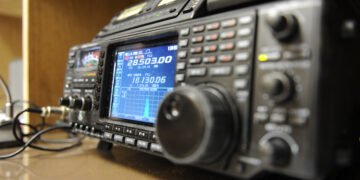
Kenwood NXDN handheld radio with industrial background — hero image for NXDN for Beginners.

A Kenwood NXDN handheld radio used in industrial environments — an example of the commercial-grade gear many hams repurpose for NXDN. Photo credit: Kenwood.

NXDN for Beginners: Why It Works – and Why Few Hams Use It

A practical look at NXDN in ham radio - what it does well, where it fell short, and when it still makes sense today.

Don Trynor, VA3XFT by Don Trynor, VA3XFT
January 13, 2026
Share on FacebookShare on TwitterShare on LinkedInShare on RedditShare on ThreadsShare on WhatsApp

Table of Contents

  • 1. What is NXDN?
  • 2. Why Few Hams Use NXDN
  • 3. When NXDN Still Makes Sense
  • 4. Quick Facts About NXDN
  • 5. How NXDN Works
  • 6. NXDN vs. DMR and Other Digital Voice Modes
  • 7. Getting Started with NXDN (If You Decide to Use It)
  • 8. Finding NXDN Repeater Activity
  • 9. Advantages and Limitations
  • 10. Frequently Asked Questions About NXDN
  • 11. Continue Learning about NXDN
  • 12. Final Thoughts
  • 13. Related Reading on EvoHam

If you’ve been exploring digital voice on the ham bands, you’ve likely come across modes like DMR, Yaesu Fusion, and P25 – each offering more consistent audio quality and better spectrum efficiency than traditional analog FM. But there’s another mode that often flies under the radar: NXDN.

Originally developed by Icom and Kenwood for commercial and public safety communications, NXDN has quietly made its way into ham radio. With its narrow 6.25 kHz and 12.5 kHz channels, it’s remarkably spectrum-efficient while still delivering clear digital audio. Many hams have discovered that surplus commercial radios – especially older NEXEDGE® and IDAS™ models, can be easily adapted for NXDN use on the 2m and 70cm bands.
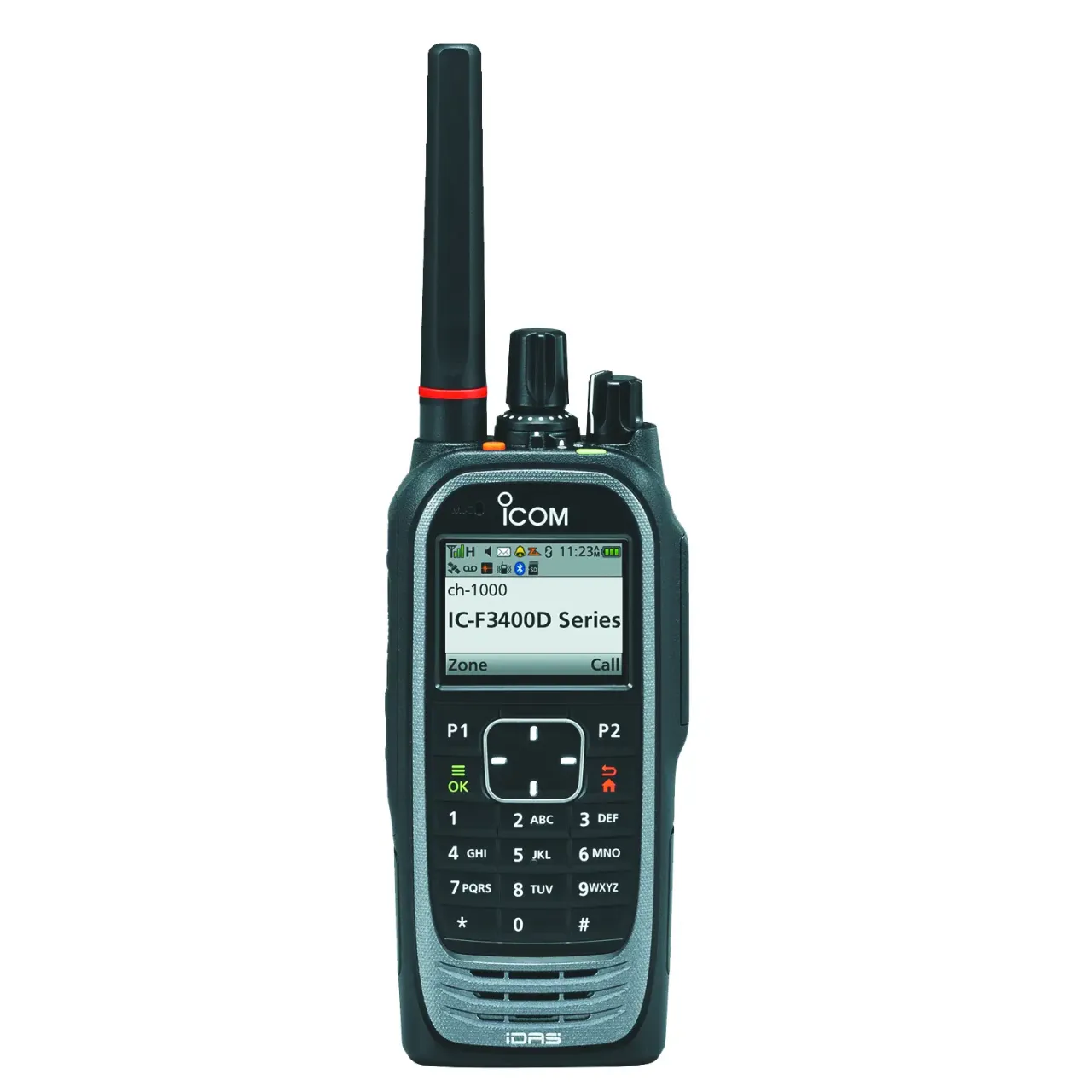
Icom IC-F3400DT IDAS handheld radio supporting NXDN digital voice - featured in the NXDN for Beginners guide.
Icom IC-F3400D handheld — a modern IDAS radio widely used for NXDN in commercial and ham radio applications. Photo credit: Icom.

Unlike open-source projects such as M17, NXDN is a proprietary digital voice mode, but that hasn’t stopped hams from experimenting. Its simplicity, strong audio performance, and interoperability between Kenwood and Icom equipment make it a practical and reliable choice for local and regional digital communication.

Despite its technical strengths, NXDN has remained far less common in amateur radio than modes like DMR – a question this guide will address directly.

1 What is NXDN?

NXDN is a narrowband digital voice and data protocol that uses FDMA (Frequency Division Multiple Access) to transmit one digital voice signal in a 6.25 kHz or 12.5 kHz channel. This efficiency makes it ideal for congested bands where channel spacing is tight. It’s widely used in professional radio systems and has seen limited but sustained use in amateur radio.

NXDN supports two different channel widths – 12.5 kHz and 6.25 kHz, and each has its purpose. A 12.5 kHz channel, known as NXDN96, is the most common choice and provides excellent audio quality with wide compatibility across NXDN-capable radios.

The narrower 6.25 kHz mode, called NXDN48, is where NXDN’s spectrum efficiency really shines. By using half the bandwidth of a standard narrowband channel, NXDN48 allows two independent 6.25 kHz channels to fit inside the same 12.5 kHz allocation – a major advantage in crowded commercial bands or locations with many users. While amateurs typically use 12.5 kHz for simplicity, 6.25 kHz remains a useful option for experimentation or when channel space is limited.

Diagram showing NXDN 12.5 kHz mode with one voice channel and NXDN 6.25 kHz mode with two separate 6.25 kHz channels inside a 12.5 kHz allocation - NXDN for Beginners.
NXDN channel spacing comparison: a single 12.5 kHz NXDN96 channel vs. two independent 6.25 kHz NXDN48 channels that can fit within the same 12.5 kHz allocation. Each 6.25 kHz channel requires its own repeater.

It’s also worth noting that while NXDN is very spectrum-efficient, it does not offer the same hardware efficiency as DMR. Because NXDN uses FDMA, each 6.25 kHz channel requires its own repeater. In other words, you can fit two NXDN channels inside a 12.5 kHz block, but doing so still requires two separate repeaters – unlike DMR, which provides two simultaneous voice slots within a single 12.5 kHz repeater. This is an important distinction for clubs and experimenters planning ham radio NXDN deployments.

In the commercial world, NXDN appears under the brand names Kenwood NEXEDGE® and Icom IDAS™. Within ham radio, operators use it primarily for simplex and repeater communications, taking advantage of the excellent audio quality and narrow-channel performance. Programming software and cables for NXDN radios are readily available, making it accessible even to newcomers.

2 Why Few Hams Use NXDN

NXDN is technically sound, spectrum-efficient, and widely used in commercial and public-safety radio systems. Yet in amateur radio, it has remained a niche digital voice mode. There isn’t a single reason for this – it’s the result of several practical and historical factors.

Limited infrastructure is the biggest barrier. Unlike DMR, which benefits from large, globally linked networks and thousands of repeaters, NXDN has far fewer amateur radio repeaters and almost no large-scale worldwide linking. In many regions, there may be no active NXDN repeaters at all, making the mode difficult for newcomers to try.

Radio availability also plays a role. Most NXDN-capable radios were originally designed for commercial use by manufacturers like Kenwood and Icom. These radios are often more expensive on the used market, require proprietary programming software, and are less beginner-friendly than modern amateur-focused DMR or Yaesu Fusion radios.

Timing mattered. NXDN arrived in amateur radio around the same period that DMR was rapidly expanding. DMR benefited from strong community momentum, open talkgroup networks, affordable radios, and broad repeater deployment. Once clubs and individuals committed to DMR infrastructure, there was little incentive to add another digital voice ecosystem.

Finally, NXDN lacks a clear “killer feature” for most hams. While its narrowband efficiency is valuable in commercial systems, amateur radio operators are rarely spectrum-constrained in the same way. For many hams, DMR, D-STAR, or Fusion already meet their needs for digital voice, networking, and experimentation.

None of this means NXDN is obsolete – only that it fills a narrower role in amateur radio than some other digital voice modes.

3 When NXDN Still Makes Sense

Despite its limited adoption in amateur radio, NXDN can still be a practical and enjoyable digital voice mode in the right circumstances. For some operators, it remains a perfectly reasonable choice.

If you already own NXDN-capable radios, especially surplus commercial equipment from Kenwood or Icom, NXDN may be the most economical option. Many hams discover NXDN through radios originally purchased for commercial or professional use, and there is little reason to abandon capable hardware simply because the mode is less common.

In regions with active NXDN repeaters or clubs, the mode can be very effective. Some areas have long-established NXDN repeaters that continue to see regular use, often with a close-knit group of operators who prefer its audio characteristics and simplicity.

For hams who value simplicity over networking, NXDN offers a more straightforward operating experience. Without large global talkgroup networks, contacts tend to be local and intentional, which some operators find refreshing compared to highly networked digital voice systems.

As a learning platform for digital voice, NXDN is useful for understanding core concepts such as FDMA channelization, narrowband operation, and commercial radio workflows. For technically curious hams, it provides insight into how professional digital voice systems are designed and deployed.

For local or tactical communications, NXDN’s narrow bandwidth and predictable behavior can be advantageous. While spectrum efficiency is rarely a limiting factor in amateur radio, NXDN performs reliably in situations where consistent audio and clean channel separation are priorities.

NXDN may never achieve the popularity of DMR or other digital voice modes, but for the right operator and the right environment, it remains a capable and relevant option.

4 Quick Facts About NXDN

AcronymNXDN (Next Generation Digital Narrowband)
Developed byIcom and Kenwood (marketed as NEXEDGE® and IDAS™)
TechnologyFDMA digital voice (6.25 kHz or 12.5 kHz channel spacing)
Typical UseCommercial and public-safety communications, increasingly used by radio amateurs
Bandwidth EfficiencyHigh - allows two voice channels in 12.5 kHz
Compatible GearIcom IC-F series, Kenwood NX-3000 series
Amateur BandsCommonly 2m and 70cm (region-dependent)

5 How NXDN Works

NXDN digitizes your voice using an AMBE+2 codec, then modulates it onto a narrowband RF carrier using 4-level FSK (4FSK). It supports both voice and limited data messaging, with optional features such as GPS position reporting and status text. Because it uses FDMA, each voice signal occupies its own frequency slot, making it simpler to configure than DMR’s TDMA two-slot structure.

6 NXDN vs. DMR and Other Digital Voice Modes

Digital voice mode comparison table for the NXDN for Beginners guide, showing NXDN, DMR, D-STAR, M17, P25, and Yaesu System Fusion across access type, modulation, bandwidth, codec, openness, and typical users.
Comparison of NXDN with other popular digital voice modes used in amateur, commercial, and public safety communications.

Audio quality is typically clear and “natural,” though not as open-sounding as analog FM due to digital compression.

7 Getting Started with NXDN (If You Decide to Use It)

If NXDN makes sense for your situation – such as owning compatible radios or having local repeater activity, getting on the air is straightforward. NXDN does not require global registration or network access, and most setups are conventional and local.

NXDN support is primarily found in commercial-grade radios from Kenwood, Icom, and a small number of amateur-focused models. Common NXDN-capable options used by hams include:

  • Kenwood NEXEDGE® NX-3000 series handhelds and mobiles
  • Kenwood NEXEDGE® NX-5000 multi-mode radios (NXDN, DMR, P25, analog FM)
  • Icom IDAS™ IC-F3161/4161 series handhelds (excellent surplus value)
  • Icom IDAS™ IC-F3400D / F4400D next-generation digital handhelds
  • Alinco DJ-NX40T / Alinco DJ-NX45T compact VHF/UHF handheld supporting NXDN

Note: Some manufacturers advertise radios that “mention” NXDN or appear in NXDN-related searches, such as certain AnyTone or Retevis models. However, as of now, these radios do not implement the NXDN protocol used by Kenwood NEXEDGE® and Icom IDAS™ systems. If you’re looking for true NXDN compatibility for ham radio use, stick to the Kenwood, Icom, or legacy Vertex Standard models listed above.

Kenwood NX-5300 handheld and NX-5800 mobile radios from the NX-5000 series, shown as examples of NXDN-capable equipment for the NXDN for Beginners guide.
Kenwood NX-5300 handheld and NX-5800 mobile radios from the NX-5000 series – multi-protocol units widely used by hams for NXDN digital voice. Photo credit: Kenwood.

Many used commercial radios can be re-programmed for ham radio frequencies using manufacturer software or third-party tools. A programming cable and CPS (Customer Programming Software) are essential. When shopping, verify that the firmware version supports NXDN conventional (not trunked) mode.

Programming Your NXDN Radio

Programming NXDN is more similar to commercial radio workflows than DMR. At a high level:

  1. Open your radio’s CPS and create a new conventional channel.
  2. Set the frequency pair (or simplex) appropriate for your region and license.
  3. Choose Mode: NXDN, select bandwidth (12.5 kHz or 6.25 kHz), and assign RX/TX frequencies.
  4. Disable encryption. In most countries, encryption is not permitted on ham radio bands. Canadian hams may use encryption only if the key and method are published publicly.
  5. Write the codeplug to your radio and perform an on-air test.

Note: Unlike DMR, NXDN does not require a global Radio ID. If a repeater uses Unit IDs for local user tracking, you can choose any simple number (e.g. 1, 10, 100), but most ham radio NXDN systems don’t require one at all.

In most cases, simplex channels work well for local testing. For repeaters, ensure your shift and access codes (RAN – Radio Access Number) match the system settings.

Pro Tips for New NXDN Users

  • Start with simplex to verify audio quality before programming repeater channels.
  • Keep your radio’s firmware and CPS updated to the same version.
  • Use the correct RAN code – it works like a CTCSS tone for digital systems.
  • Remember that NXDN and DMR are not cross-compatible unless bridged by a network gateway.

8 Finding NXDN Repeater Activity

NXDN shares similarities with DMR and P25, but ham radio NXDN repeaters are far less common worldwide – with only about 240–250 repeater systems listed on RepeaterBook. Because of this, coverage can vary significantly by region, though activity is slowly growing as more hams experiment with surplus commercial gear.

To find NXDN systems near you, check online directories such as RepeaterBook or local club websites for “NXDN” listings. You can also view a global map of NXDN repeaters on RadioID.net, which includes both NXDN and mixed-mode systems. Some MMDVM-based hotspots and cross-mode reflectors also support NXDN, allowing you to link into systems even if there are no local repeaters.
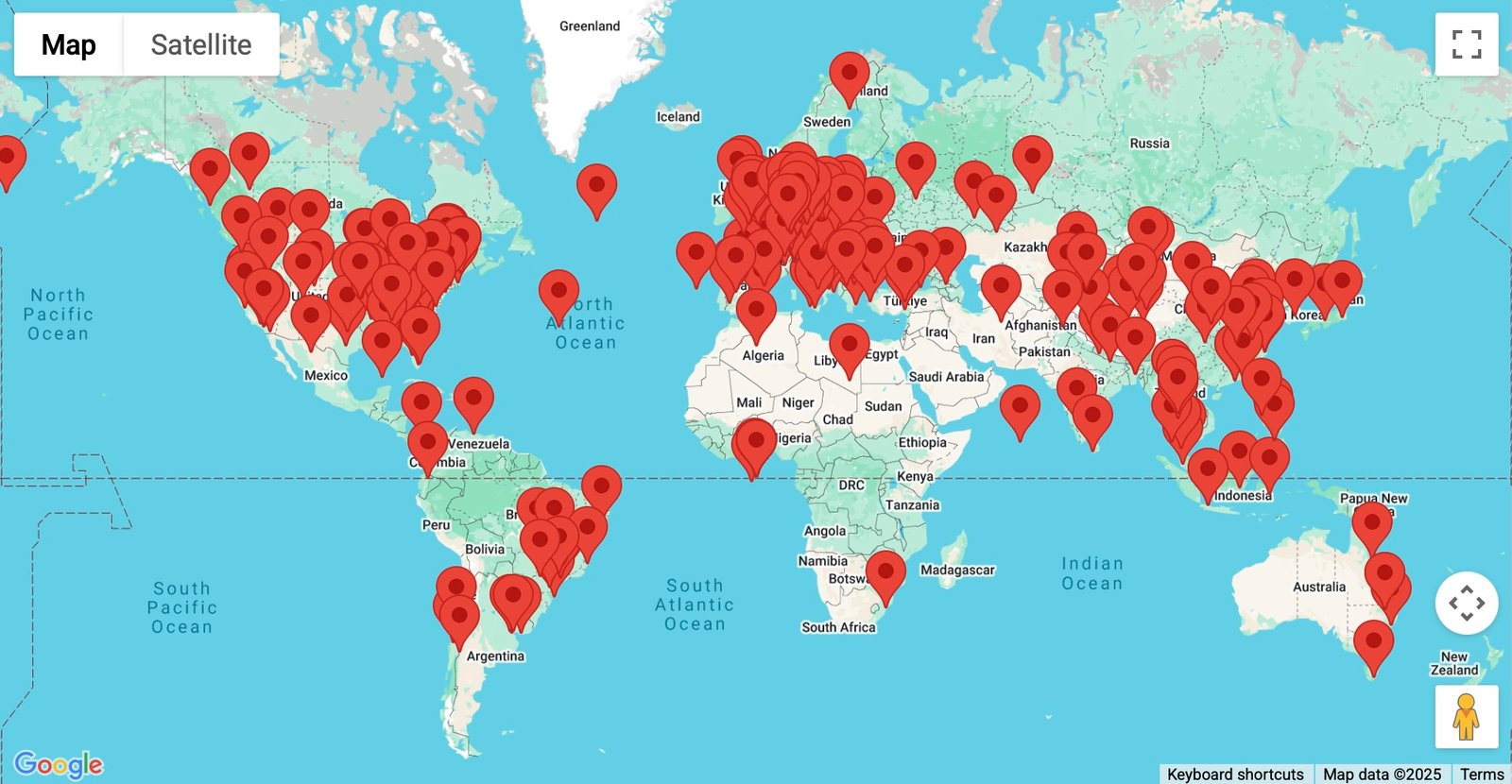
World map showing the locations of ham radio NXDN repeaters from RadioID.net - NXDN for Beginners.
Global map of ham radio NXDN repeaters, as listed on RadioID.net. Coverage varies by region, with notable activity in North America, Europe, and parts of Asia and Oceania. Photo credit: RadioID.net.

In North America, most amateur NXDN activity occurs on mixed-mode repeaters – systems that support NXDN alongside other modes such as FM, P25, or DMR, primarily on the 2m and 70cm bands. Operators in the UK, Australia, and New Zealand can check their regional band plans and repeater directories, as frequency allocations and channel spacing may vary slightly by country.

9 Advantages and Limitations

NXDN offers several technical advantages, but those benefits come with practical limitations that have shaped its adoption in amateur radio.

  • Pros: Excellent voice clarity, narrow bandwidth, robust against interference, straightforward setup.
  • Cons: Fewer repeaters, proprietary nature, limited open-source software support.

For hams who already own compatible Kenwood or Icom commercial gear, NXDN is an easy entry into digital voice experimentation.

10 Frequently Asked Questions About NXDN

Do I need a Radio ID like DMR to use NXDN?
No. Unlike DMR, NXDN does not use a global Radio ID system. Most ham NXDN repeaters do not require any ID at all, and if a system uses local Unit IDs, you can simply choose a small number (e.g., 1, 10, 100) with no registration needed.

Can NXDN radios talk to DMR radios?
No. They use different digital protocols, though some gateways can bridge the two.

What is a RAN code?
It’s the Radio Access Number – NXDN’s version of a digital access tone, required to access most systems.

Can I use a hotspot for NXDN?
Yes, some MMDVM-based hotspots and cross-mode servers support NXDN, though not all.

Is NXDN better than DMR?
Not necessarily – it depends on local repeater coverage and your operating goals.

Can I use encryption on NXDN as a ham?
In most countries, no – encryption is not permitted on ham radio. This includes the United States, the United Kingdom, Australia, and New Zealand. In Canada, encryption may be used only if the method and key are published publicly, meaning the communication is not intended to obscure its meaning.

11 Continue Learning about NXDN

NXDN occupies a somewhat unique place in amateur radio, blending narrowband digital voice with equipment and concepts that originated in the commercial radio world.

If you’re exploring NXDN for amateur use, curious about compatible radios, simplex or repeater operation, network options, or how NXDN compares to other digital voice modes like DMR or D-STAR, the EvoHam Community offers a place to explore those questions through real-world ham experience.

Visit the EvoHam Community’s NXDN section to see how other hams are approaching the mode, share setup experiences, and learn what works well in amateur radio environments.

12 Final Thoughts

NXDN is a technically sound, spectrum-efficient digital voice mode with a long history in commercial radio and a smaller but dedicated presence in amateur radio. Its limited adoption among hams is not due to poor performance, but rather to infrastructure availability, radio accessibility, and competition from more widely deployed digital voice systems.

For operators who already own NXDN-capable radios, live in areas with active repeaters, or simply want to explore a less common digital mode, NXDN can still be a rewarding option. For others, modes like DMR, D-STAR, or Fusion may offer a lower barrier to entry and broader community support.

Understanding where NXDN fits – and where it doesn’t, is the key to deciding whether it belongs in your own ham radio toolkit.

13 Related Reading on EvoHam

  • Fusion for Beginners: A Step-by-Step Guide to Yaesu System Fusion
  • DMR for Beginners: A Step-by-Step Guide for New Hams
  • M17 for Beginners: A Step-by-Step Guide for New Hams
  • P25 for Beginners:Understanding Project 25 Digital Voice


Some links in this story are affiliate links. If you choose to buy through them, EvoHam may earn a small commission – at no extra cost to you. It helps support more stories like this.

Tags: AlincoBeginnerIcomKenwoodMotorolaNXDN
Don Trynor, VA3XFT

Don Trynor, VA3XFT

A licensed amateur radio operator since 1988, Don brings over 15 years of professional experience in telecommunications. A lifelong digital communications enthusiast, he channels that passion into EvoHam.com - a site dedicated to digital voice technologies in amateur radio. When he’s not testing new radios, Don enjoys hiking, kayaking, and exploring the science behind the world’s wonders.

Related Posts

NA5B WebSDR interface with HF waterfall display, illustrating what users see when listening to FreeDV using a FreeDV WebSDR. Photo credit: NA5B
FreeDV Guides

FreeDV WebSDR: Listen to FreeDV Online Without an HF Radio

January 8, 2026
TETRA ham radio example of a Motorola MTP8000Ex Series TETRA portable radio used aboard a German navy vessel
TETRA Guides

TETRA Ham Radio: A Beginner’s Guide

January 23, 2026
Yaesu System Fusion radio being programmed, illustrating ham radio digital voice terminology and digital mode setup
Operating Guides

Ham Radio Digital Voice Terminology Explained for Beginners

December 19, 2025
HF radio displaying an SSB spectrum, used for operating FreeDV Frequencies on amateur HF bands. U.S. Air Force photo by Airman 1st Class Omari Bernard.
FreeDV Guides

FreeDV Frequencies (HF): Where to Call on 20m, 40m & 80m

January 8, 2026
Next Post
Baofeng DM32UV and AnyTone AT-D878UVII Plus handheld radios beside a laptop running DMR Programming Software.

DMR Programming Software and Firmware for Ham Radios

Popular Posts

Baofeng DM32UV and AnyTone AT-D878UVII Plus handheld radios beside a laptop running DMR Programming Software.

DMR Programming Software and Firmware for Ham Radios

January 8, 2026
DMR for Beginners - Radioddity GD-77 and AnyTone AT-D878UV handheld radios side-by-side on a white background

DMR for Beginners: A Step-by-Step Guide for New Hams

January 13, 2026
Kenwood NXDN handheld radio with industrial background — hero image for NXDN for Beginners.

NXDN for Beginners: Why It Works – and Why Few Hams Use It

January 13, 2026
HF radio displaying an SSB spectrum, used for operating FreeDV Frequencies on amateur HF bands. U.S. Air Force photo by Airman 1st Class Omari Bernard.

FreeDV Frequencies (HF): Where to Call on 20m, 40m & 80m

January 8, 2026

Follow EvoHam

Join the EvoHam Community

Compare notes, ask questions, and learn how other hams are using FreeDV, DMR, Yaesu Fusion, D-STAR, M17 & more.

Explore the Community

A calm place to learn digital voice in amateur radio.

Join 2,000+ Hams on Facebook

EvoHam

EvoHam offers clear, practical guides, reviews, and resources for modern amateur radio - covering DMR, Yaesu Fusion, D-STAR, P25, NXDN, M17, FreeDV, and other digital voice modes. Everything you need, all in one trusted place.

FOLLOW US

ARCHIVE

  • January 2026
  • December 2025
  • November 2025
  • October 2025
  • September 2025
  • February 2025
  • December 2024

LATEST UPDATES

  • Join the EvoHam Community: A Ham Radio Digital Voice Forum
  • FreeDV WebSDR: Listen to FreeDV Online Without an HF Radio
  • LinHT for Beginners: A Linux-Based Experimental SDR Radio
  • TETRA Ham Radio: A Beginner’s Guide
  • About EvoHam
  • Contact
  • Privacy Policy
  • Affiliate Disclosure
  • Terms of Service

Copyright © 2026 EvoHam. All rights reserved.

No Result
View All Result
  • Home
  • News
    • DMR News
    • Yaesu Fusion News
    • D-STAR News
    • Equipment News
    • Operating News
    • FreeDV News
    • M17 News
    • P25 News
  • Reviews
    • DMR
    • Yaesu Fusion
    • D-STAR
    • P25
    • NXDN
    • Portable Radios
    • Mobile Radios
    • Hotspots
    • Repeaters
  • Guides
    • DMR Guides
    • FreeDV Guides
    • Operating Guides
    • YAESU FUSION
    • D-STAR
    • P25
    • M17 Guides
    • NXDN
    • Destination Guides
    • Repeater Guides
    • Software & Programming Guides
  • Resources
    • DMR Resources
    • Yaesu Fusion Resources
    • D-STAR Resources
    • NXDN Resources
    • P25 Resources
  • Editorial
  • Community

Copyright © 2026 EvoHam. All rights reserved.