



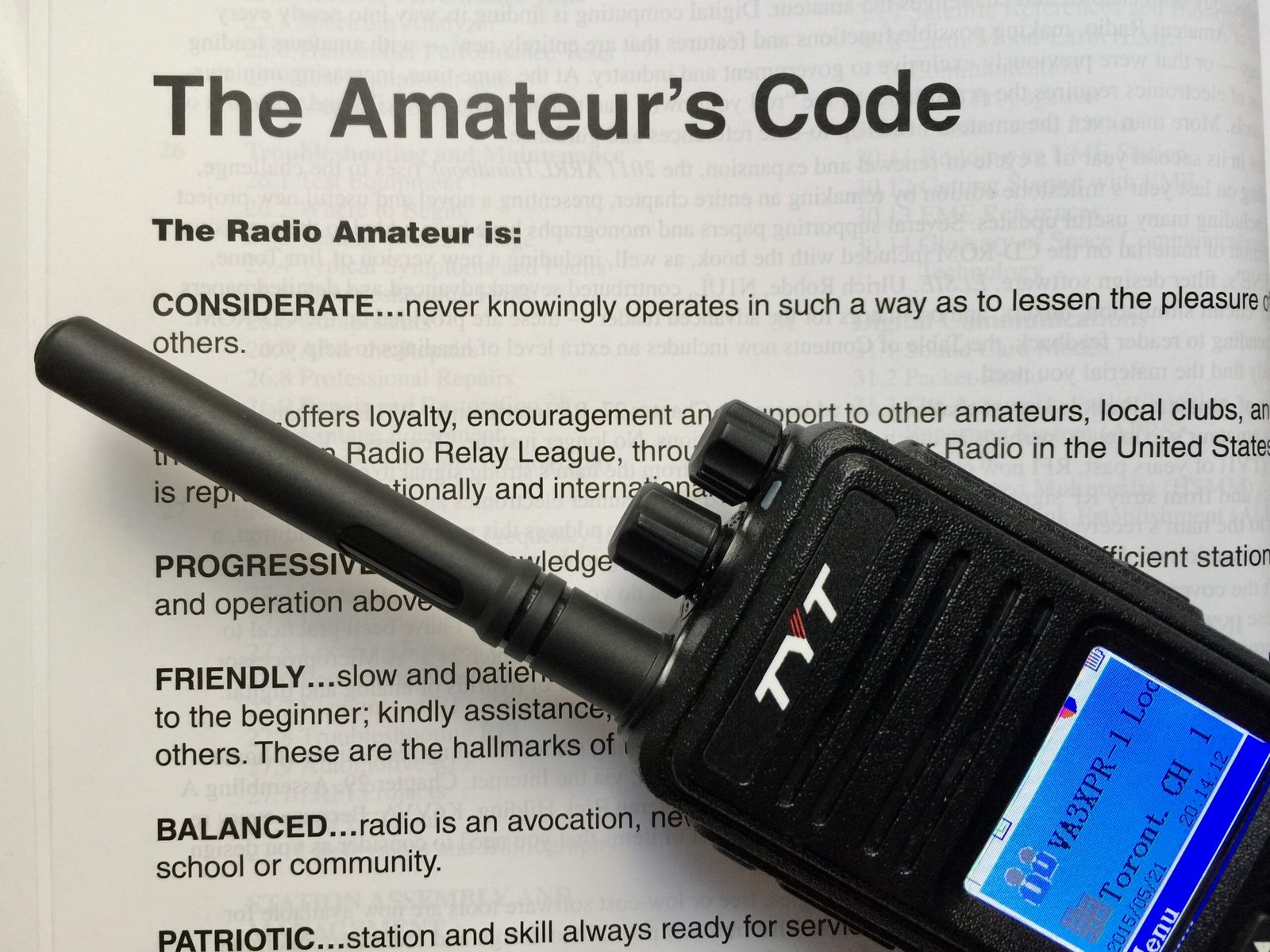

The Radio Amateur’s Code remains just as relevant today as it was nearly a century ago – especially in a world transformed by digital voice. What began as a hobby built around home-made rigs and local repeaters now connects operators worldwide through systems like DMR, Yaesu Fusion, D-STAR, P25, and NXDN.
At the same time, fully open-source innovations such as M17 and FreeDV – along with a growing ecosystem of community-developed digital voice tools, are pushing the hobby into exciting new territory.
Today, anyone can join a talkgroup, reflector, or hotspot from nearly anywhere on Earth, often reaching thousands of listeners instantly.
This accessibility is one of ham radio’s greatest strengths – but it also means our voices travel farther and faster than ever. A single comment on a busy digital-voice network can be heard across multiple repeaters, states, or countries. In a world this interconnected, how we conduct ourselves matters more than ever.
To guide the modern ham, we look again to a timeless piece of amateur-radio heritage: The Radio Amateur’s Code.
A Brief History of the Radio Amateur’s Code
The Radio Amateur’s Code was written in 1928 by Paul M. Segal, W9EEA, a Chicago attorney, devoted ham, and early advocate for the character of amateur radio. His six principles – being Considerate, Loyal, Progressive, Friendly, Balanced, and Patriotic, were crafted to reflect the qualities early radio operators believed were essential to preserving the dignity, innovation, and goodwill of the hobby.
A commonly referenced version of the Code is available on the ARRL website, where the original text continues to be preserved and shared.
For nearly a century, this Code has served as the ethical backbone of amateur radio worldwide. Clubs have posted it in their shacks, repeaters have printed it in their bylaws, and newcomers have learned it as part of their entry into the hobby.
While technology has evolved dramatically – from spark gap to SSB, from analog FM to the many digital voice modes we use today, the spirit behind Segal’s words remains timeless. Today, in a world of global talkgroups, instant connectivity, and open-source experimentation, the Code is more relevant than ever.
The Radio Amateur’s Code for the Digital Voice Era
Adapted for modern networks, digital standards, and today’s global ham community.
The Radio Amateur is:
- Considerate – Never knowingly operates in such a way as to lessen the pleasure of others.
- Loyal – Offers loyalty, encouragement, and support to fellow amateurs, clubs, and organizations that represent amateur radio internationally.
- Progressive – With knowledge abreast of science, a well-built and efficient station, and operation above reproach.
- Friendly – Slow and patient operating when requested; friendly advice and counsel to the beginner; kindly assistance, cooperation, and consideration for the interests of others. These are the hallmarks of the amateur spirit.
- Balanced – Radio is an avocation, never interfering with duties owed to family, job, school, or community.
- Patriotic – Station and skill always ready for service to country and community.
Why This Matters More Than Ever
Digital voice systems allow thousands of operators to share the same channels at the same time. A single conversation may be relayed across continents. In this environment, the tone of our interactions shapes the entire experience of the hobby.
A community built on respect, curiosity, and collaboration:
- Attracts new operators
- Encourages innovation
- Supports open-source development
- Strengthens clubs and networks
- Preserves amateur radio as a space for learning and goodwill
Amateur radio is one of the few places where strangers become friends within minutes – not through algorithms, but through real conversation.
Let’s continue that tradition.
Share the Modern Radio Amateur’s Code
If this resonates with you, feel free to share it with:
- Your club newsletter
- Repeater group
- Local net
- Digital voice community
- Online groups
- New operators
Together, we help shape the best version of the hobby.
Related Reading on EvoHam
- Fusion for Beginners: A Step-by-Step Guide to Yaesu System Fusion
- DMR for Beginners: A Step-by-Step Guide for New Hams
- M17 for Beginners: A Step-by-Step Guide for New Hams