






For decades, ham radio has been evolving through new technologies. From analog voice to early packet radio networks using AX.25, APRS, digital voice and data systems such as D-STAR, DMR, Internet-linked repeaters, and software-defined radios, hams have continually developed new and increasingly sophisticated ways to communicate over the airwaves.
But one of the most interesting developments in digital radio today doesn’t involve voice communications at all.
Instead, it involves small, inexpensive radios that can exchange text messages over surprisingly long distances, consume very little power, and communicate without cellular networks or Internet access.
The technology is called LoRa (Long Range), and thanks to open-source projects such as Meshtastic and MeshCore, it’s attracting growing interest among hams, electronics enthusiasts, outdoor adventurers, and people interested in off-grid communications.
Could this be the next big thing in ham radio?
We think it just might be.
1 What Exactly Is LoRa?
LoRa is a wireless modulation technology designed to transmit relatively small amounts of data over long distances while consuming very little power. Think smart meters, environmental sensors, and other Internet of Things (IoT) applications.
Unlike typical VHF/UHF ham radio transceivers that transmit at several watts or more, many LoRa devices operate with less than one watt of RF power, sometimes considerably less.
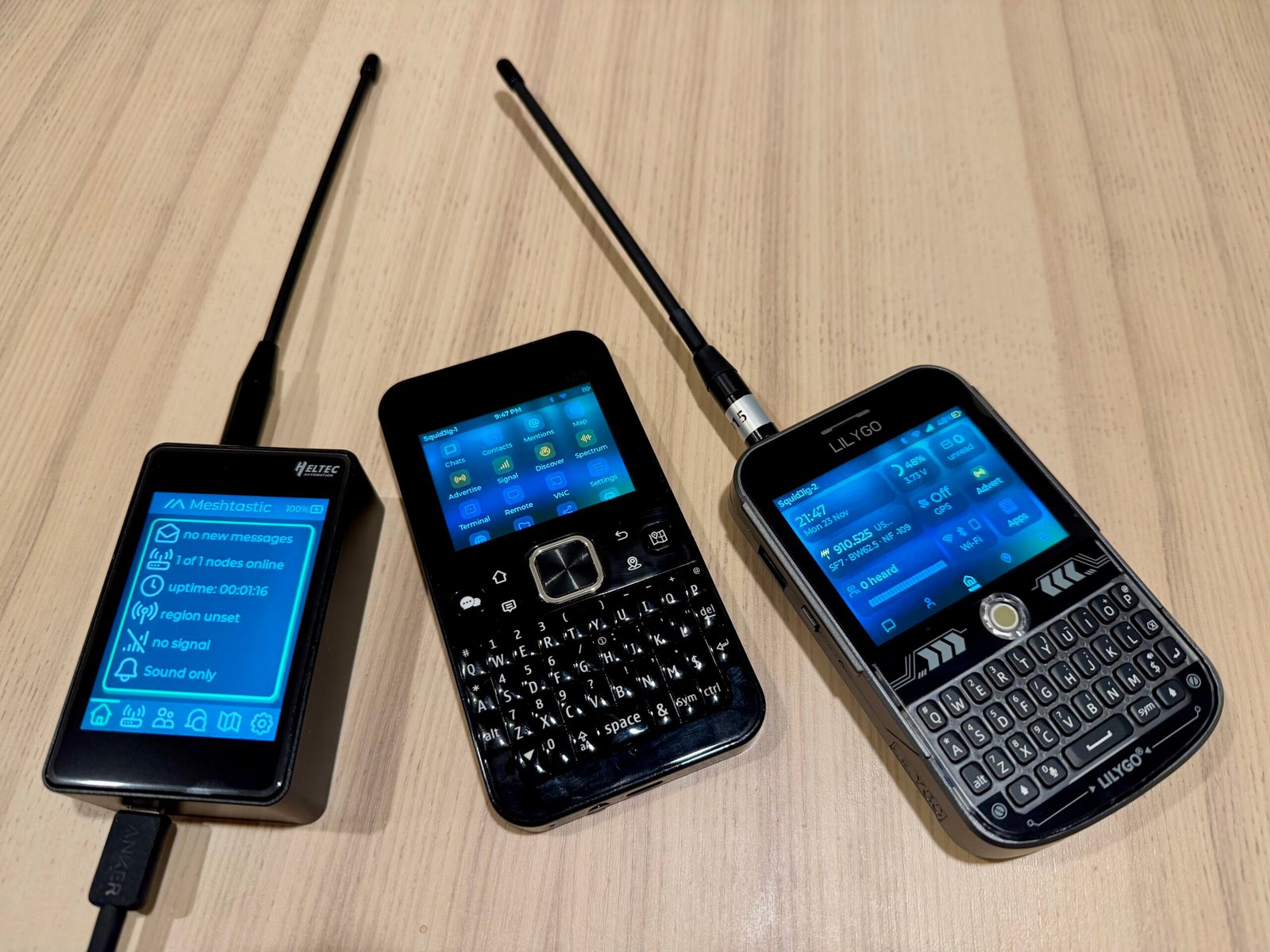
Yet, under favourable conditions, those tiny radios can communicate over distances of many kilometres. With elevated antennas and clear line-of-sight paths, considerably greater distances are possible.
The secret lies in a modulation technique called chirp spread spectrum (CSS), which allows LoRa receivers to detect signals at extremely low signal levels, often below the noise floor.
Of course, there’s a trade-off. LoRa achieves its impressive range and sensitivity by operating at relatively low data rates. It’s not intended for streaming video, transferring large files, or carrying conventional real-time voice conversations.
But for exchanging short messages, location information, telemetry, and other small amounts of data, it’s remarkably effective.
And that’s where things get interesting.
2 Enter the Mesh Network
Imagine sending a text message from a small handheld radio to someone several kilometres away, without using a cellular network.
Now imagine that the person is too far away for your radio to reach directly.
What if another radio, positioned somewhere between you, could relay that message onward? You can do this today on some ham radio digital voice repeaters like with D-STAR and DMR, however this is done at considerably higher power levels.
That’s the basic idea behind a radio mesh network.
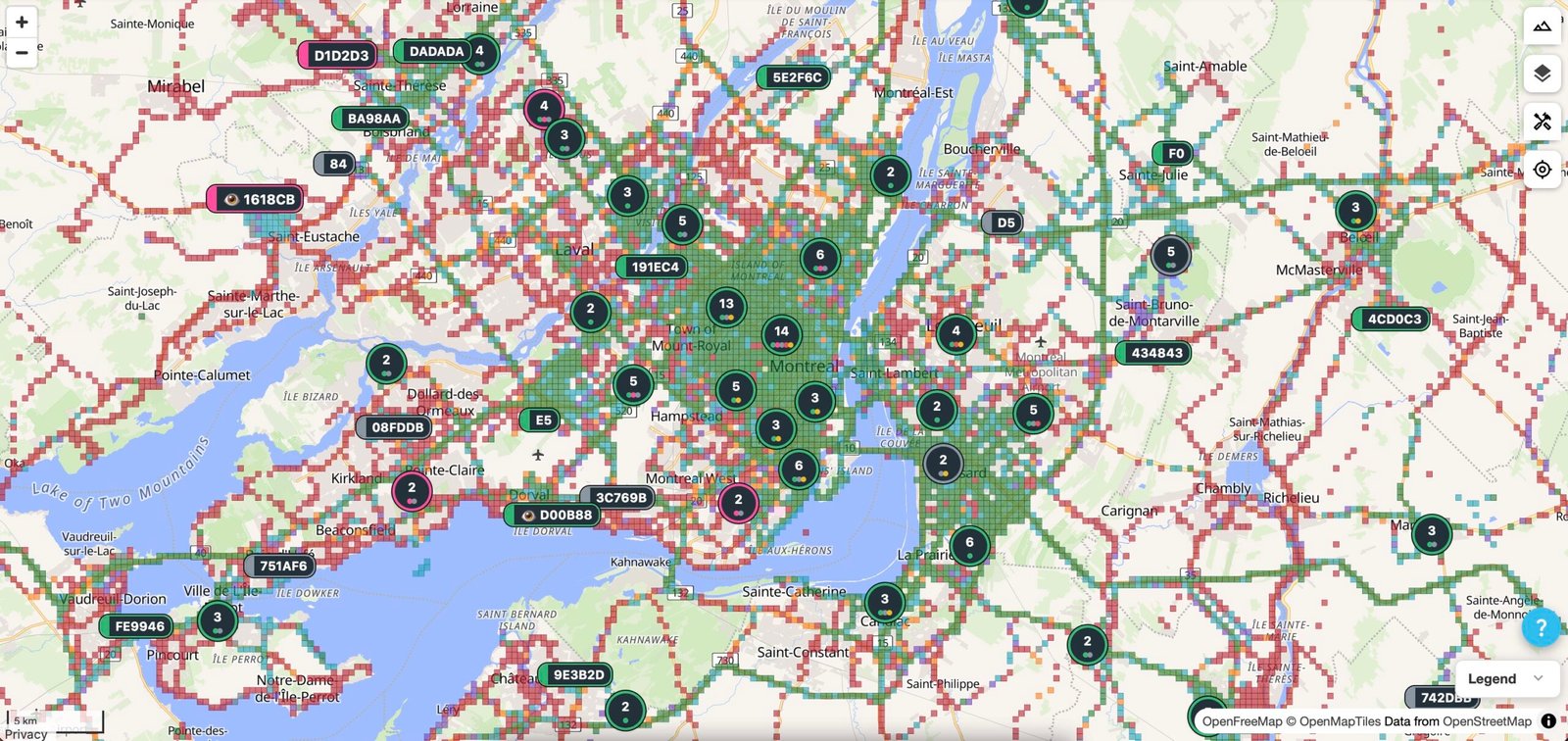
Rather than relying entirely on a single central repeater or communications infrastructure, participating radios can help extend the reach of the network by forwarding messages onto other connected devices.
Some nodes might be carried by hikers, others mounted in vehicles, and still others installed at elevated locations such as rooftops or hilltops.
A well-positioned radio could provide coverage to a substantial surrounding area, even though it’s transmitting with a fraction of the power used by a conventional ham radio repeater.
As additional nodes are deployed, the network’s potential coverage and resilience can improve.
And unlike conventional Internet-based messaging services, these networks can operate entirely over radio.
No cellular towers. No Internet provider. No monthly subscription.
Just radios communicating with other radios.
For ham radio operators, that concept should sound pretty familiar.
3 Meshtastic and MeshCore: Two Approaches to LoRa Networking
Much of the current excitement surrounding LoRa mesh networking centres on two open-source projects: Meshtastic and MeshCore.
Both use inexpensive LoRa radio hardware to exchange digital messages, but they approach networking somewhat differently.
Meshtastic
Meshtastic has helped introduce thousands of people to off-grid LoRa messaging.
It transforms supported LoRa devices into communication nodes that can exchange messages, share location information, and relay traffic across a network.
Many devices connect to a smartphone over Bluetooth, allowing users to compose messages through a mobile app rather than typing directly on the radio.
Meshtastic uses a managed-flooding approach to routing, where nodes can rebroadcast eligible messages to help them reach their destinations. This makes it relatively straightforward to establish a network without extensive infrastructure.
For someone new to LoRa, Meshtastic can be an accessible introduction to digital radio networking.
MeshCore
MeshCore is another open-source project that has been gaining attention, particularly among people building larger community networks.
While Meshtastic uses managed flooding, MeshCore takes a different approach by separating devices into roles, including companion radios, repeaters, and room servers.
This architecture is designed to make more deliberate use of dedicated relay infrastructure, with routing mechanisms intended to reduce unnecessary retransmissions and improve network efficiency.
For example, a community might deploy several strategically positioned MeshCore repeaters across a city, allowing users with small handheld devices to exchange messages over a much larger area than their radios could reach directly.
Both platforms have their advantages, and they’re evolving rapidly.
Importantly, although they use similar LoRa radio technology, Meshtastic and MeshCore are not directly interoperable. Users generally need to participate in the same system, with compatible radio configurations, to exchange messages.
We’ll explore both platforms in greater detail in upcoming EvoHam beginner guides.
4 Do You Need a Ham Radio Licence to Use LoRa?
Here’s something particularly interesting about LoRa: you don’t need a ham radio licence, or any other radio operator’s licence, to get involved, provided you’re using compliant licence-exempt equipment.
In Canada and the United States, many LoRa networks operate in the 902–928 MHz spectrum, commonly associated with the 915 MHz ISM band. In the EU and the United Kingdom, LoRa networks typically use the 863–870 MHz range, commonly referred to as the 868 MHz band. Some European LoRa networks also operate around 433 MHz.
These frequency ranges support certain licence-exempt radio devices, provided the equipment and its operation comply with applicable national regulations.
That means people can experiment with compatible, compliant LoRa devices without first obtaining a ham radio licence.
There are some important distinctions, however.
In North America, the licence-exempt 902–928 MHz spectrum also overlaps the 33-centimetre ham radio band, where ham radio operates on a secondary basis. In Europe, the 433 MHz licence-exempt spectrum (433.05–434.79 MHz) similarly overlaps the 70-centimetre ham radio band (430–440 MHz). However, the more commonly used 868 MHz LoRa band does not overlap any ham radio allocation in the EU.
Operating under ham radio regulations is different from operating a licence-exempt device, even when both use the same frequencies.
Ham radio transmissions are subject to requirements involving station identification, permitted communications, and restrictions on obscuring messages. Licence-exempt equipment, meanwhile, must comply with applicable equipment certification, power limits, duty-cycle restrictions where applicable, and other technical requirements.
It’s also worth noting that regulatory compliance has become an active topic of discussion within the LoRa community, particularly concerning certain firmware configurations and operating modes. Simply selecting a frequency within an approved band doesn’t automatically make a particular configuration legal.
Nevertheless, the ability to experiment with radio communications without first obtaining a ham radio licence is one of LoRa’s most intriguing characteristics.
And it raises a fascinating question.
5 Could LoRa Bring a New Generation Into Ham Radio?
For years, ham radio organizations have been grappling with how to attract younger participants and introduce new people to the hobby. Perhaps LoRa offers an opportunity to do just that, by reconnecting newcomers with the experimentation and technical curiosity that have always been at the heart of ham radio.
The Advent of the Internet
It’s worth considering how the appeal of ham radio has changed over the years.
There was a time when communicating with someone on the other side of the world seemed almost magical. Building a station, experimenting with antennas, and making that first long-distance contact inspired generations of hams.
Then came the Internet.
Today, anyone with a smartphone can communicate instantly with someone thousands of kilometres away, often with crystal-clear audio and video. What once seemed extraordinary has become an everyday experience.
Of course, ham radio has enthusiastically embraced the Internet through technologies such as EchoLink, Internet-linked repeaters, and digital voice networks. And for many operators, the challenge of making long-distance contacts over the air remains just as exciting as ever.
But it’s fair to ask whether some of the novelty that once attracted newcomers to ham radio has diminished in a world where distance is no longer much of a barrier to communication.
Perhaps that’s where LoRa presents an interesting opportunity.
Rediscovering the Magic of Radio
Traditional ham radio can sometimes appear intimidating to newcomers, with its licensing requirements, unfamiliar terminology, and potentially expensive equipment, particularly for those interested in HF communications.
LoRa offers many of the same attractions as ham radio, but with a much lower barrier to entry.
Someone interested in electronics, software development, outdoor activities, emergency preparedness, or wireless networking can purchase an inexpensive, compliant LoRa device and begin experimenting with radio communications without first obtaining a ham radio licence.
They might start by exchanging messages with a friend. Then they discover that someone across town has installed a repeater.
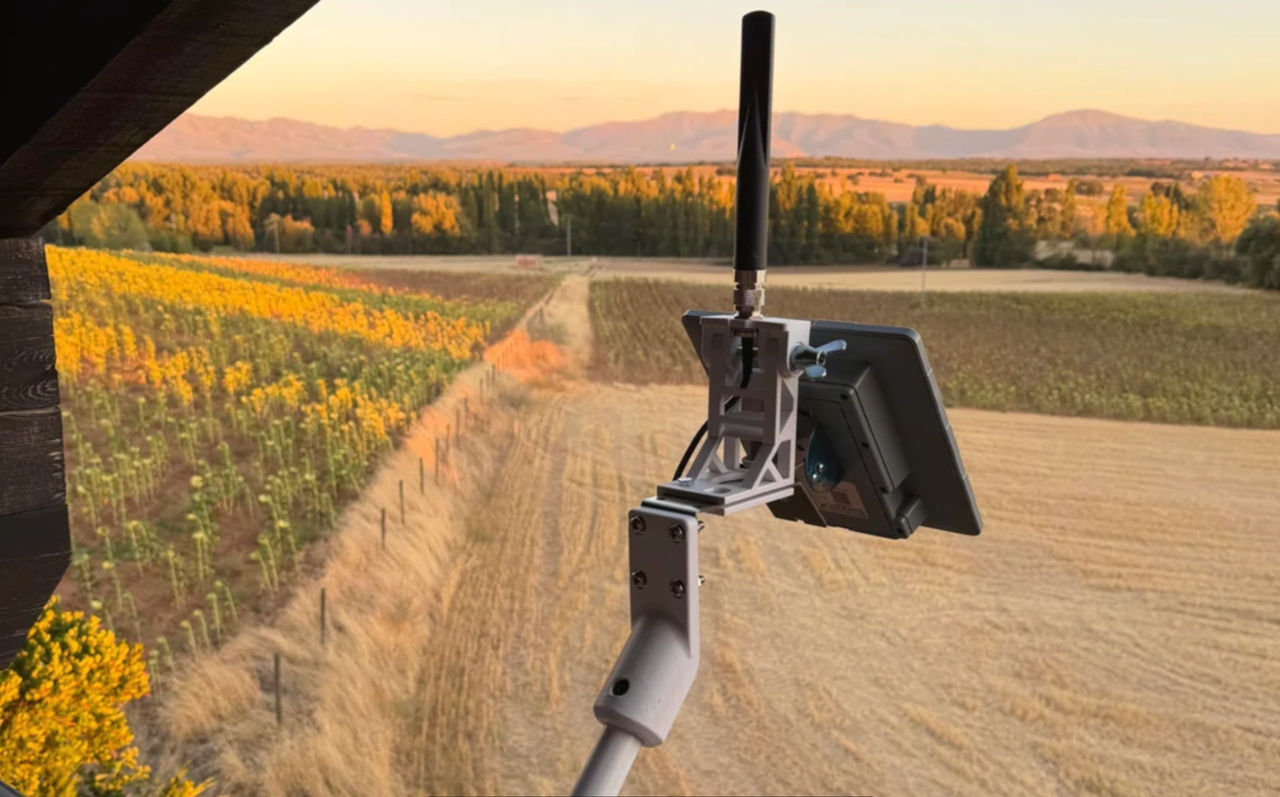
Before long, they’re learning about antennas, propagation, receiver sensitivity, line-of-sight paths, interference, and the effect of antenna height on coverage.
Sound familiar?
These are the same kinds of challenges that have fascinated hams for generations.
And perhaps that’s the real attraction of LoRa. It’s not simply about sending text messages without cellular service. After all, there are plenty of ways to send messages today.
It’s about the challenge and satisfaction of building something that works, experimenting with radio technology, and discovering just how far a tiny wireless signal can travel.
The difference is that LoRa makes much of this experimentation accessible to people who might never have considered becoming licensed hams.
And once someone experiences that satisfaction, the natural next question might be: What else can I do with radio?
That’s an opportunity ham radio organizations shouldn’t overlook.
An Opportunity for Ham Radio Clubs
Some ham radio clubs are already embracing the technology, experimenting with Meshtastic and MeshCore, deploying LoRa repeaters, and contributing to community networks in their local areas.
Beyond expanding network coverage, these initiatives give clubs an opportunity to share their technical expertise and collaborate with enthusiasts who may not hold ham radio licences.
Of course, not every LoRa enthusiast will become a licensed ham. Many will be perfectly happy using licence-exempt systems.
But others may become curious about HF, VHF/UHF repeaters, digital voice, satellites, and the many other possibilities that ham radio offers.
And who knows? LoRa might just help rekindle some of the curiosity, experimentation, and excitement that drew so many people into ham radio in the first place.
6 More Than Just Text Messaging
Although exchanging text messages is the most visible application, LoRa offers opportunities for experimentation well beyond messaging.
Imagine a community network of low-power radios supporting environmental sensors, weather stations, GPS trackers, or remote monitoring systems.
Or a group of hikers exchanging location information and short messages in an area without cellular coverage.
Perhaps a local ham radio club could establish a network of strategically located nodes to experiment with coverage, routing, and emergency preparedness.
These projects combine RF engineering with embedded electronics, software development, networking, and practical experimentation.
Of course, LoRa isn’t a replacement for conventional ham radio. Rather, it can complement existing voice and data communications by providing additional capabilities through inexpensive, low-power wireless networks.
Like any technology, LoRa has its limitations. Its low data rates, limited message capacity, potential network congestion, and dependence on suitable radio paths can restrict its usefulness in certain situations.
A community mesh network is also only as reliable as its coverage, infrastructure, and maintenance. It shouldn’t be assumed to provide dependable emergency communications simply because it doesn’t require the Internet.
Still, for those interested in experimenting with wireless communications, LoRa opens up an exciting new range of possibilities using relatively inexpensive, low-power equipment.
7 Is This Really a Growth Area?
The signs are encouraging.
Throughout 2026, ham radio clubs and community groups have increasingly been discussing, demonstrating, and deploying LoRa networks.
In Australia, the Wireless Institute of Australia has reported on the expansion of MeshCore networks. In Canada, ham radio organizations such as the Ottawa Amateur Radio Club have been exploring the potential of Meshtastic and MeshCore, including their role in emergency communications and attracting new participants. Even my local club, the Fredericton Amateur Radio Club, here in New Brunswick, has started experimenting with Meshtastic nodes.
Independent communities are also building networks across cities and regions, creating opportunities for enthusiasts to discover nearby nodes, exchange messages, and participate in ongoing experimentation.
And some of these networks are already reaching an impressive scale.
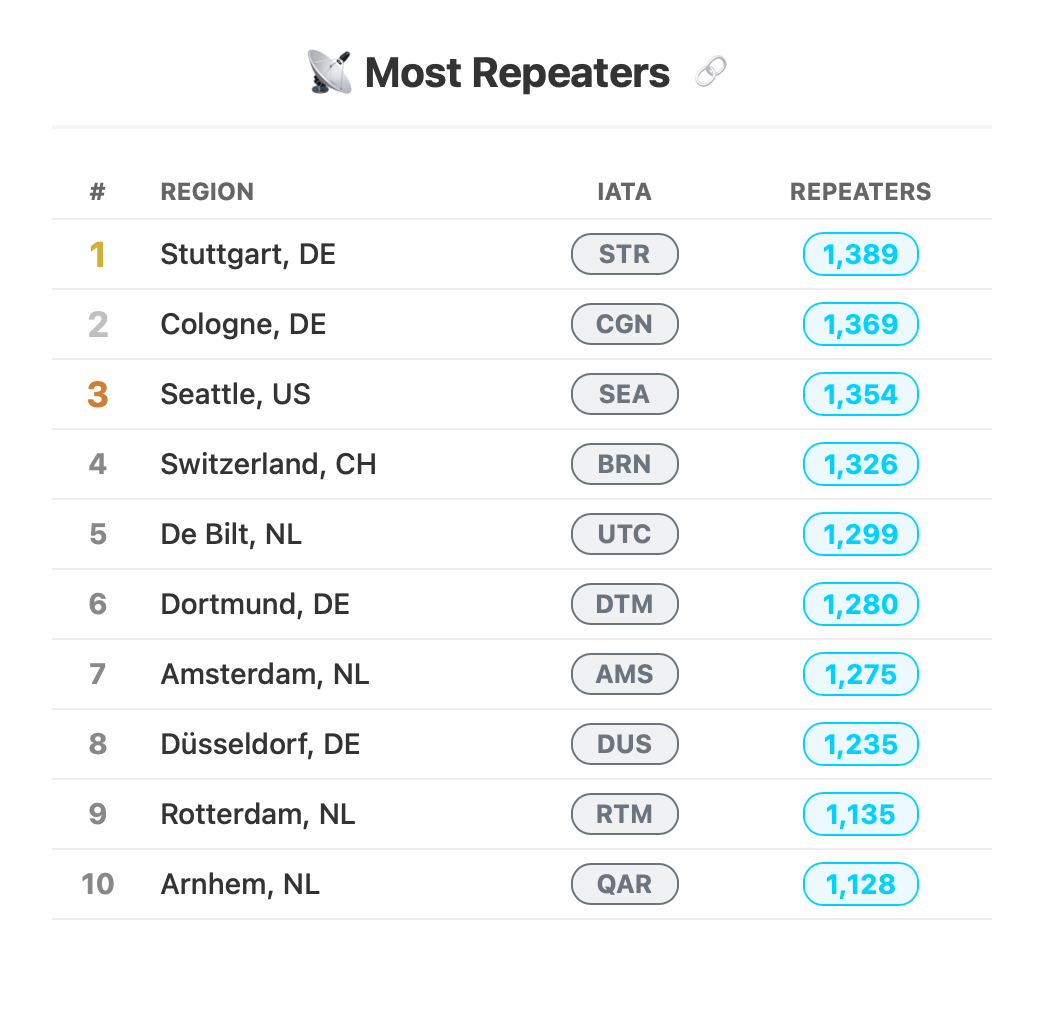
According to community-reported MeshCore network statistics from November 2026, the Stuttgart and Cologne regions of Germany each have more than 1,300 listed repeaters, as does the Seattle region in the United States. Several other European regions also report more than 1,000 repeaters.
Just as importantly, the hardware ecosystem continues to develop.
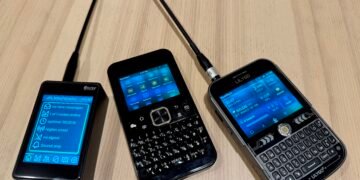
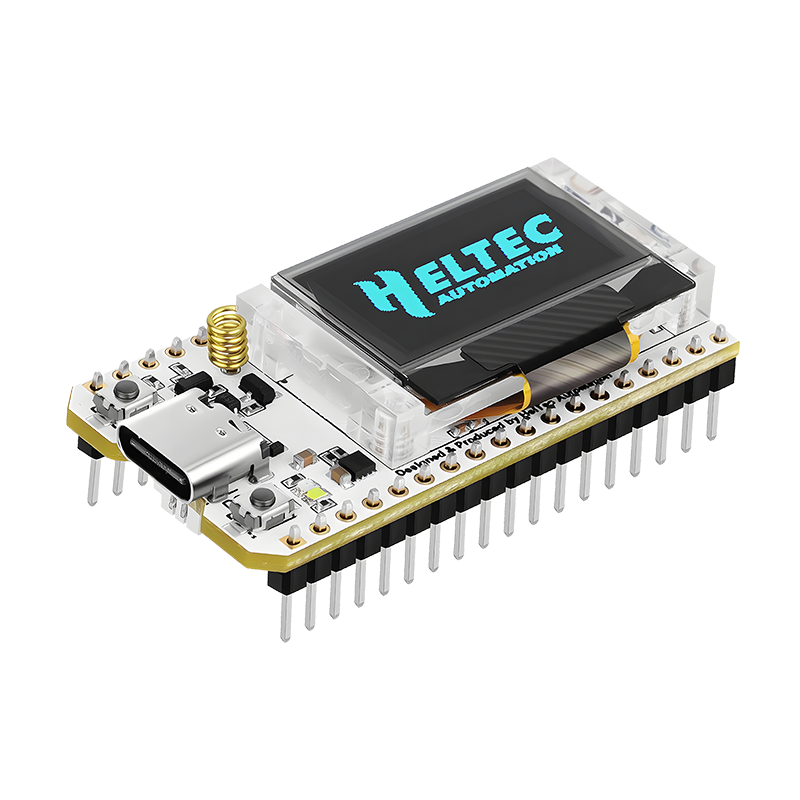
Compact LoRa boards, handheld communicators with keyboards, battery-powered devices, smartwatches, and solar-powered installations are giving experimenters an expanding selection of equipment.
Meanwhile, the open-source nature of projects such as Meshtastic and MeshCore means that developers and enthusiasts can actively contribute to the evolution of these technologies.
Of course, we should be careful not to confuse growing enthusiasm with definitive evidence of widespread adoption. The MeshCore statistics represent reported network infrastructure, not necessarily independently verified active installations or unique users. There isn’t yet a comprehensive picture of how many people are actively participating in these networks worldwide.
Nevertheless, the expanding infrastructure, growing hardware ecosystem, and increasing community experimentation suggest that LoRa networking is becoming a meaningful area of interest in the broader radio hobby.
8 The Evolution of Ham Radio Continues
When we launched EvoHam, our primary focus was the evolution of digital voice technologies in ham radio.
DMR, D-STAR, System Fusion, P25, NXDN, and other digital voice systems represented a fascinating transition from traditional analog communications toward increasingly sophisticated digital platforms.
But the evolution of radio doesn’t stop with voice.
Technologies such as LoRa are demonstrating that digital radio communications can take many different forms, from messaging and telemetry to distributed networks built by communities of enthusiasts.
And we’re likely only scratching the surface of what’s possible.
As hardware, software, and networking technologies continue to evolve, we may see LoRa-based systems support new capabilities, including more sophisticated data applications, small file transfers, and even digital voice using low-bitrate codecs such as Codec 2. Technical limitations remain, but there’s plenty of room for innovation.
Perhaps most interestingly, much of this innovation is happening outside traditional ham radio structures.
That doesn’t make it any less relevant to ham radio.
Actually, quite the opposite.
The experimentation, ingenuity, and community collaboration behind these projects reflect many of the qualities that have made ham radio appealing for more than a century.
And if LoRa helps introduce more people to the fascinating world of wireless communications, while inspiring new ways to experiment with radio technology, that can only be a positive development for the hobby.
9 Is LoRa the Next Big Thing in Ham Radio?
It’s probably too early to say.
But when inexpensive radios, open-source software, community-built networks, and a growing population of enthusiasts come together, it’s certainly something worth paying attention to.
And here at EvoHam, we’ll be doing exactly that.
10 Coming Next on EvoHam
Curious about trying LoRa for yourself? We’ll be publishing a few beginner-friendly guides to help you get started:
- Getting Started with MeshCore: A Beginner’s Guide
- Getting Started with Meshtastic: A Beginner’s Guide
- Building Your First MeshCore Repeater: A Step-by-Step Guide
We’ll explain what equipment you need, how to configure it, and how to begin exploring local LoRa networks. In addition, we’ll take you through the process of building and deploying your own MeshCore repeater.
Some links in this story are affiliate links. If you choose to buy through them, EvoHam may earn a small commission – at no extra cost to you. It helps support more stories like this.