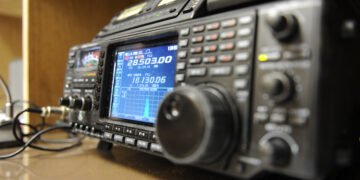





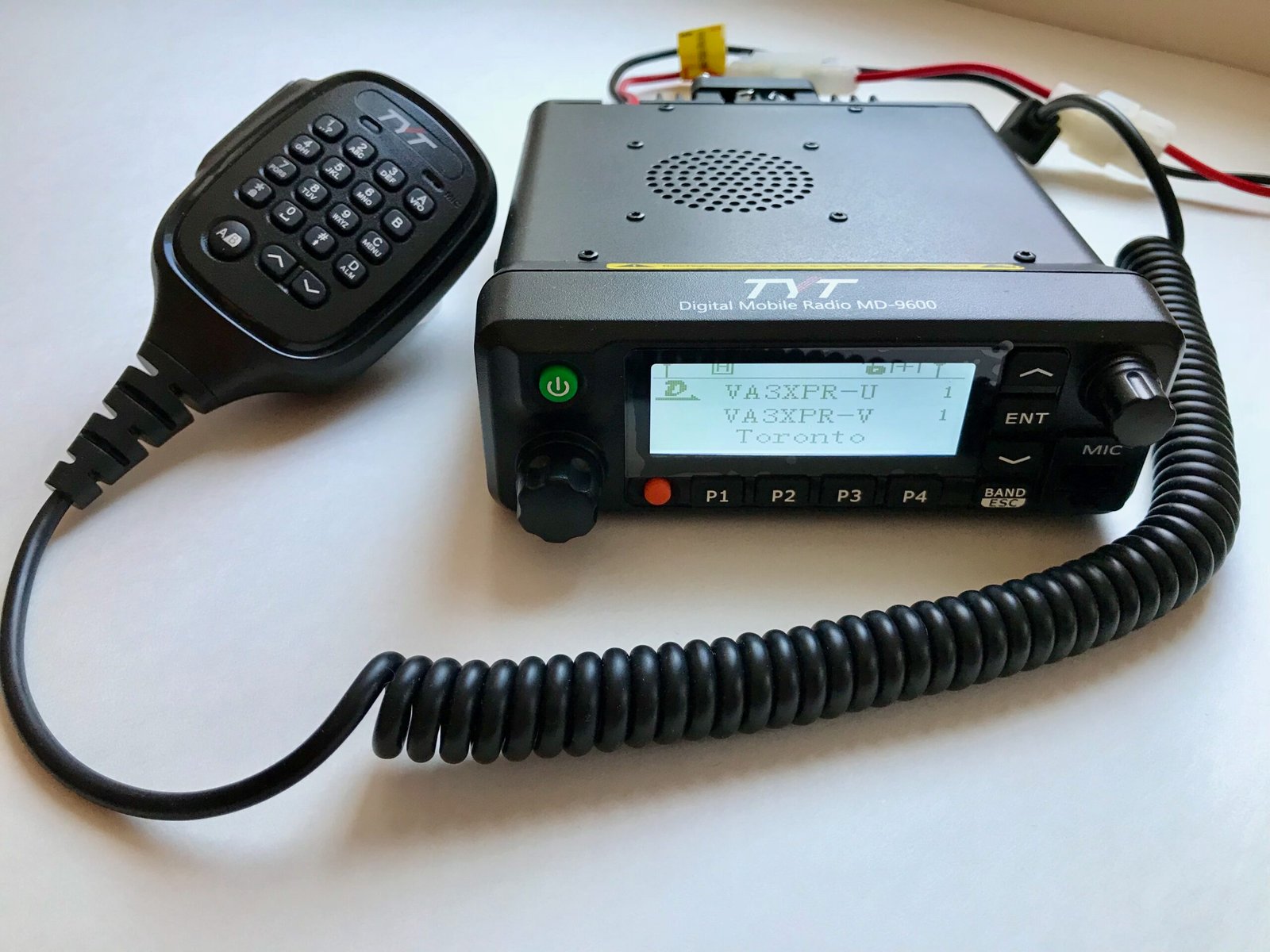

The TYT MD-9600 remains one of the most capable and affordable dual-band DMR mobile radios in 2025. With 50 W VHF and 45 W UHF transmit power, 100,000-contact support, and rugged MIL-STD construction, it’s an excellent choice for hams who travel or operate between VHF and UHF DMR networks. While the user interface and software still feel dated, TYT’s firmware updates and broad codeplug compatibility with the MD-2017 make this radio a dependable mobile workhorse for everyday DMR use.
1 Introduction
First introduced in 2017, the TYT MD-9600 gave hams an affordable way to bring full-featured dual-band DMR capability into the mobile shack. Designed for both amateur and light commercial use, it combined 50 W output, dual-band coverage, and a rugged metal chassis at a fraction of the cost of commercial-grade gear.
In 2025, the MD-9600 still holds its own as a dependable, high-power DMR mobile for everyday operators. While its monochrome display and dated interface show its age, its proven reliability, loud audio, and shared codeplug compatibility with the popular MD-2017 handheld continue to make it a go-to choice for mobile and base installations alike.
2 Quick Facts About the TYT MD-9600
| Bands | VHF (136–174 MHz) & UHF (400–480 MHz) |
|---|---|
| Modes | DMR Tier II & Analog FM |
| Power Output | 50 W (VHF) / 45 W (UHF) |
| Channels / Zones | 3,000 channels / 250 zones |
| Contacts | Up to 100,000 |
| DMR IDs | Multiple IDs supported |
| Display | Monochrome LCD (blue backlight) |
| Programming | CPS via USB (included) or front-panel/mic keypad |
| Audio | Internal speaker ~1 W; external speaker jack (3.5 mm) |
| Ingress / Durability | Mic IP54; radio meets MIL-STD-810 C/D/E |
| Bluetooth | Not supported |
| Head Separation | Not supported (fixed face/body) |
| Price (2025) | $230 USD new or $180 USD used |
3 Key Features and Highlights
- Dual-Band Coverage: Operates on VHF (136–174 MHz) and UHF (400–480 MHz).
- High Power Output: 50 W VHF / 45 W UHF for strong mobile performance.
- Rugged Construction: Metal chassis meets MIL-STD-810 C/D/E standards.
- Loud Audio: 1 W internal speaker for clear sound in noisy vehicles.
- Large Display: Bright monochrome LCD for easy viewing on the road.
- Front-Panel Programming: Make quick edits via the microphone keypad.
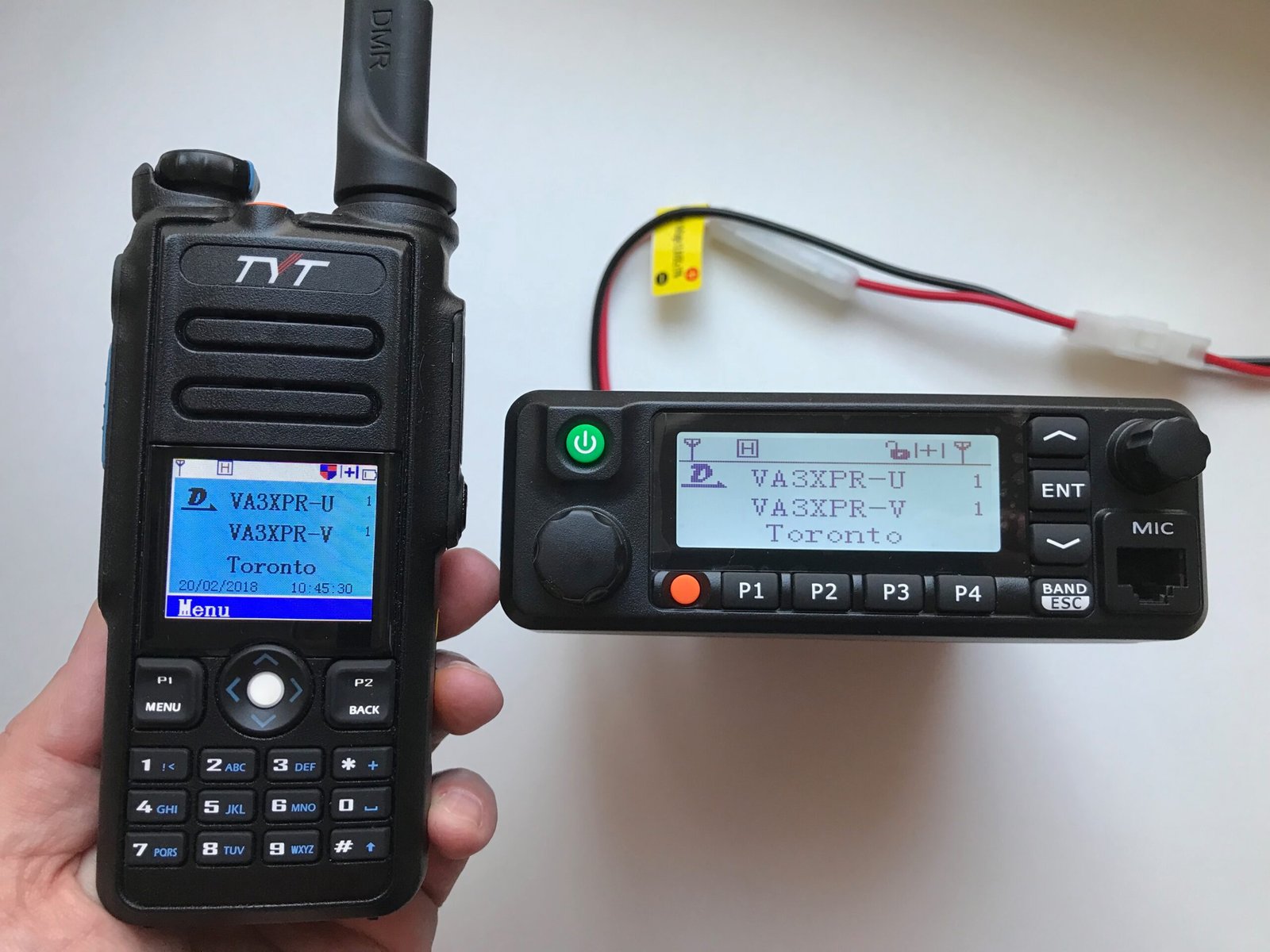
- Shared Codeplug: Compatible with the TYT MD-2017 handheld.
- Generous Memory: 3,000 channels, 250 zones, and 100 K contacts.
- Multiple DMR IDs: Supports several IDs for different networks.
- Great Value: Priced around $230 USD new in 2025.
4 Design & Build Quality
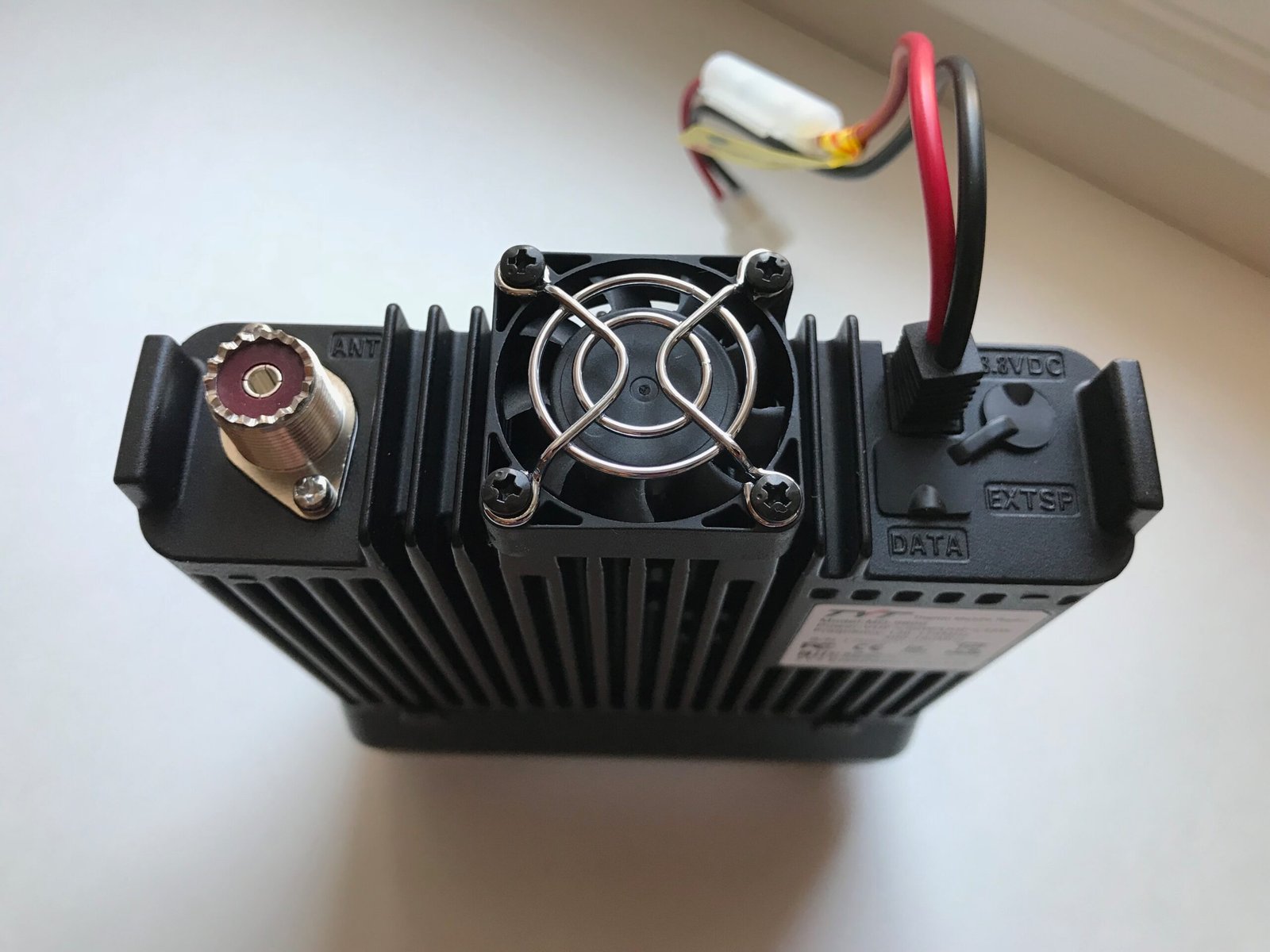
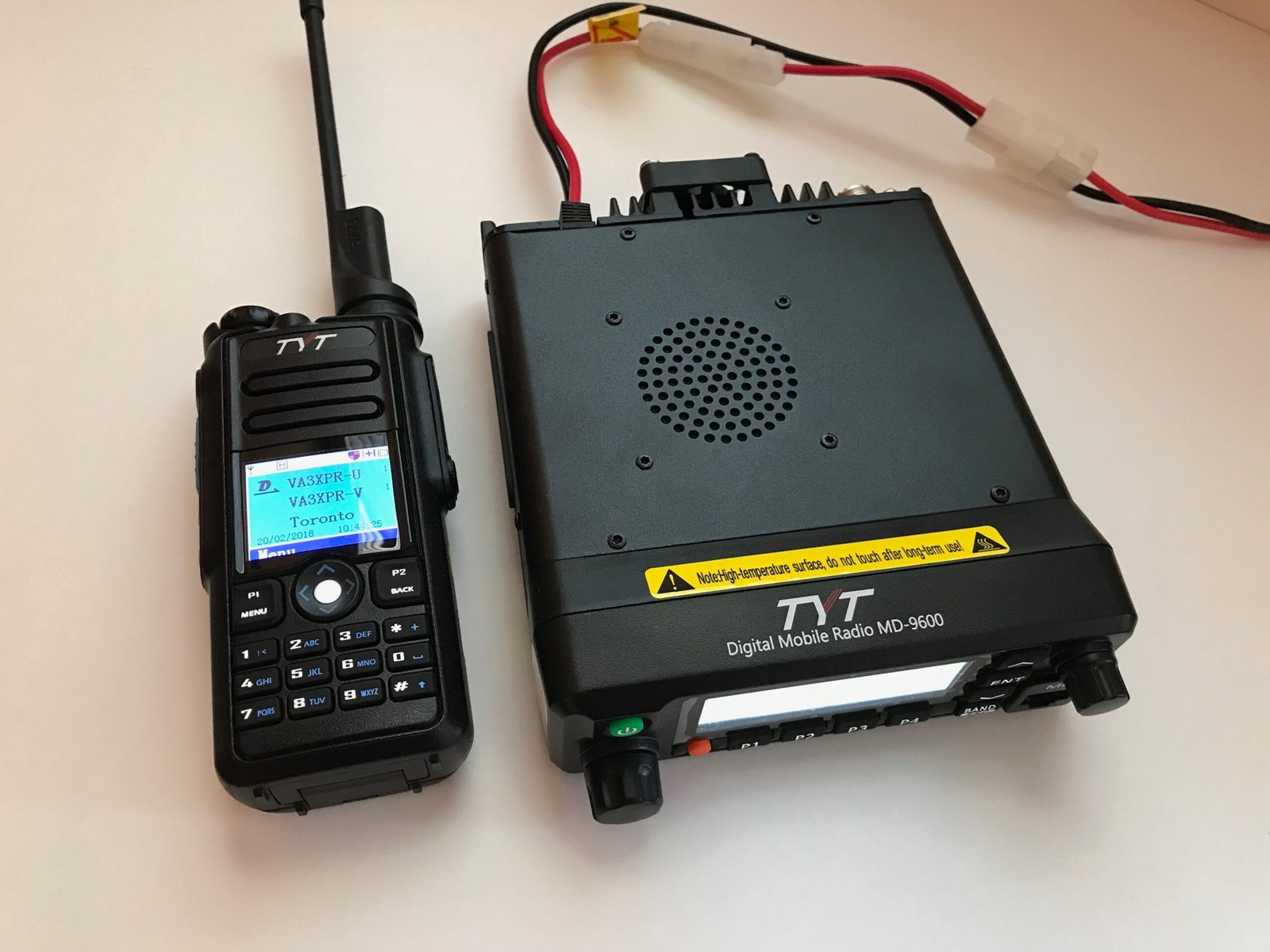
The MD-9600’s chassis remains rugged and heat-efficient, with a metal body, plastic faceplate, and integrated cooling fan. Its form factor matches the Yaesu FT-8900R footprint – compact enough for most mobile dashboards. However, the head and body are one piece, so remote mounting isn’t possible.
5 Audio & Microphone
The internal speaker delivers clear, high-volume output, ideal for noisy environments. The supplied DTMF microphone feels comfortable, though its PTT button still feels a bit cheap. Backlit keys are handy at night, and microphone gain can be adjusted via CPS. External speakers can be added via a standard 3.5 mm jack.
6 Display & Interface
A large monochrome blue LCD provides good contrast in daylight, but brightness isn’t adjustable – something users still wish TYT would add. The menu layout mirrors that of the MD-2017 handheld, making it familiar for existing TYT users. A future firmware update enabling day/night modes would greatly improve usability.
7 RF Performance
Power output remains strong: 50 W (VHF) and 45 W (UHF). The radio supports both analog FM and DMR Tier II with selectable channel spacing (12.5/20/25 kHz). Signal reports in the field remain excellent, and the receiver sensitivity compares well against other mid-range DMR mobiles.
8 Usability & Firmware
Since 2018, TYT has issued several firmware updates addressing bugs, improving contact management, and adding CSV import/export. While the UI still feels dated, the MD-9600 remains reliable and stable for daily use – particularly for operators needing a proven dual-band DMR setup without the high cost of commercial gear.
9 Programming Experience
CPS Software
The included CPS software remains serviceable but not intuitive. However, since codeplugs are compatible with the MD-2017, users can maintain a single unified setup for both mobile and handheld use – a major advantage. Firmware updates (as of v5.xx) allow CSV contact imports, faster writes, and better channel organization.
Front Panel Programming (FPP)
Front-panel programming is supported via the mic keypad, but most users will find it tedious for more than minor edits.
10 What’s in the Box
- DTMF microphone (backlit, IP54-rated)
- USB programming cable
- 13.8 V DC power cable
- Mounting bracket & hardware
- Microphone hanger
- User manual (basic)
11 Pros and Cons
Comparison of key strengths and weaknesses of the TYT MD-9600 dual-band DMR mobile radio.
| Pros | Cons |
|---|---|
| Dual-band operation on VHF and UHF | No Bluetooth or wireless audio support |
| Powerful 50 W / 45 W output | Fixed head unit — cannot be remote mounted |
| Excellent, loud internal speaker | Programming software can be difficult for beginners |
| Rugged metal construction meets MIL-STD-810 C/D/E | Non-adjustable display backlight |
| Shared codeplug compatibility with TYT MD-2017 | User interface and manual feel dated |
| Supports multiple DMR IDs | Limited firmware customization options |
| Affordable price for dual-band DMR mobile | Learning curve for first-time DMR users |
12 Alternatives to Consider
- AnyTone AT-D578UV III Pro – Premium dual-band DMR mobile with Bluetooth, GPS, and detachable head.
- Radioddity DB25-D – Compact, budget-friendly DMR mobile for lighter-duty installs.
- Alinco DR-MD500T – Commercial-grade dual-band DMR mobile with robust build and clean audio.
13 Who It’s For
The TYT MD-9600 is ideal for operators who:
- Want a powerful dual-band DMR mobile for vehicle or base use.
- Need reliable performance across both VHF and UHF repeaters.
- Prefer a proven, rugged design over modern extras like Bluetooth or color displays.
- Already use the TYT MD-2017 and want shared codeplug convenience.
It’s less suited to absolute beginners or those seeking plug-and-play simplicity, but for technically confident hams who value power, durability, and flexibility, the MD-9600 remains an excellent performer in 2025.
14 Final Verdict
The TYT MD-9600 has aged gracefully – a durable, dual-band DMR mobile that continues to deliver dependable performance at a reasonable price. It’s ideal for hams who need both VHF and UHF coverage, especially those already using TYT portables. While the interface and CPS software could be smoother, the MD-9600’s power, audio quality, and shared codeplug ecosystem make it one of the best value DMR mobiles still available in 2025.
15 You Might Also Like
- Motorola XPR 5550 Review: A Powerful Ham Radio DMR Essential
- DMR for Beginners: A Step-by-Step Guide for New Hams
- TYT MD-UV380 Review (2025): Reliable Dual-Band DMR Value
Some links in this article are affiliate links. If you purchase through them, EvoHam may earn a small commission – at no extra cost to you. Your support helps us keep creating detailed ham radio guides, reviews, and resources for the amateur radio community.
The Review
TYT MD-9600
The TYT MD-9600 remains one of the best-value dual-band DMR mobile radios in 2025. With 50 W output, rugged build, and shared codeplug compatibility with the MD-2017, it’s an affordable and proven performer. The dated interface and lack of Bluetooth are its only real drawbacks.
PROS
- Dual-band VHF/UHF coverage
- 50 W VHF / 45 W UHF output
- Rugged metal construction
- Loud audio and clear mic quality
- Shared codeplug with TYT MD-2017
- Supports multiple DMR IDs
- Great value for money
CONS
- No Bluetooth support
- Fixed head (no remote mounting)
- Non-adjustable display brightness
- Programming software can be confusing
- Slightly dated menu interface
Review Breakdown
-
Audio Quality – Loud, clear audio; adjustable mic gain
-
Build Quality – Solid metal chassis; MIL-STD rugged
-
Ease of Use – Dated menu; complex CPS software
-
Features & Flexibility – Dual-band; no Bluetooth
-
Display & Controls – Bright, fixed backlight
-
Value for Money – Excellent price-performance