






FreeDV is an open-source digital voice mode for the HF bands that delivers high-quality digital audio using a standard SSB transceiver. Unlike FM repeaters or networked modes such as DMR, FreeDV does not use fixed, officially assigned global frequencies.
Instead, the amateur radio community has converged on a set of shared calling frequencies – informal “watering holes” on each band where operators listen for and initiate FreeDV contacts. Some additional frequencies see regional or time-of-day activity.
This page lists the most commonly used FreeDV frequencies on HF, based on the FreeDV Reporter “Calling Frequencies” list and recent FreeDV project updates. These frequencies are intended as practical starting points to find activity – not exclusive channels you must (or may only) use.
If you’re new to the mode or want a broader overview, see the FreeDV for Beginners guide.
1 How to Use These FreeDV Frequencies
- Think “centres of activity,” not fixed channels. Call “CQ FreeDV here,” then QSY if needed.
- Always follow your local regulations and band plan. If a listed frequency falls outside your permitted sub-band, do not use it.
- Check that the frequency is clear. If SSB, nets, or other digital signals are present, move to a nearby clear frequency.
- Stay within an SSB voice or “all modes” segment. FreeDV is a voice mode and should operate where SSB voice is normally allowed.
2 Global FreeDV Frequencies
These are community-adopted centres of activity compiled from FreeDV Reporter and project documentation. They are not legal allocations or IARU mandates. Always verify your national band plan and licence conditions.
| Band | Frequency | Sideband |
|---|---|---|
| 160m | 1.870 MHz (Primary) 1.997 MHz (Alt, Region 2) | LSB |
| 80m | 3.625 MHz (Primary) 3.643 MHz (Alt., Region 1) 3.693 MHz (Alternate) 3.697 MHz (Alternate) 3.803 MHz (Alternate) 3.850 MHz (Alt., Region 2) | LSB |
| 60m | 5.3665 MHz 5.3685 MHz 5.4035 MHz | USB |
| 40m | 7.177 MHz (Primary) 7.197 MHz (Alt., Region 2) | LSB |
| 30m | (none standardised) | USB |
| 20m | 14.236 MHz (Primary) 14.240 MHz (Alternate) | USB |
| 17m | 18.118 MHz | USB |
| 15m | 21.313 MHz | USB |
| 12m | 24.933 MHz | USB |
| 10m | 28.330 MHz (Primary) 28.720 MHz (Alternate) | USB |
| 13cm | 2400.140 MHz (QO-100 Uplink) | USB |
| 3cm | 10489.640 MHz (QO-100 Downlink) | USB |
3 Sideband Conventions for FreeDV
FreeDV follows the same sideband conventions as SSB voice on HF:
- 160m – 40m: Use LSB (Lower Sideband) for FreeDV.
- 30m and above (including 20, 17, 15, 12, 10m and higher): Use USB (Upper Sideband).
- 60m: Most countries that permit phone on 60 m require USB and may have specific channels and power limits.
Please note: If your radio and FreeDV software disagree on sideband (for example, your rig switches to USB on 40m), make sure you manually set the correct sideband before calling CQ – a station listening in USB cannot decode a FreeDV signal transmitted in LSB and vice-versa.
4 Finding Live FreeDV Activity
To see where FreeDV is actually in use right now, use:
- FreeDV Reporter: A web map and log of active FreeDV stations. It also shows the current calling frequencies by band and who has transmitted recently.
- Scheduled Nets and Activity Days: Several regional groups run FreeDV nets (for example, on 3.640 – 3.643 MHz and 7.045 – 7.177 MHz). Check the official FreeDV website for up-to-date net listings.
FreeDV activity tends to cluster on 20m (14.236 MHz) plus 40m and 10m when propagation is good. If you don’t hear anything, call CQ on one of the recognized FreeDV frequencies and watch FreeDV Reporter to see if your signal is being spotted.
5 Frequently Asked Questions
Are these “official” FreeDV frequencies?
No. These are community-adopted centres of activity, not legally assigned channels. They come from FreeDV Reporter, FreeDV project release notes, and several years of on-air practice. They’re meant to make it easier for operators to find each other.
What if the listed frequency is busy?
Treat these as calling spots. If the exact frequency is in use by SSB, nets, or other digital traffic:
- Move a little up or down (for example, ±1–3 kHz on HF).
- Stay inside your allowed phone/all-modes sub-band.
- Mention the new frequency when you answer a CQ (“QSY 2 kHz up for FreeDV?”).
Do I have to be exactly on the listed frequency?
No. FreeDV has a relatively narrow occupied bandwidth, and real-world operation is always “±QRM”. The listed frequencies are nominal centres; staying within a couple of kilohertz is usually fine, as long as both sides are tuned and your signal does not overlap existing QSOs.
Can I use FreeDV on 60m?
Maybe. 60m is heavily regulated and often channelized. Some administrations treat FreeDV as “data”, others as “phone”, and some do not permit it at all on 60m. It is recommended to always:
- Check your national 60m band/channel plan.
- Confirm which emissions (J2E, J2D, etc.) are allowed.
- Follow power and ERP limits exactly.
Can I use FreeDV on other bands not listed here?
Yes. The listed frequencies are just common calling spots. You can use FreeDV on any amateur band where your licence and band plan allow SSB or “all modes,” as long as the frequency is clear.
Can I use FreeDV on other modes, like analog FM?
No. FreeDV must be transmitted over SSB. It will not work properly on FM, AM, or CW, and it is not compatible with other digital voice modes, such as C4FM, D-STAR, DMR, P25, NXDN, or M17.
Why do some FreeDV frequencies mention “Region 1” or “Region 2”?
The IARU has three regions, each with its own recommended HF band plan. Some FreeDV frequencies are chosen specifically to fit licence and sub-band constraints in a region (for example, certain 80m and 40m frequencies that Region 2 General-class operators can use, but Region 1 operators may not). This page shows one global table and uses the notes column to flag region-specific nuances.
The Bottom line: Use this table as a handy global cheat-sheet, then double-check your local band plan and regulations before putting FreeDV on the air.
6 You Might Also Like
- DMR for Beginners: A Step-by-Step Guide for New Hams
- RF Coverage Maps: Create Like a Pro in 3 Easy Steps
- What Is BrandMeister DMR? How Hams Connect Worldwide
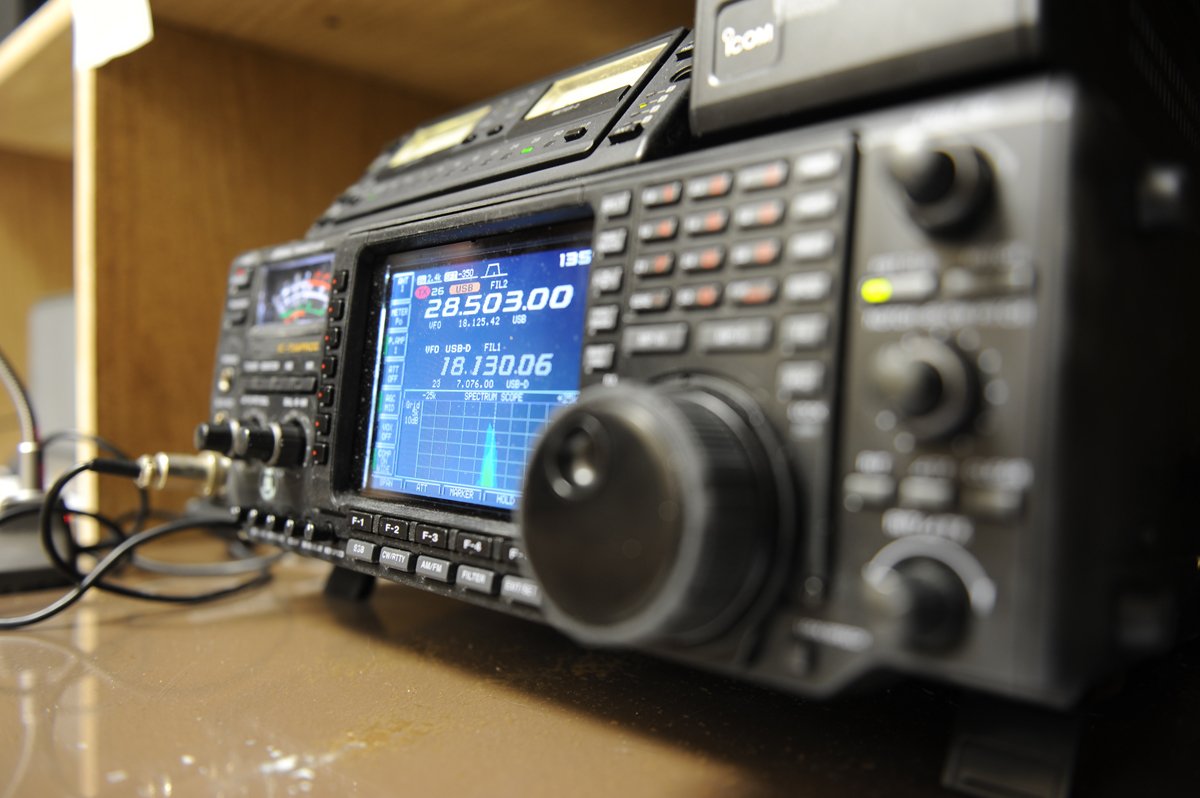
Hero image credit: U.S. Air Force / Airman 1st Class Omari Bernard.
Some links in this story are affiliate links. If you choose to buy through them, EvoHam may earn a small commission – at no extra cost to you. It helps support more stories like this.