



Editor’s Note: This article was originally published on January 28, 2013, and has been updated for clarity and relevance. Since its publication, Jean Moffett, VE3WAD, celebrated her 100th birthday in August 2023, a remarkable milestone for an inspiring figure in the amateur radio community.
Ham radio, a technology your grandfather might have used to explore the airwaves, has been reimagined for the digital age—and it’s now a centerpiece at the Ontario Science Centre.
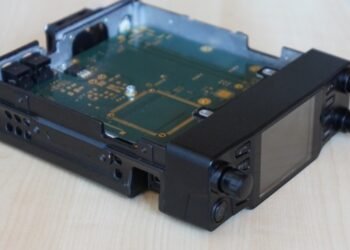
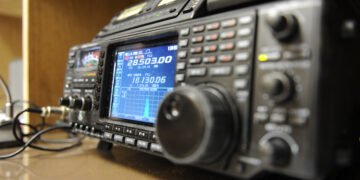
On January 27, 2013, the Ontario Science Centre Amateur Radio Station (VE3OSC) celebrated a milestone: its first-ever contact using Digital Mobile Radio (DMR). This digital evolution of ham radio represents a major step forward in communication technology. Long-time volunteer operator Jean Moffett, VE3WAD, made the inaugural DMR contact with Bill Barber, NE1B, of Hudson, NH, using her newly acquired DMR radio and the VA3XPR DMR repeater.
“I just love this new mode of ham radio communications,” Jean shared enthusiastically. “It’s so much fun talking to people all over the world, and they sound so crystal clear using DMR.” Jean, a dedicated ambassador for amateur radio, is especially excited to showcase DMR’s capabilities to youth visitors, highlighting the remarkable evolution of the hobby from its analog beginnings to cutting-edge digital technology.
What Makes DMR So Revolutionary?
Digital Mobile Radio (DMR) is a global standard for digital voice communication that leverages Time Division Multiple Access (TDMA) technology. Unlike traditional analog systems, DMR enables amateur radio operators to connect seamlessly across local and international networks. Using the Motorola Amateur Radio Club’s (MARC) World Wide Network, also known as the DMR-MARC network, operators can enjoy crisp, clear communication regardless of their location.
The first DMR repeater in downtown Toronto, VA3XPR, was launched in December 2012 and has since become a hub for amateur radio enthusiasts in the area. The technology’s accessibility and performance have sparked widespread interest in the local ham radio community, providing an excellent platform for experimentation, learning, and global outreach.
Ham Radio’s Role in Today’s World
In a time dominated by smartphones and the internet, ham radio retains its charm by adapting to modern needs. With DMR, operators can not only enjoy global communication but also engage in real-time emergency response, technical innovation, and hands-on STEM education. At the Ontario Science Centre, young visitors can now witness how ham radio bridges the gap between history and technology, inspiring a new generation of amateur radio operators.
Jean Moffett and her fellow operators at VE3OSC demonstrate how a classic hobby can remain relevant in the digital age. By embracing tools like DMR, they are showing that ham radio isn’t just a relic of the past—it’s a platform for the future.
Want to Learn More?
Curious about DMR and how it’s revolutionizing amateur radio? Visit the DMR Guide page for detailed information on how the technology works and how you can get involved. Whether you’re a seasoned operator or a newcomer, DMR offers an exciting way to explore the airwaves and connect with people worldwide.