

This article was originally published in 2013 and has been updated for clarity, relevance, and accuracy. While Vertex Standard’s branding and distribution channels have changed over the years – due in part to corporate restructuring and integrations – many of the principles, features, and best practices outlined here remain valid. This article is specifically tailored for ham radio operators interested in leveraging DMR technology.
1 Introduction
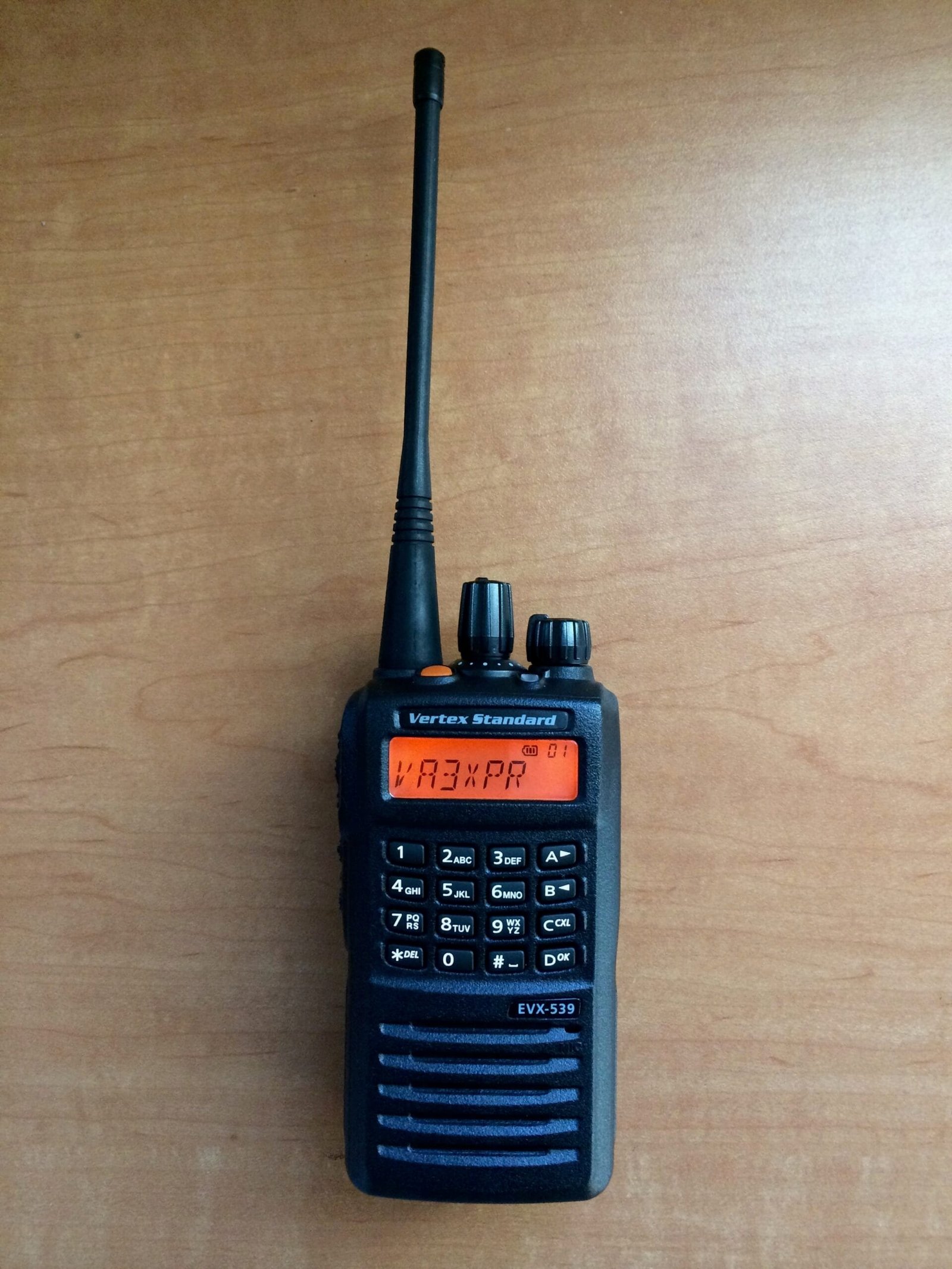
The Vertex Standard eVerge EVX 539 emerged in the early 2010s as a solid option for amateur radio enthusiasts looking to explore Digital Mobile Radio (DMR). At the time of its release, the eVerge series was celebrated for blending affordability, durability, and a robust feature set compared to many early DMR offerings on the market. DMR itself was (and continues to be) a game-changer for amateurs who want clearer voice communications, enhanced privacy options, and the ability to connect with wide-ranging networks such as DMR-MARC, BrandMeister, and others.
Since 2013, digital voice technologies have exploded in popularity. More manufacturers now offer DMR gear, and there’s greater interest in bridging analog and digital modes. The EVX 539, while not the newest radio around, can still hold its own for day-to-day ham use, emergency communications, and even casual hobbyist exploration. Below, we’ll dive into the radio’s background, discuss how it holds up in the current amateur radio landscape, and provide practical tips for those who might be considering the EVX 539 for their shack or portable kit.
2 Background and Brand Overview
Originally, Vertex Standard was a separate entity known for commercial-grade two-way radios that straddled both amateur and professional markets. Over time, the brand underwent mergers and acquisitions that involved Motorola Solutions and Yaesu. While Vertex Standard’s presence has diminished under its original name, many of its radios persist in the used market and remain serviceable by third-party vendors. The EVX 539 is part of the “eVerge” (EVX) line, which aimed to bring professional-grade build quality and digital capabilities to a wider user base.
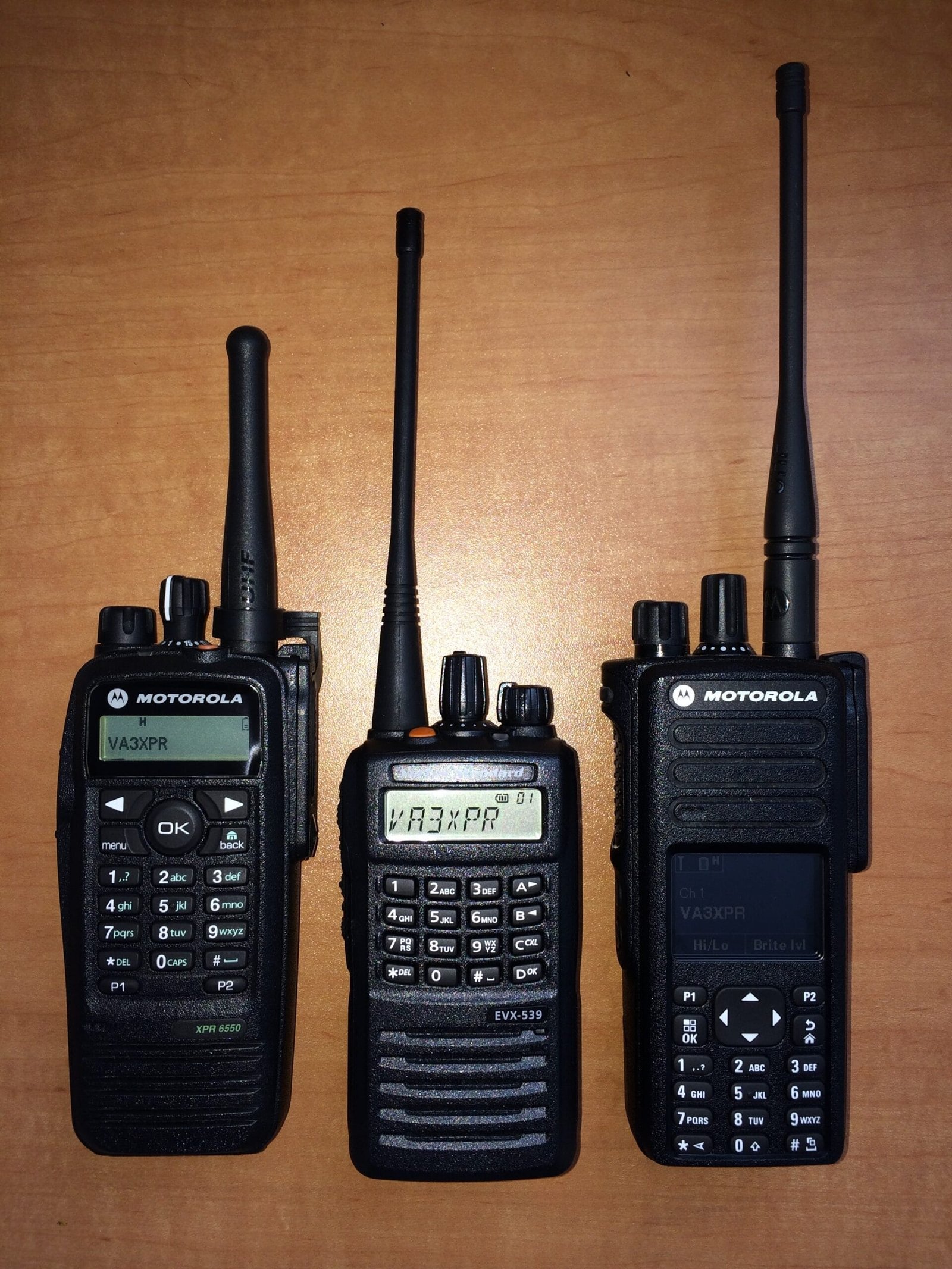
For ham operators, Vertex Standard gear has historically been appealing for its ruggedness, strong battery life, and compliance with Part 90 (and similar certifications in other regions). The eVerge series was especially interesting for those ready to transition from analog VHF/UHF to the clarity and advanced features of DMR.
In 2024 and beyond, you may not easily find the EVX 539 as a brand-new unit from mainstream retailers. However, second-hand or new-old-stock models pop up regularly on classified websites, ham radio swap meets, and specialized resellers. The coverage, robust design, and proven track record mean that if you find one in decent condition, it can still be a fantastic addition to your ham arsenal.
3 Key Features and Specifications
- Frequency Range
- The EVX 539 covers either VHF (136–174 MHz) or UHF (403–470 MHz), depending on the model. The wide frequency coverage is useful for ham radio operations in standard 2m/70cm bands, though you must ensure you purchase the correct model for your band of interest.
- Dual-Mode Operation
- One of the big selling points is its ability to handle both analog (FM) and DMR (TDMA) modes. For ham operators straddling the line between analog repeaters and modern digital systems, this versatility is essential. You can remain active on traditional voice repeaters while gradually exploring DMR talkgroups.
- Channel Capacity
- The EVX 539 supports up to 512 channels, separated into multiple zones. For amateurs, that’s plenty of room to store a variety of local, regional, and even international DMR talkgroups, as well as analog repeaters and simplex channels.
- Audio Quality
- DMR’s inherent digital clarity ensures a crisp signal, which many users prefer over analog’s noise-laden transmissions at the fringes of coverage. The EVX 539’s audio is strong and clear, and the built-in 700mW speaker output is generally loud enough for most environments.
- Battery Life
- The standard lithium-ion battery offers 2000 mAh, sufficient to carry you through most day-long events or emergency nets. Standby time can extend well over 10 hours with moderate use. If you’re a heavy talker or plan to use high power (5W), expect less operational time.
- Programming and Customization
- Like many commercial-focused DMR radios, you must configure channels and talkgroups through dedicated programming software. This is par for the course with professional-grade DMR devices, but it does present a learning curve compared to the simpler front-panel programming found on some ham-specific radios.
- Durability and Weather Resistance
- Classified under IP57 (depending on the exact version), the EVX 539 is resistant to dust and water immersion up to a certain depth. For operators who are out in the field, this robustness is a major plus.
- Firmware Updates
- While new official firmware releases for the EVX line may be less frequent nowadays, you can still find older updates and programming software from online repositories and radio communities. Make sure your radio is running the latest available firmware to maximize performance and compatibility.
In sum, the EVX 539’s feature set includes everything a ham operator needs to get started on DMR while maintaining analog operation. Despite being an older model, its specs remain competitive for many real-world hobbyist scenarios.
4 Performance in the Field
The real test of any radio is how it performs in day-to-day ham activities—nets, local repeater chatter, special events, or even public service. In side-by-side comparisons with more modern DMR radios (like Anytone, TYT, or newer Motorola models), the EVX 539 continues to impress in terms of audio clarity and signal stability.
- Range and Sensitivity
The eVerge series has a reputation for excellent receive sensitivity, which helps pull in weaker signals. On transmit, you get a reliable 5W (UHF) or up to 5W (VHF), which is typical for handhelds in this category. While DMR can’t magically defeat poor propagation, the digital advantage helps maintain voice clarity at the edges of coverage. - Battery Performance Under Load
Battery runtime is highly dependent on your talk/listen ratio, output power, and whether you frequently switch between talkgroups. Overall, the EVX 539 is considered fairly efficient, but having a spare battery at events or field days is always a good practice. - Audio Reports
Users often report loud, clean audio from this device. The digital voice processing in DMR helps ensure minimal background noise. On analog repeaters, the audio is still crisp and strong, thanks in part to Vertex Standard’s time-tested design.
In typical ham scenarios—weekly nets, local club events, or even multi-day public service events—the EVX 539 performs admirably. Unless you specifically need advanced features like APRS, GPS location tracking, or Bluetooth programming (features found in some newer DMR handhelds), this radio can more than meet your needs.
5 Programming & Codeplug Management
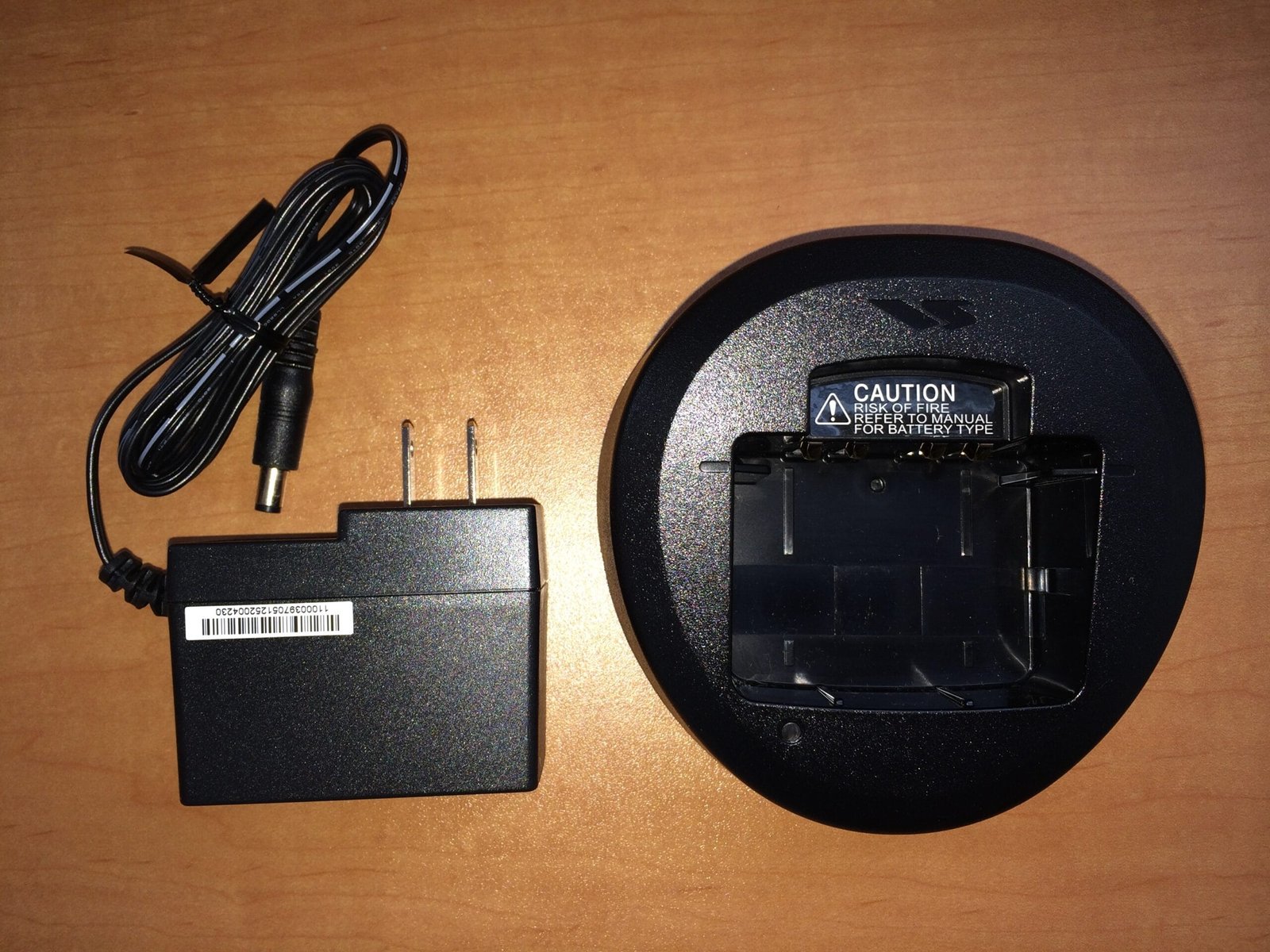
One of the most significant hurdles for many operators transitioning to DMR is the concept of a “codeplug,” which is effectively a pre-configured set of channels, talkgroups, and settings. While the EVX 539 can be front-panel programmable (FPP) in a very limited sense, full-blown channel setup typically requires the Vertex Standard programming software.
- Software Compatibility
Vertex Standard provided proprietary software for their eVerge series. Over the years, community-driven resources and tutorials have cropped up, making it easier to configure these radios for ham use. If you locate a second-hand EVX 539, it’s worth verifying that you can get the appropriate programming cable and software. - Learning Curve
Expect to invest some time learning how to manage zones, talkgroups, color codes, and time slots. Once you master these basics, you’ll be able to replicate your codeplug across multiple eVerge units or share it with other local hams. - Regular Updates
Even though official Vertex Standard support might be limited now, keep your ear to the ground in ham forums and local clubs. They often share codeplugs tailored to specific regions or large DMR networks. A well-organized codeplug can drastically enhance your experience by placing talkgroups at your fingertips.
Given the EVX 539’s proven track record, programming it correctly can help you seamlessly hop between analog and digital realms, expanding your communication options.
6 Durability & Design
A hallmark of Vertex Standard gear is rugged design. The EVX 539 features a compact form factor with a sturdy chassis that can handle minor drops and rough usage. The knobs and buttons are generally well-spaced, and the front display is bright enough for most lighting conditions. Although the screen is relatively small, it displays essential information (channel name, battery level, signal strength) clearly.
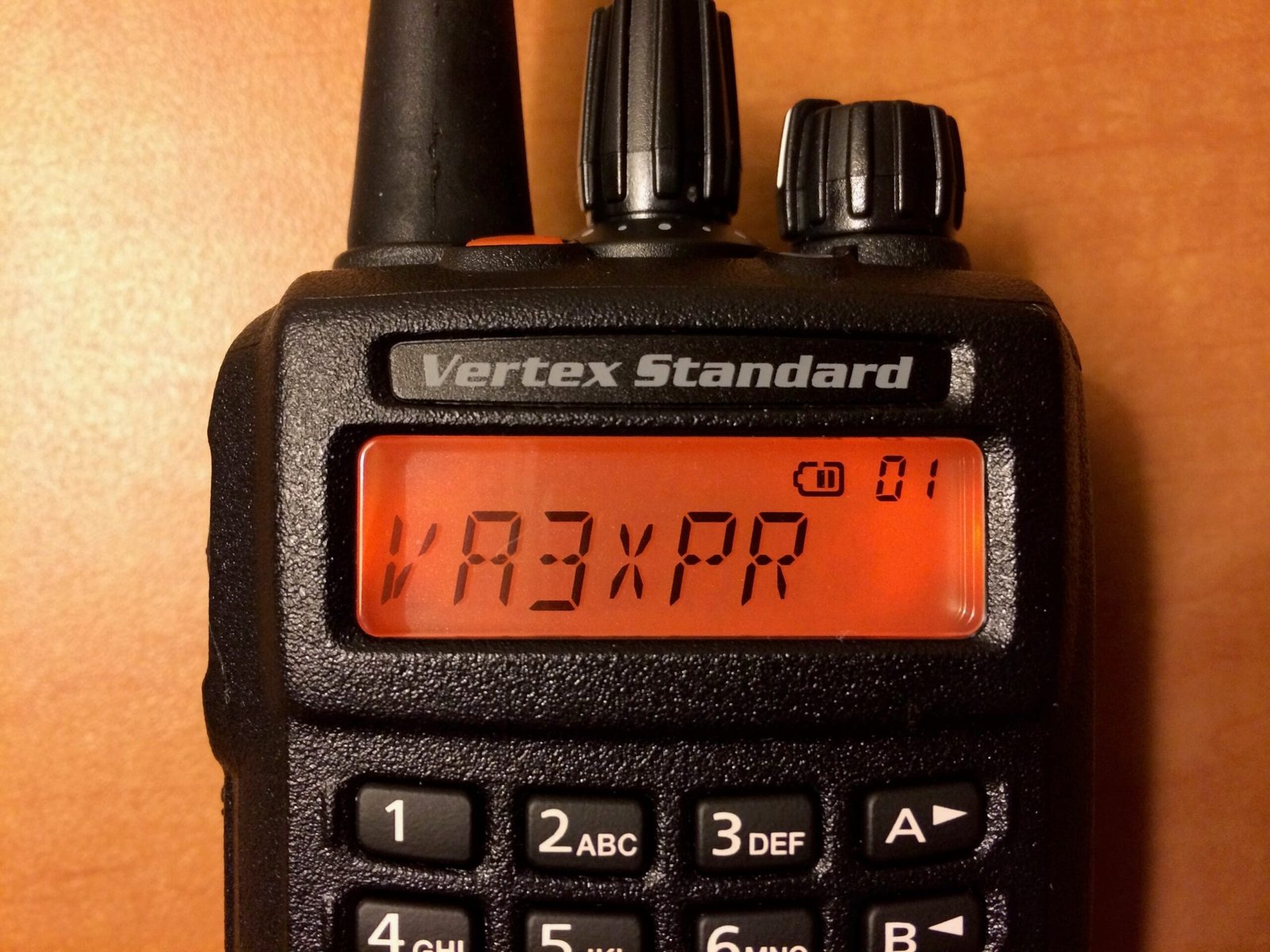
For field operators who may find themselves in damp or dusty environments, the IP57 rating is a confidence booster. While you wouldn’t want to submerge the radio frequently, it can handle a quick splash or the occasional downpour. The robust build also makes it an excellent choice for volunteering at events where your radio might get jostled around.
7 Additional Features & Firmware Updates
Although Vertex Standard never positioned the EVX 539 as a bells-and-whistles device, it includes several perks that remain relevant:
- Text Messaging (DMR)
In certain DMR tiers, short text messages are possible. This can be handy for group coordination when voice communication might be distracting or when you need to share precise, spelled-out details. - AES Encryption (Where Legal)
The EVX 539 supports encryption features that may be permitted in certain contexts. In ham radio, full encryption is generally frowned upon or outright disallowed by regulatory bodies. However, for MURS or commercial frequencies (if you hold proper licensing), encryption can be beneficial. - GPS (in Some Models)
Select eVerge models offered optional GPS capability. If you happen to have a GPS-enabled model, you could integrate location services with certain DMR networks. However, the ham community more often relies on APRS for location data, which the EVX 539 does not natively support out of the box. - Limited Future Firmware
Since Vertex Standard as it once was has largely been absorbed, the chance of new EVX 539 firmware releases is slim. That said, if you do find any official or unofficial firmware updates, ensure you back up your codeplug thoroughly before flashing.
8 Pros and Cons
Pros:
- Affordable Price: The EVX 539 offers excellent value for money, making it an attractive choice for newcomers to DMR or budget-conscious operators.
- Loud Audio Volume: This radio delivers clear, powerful audio that can be heard even in noisy environments, ideal for fieldwork or outdoor use.
- Rugged Construction: Built to MIL-Spec standards, the EVX 539 is highly durable, outperforming many typical ham radios in tough conditions.
- Free Software Updates: Users can access firmware and programming software updates at no additional cost by registering with Vertex Standard Online, ensuring the radio stays up-to-date.
Cons:
- Complex Programming Software: The included programming software is not user-friendly, with a steep learning curve and limited help documentation, making setup challenging for beginners.
- Audio Quality in FM Mode: While adequate, the speaker audio in FM mode is overly bass-heavy and can sound somewhat distorted compared to digital modes.
- Limited LCD Display: The 8-character LCD is restrictive, especially when trying to label repeater call signs, talkgroups, or channel names effectively.
- Inconvenient Accessory Connector: Removing the accessory connector cover requires a screwdriver, which can be cumbersome when making quick adjustments on the go.
9 Tips for Getting the Most Out of Your EVX 539
To maximize your experience with the EVX-539, consider the following practical tips:
- Master Your Codeplug
- Spend time organizing your channels, talkgroups, and zones logically. Group local repeaters, statewide or provincial talkgroups, and international talkgroups so you can switch quickly. Label them descriptively in the programming software for easier navigation.
- Keep Spare Batteries
- If you plan on participating in lengthy events or field days, invest in at least one extra battery pack. This ensures you won’t lose contact mid-net, especially if you’re transmitting at high power.
- Use a Quality Antenna
- While the stock whip antenna is decent, upgrading to a specialized high-gain antenna can improve both receive and transmit performance. Research antennas designed for your particular band (VHF or UHF) to optimize coverage.
- Stay Updated on DMR Networks
- DMR networks evolve constantly. Keep track of talkgroup changes, new local repeaters, and popular nets in your region. Regularly updating your codeplug with these changes means you’ll always have the talkgroups you need at your fingertips.
- Explore Accessory Options
- Look into speaker mics, earpieces, and carrying cases specifically designed for the EVX 539. These can improve ease of use and comfort, especially if you plan on operating for extended periods or in crowded environments.
- Join DMR Communities
- Online forums, Facebook groups, and local clubs can be invaluable resources. Swap codeplugs, troubleshoot software issues, and share on-air experiences with other EVX 539 or eVerge users to enhance your knowledge.
- Regularly Check for Firmware & CPS Updates
- Even though new official updates may be rare, occasionally check with community forums to see if any new resources or bug fixes have surfaced. Keeping your programming software (CPS) version current ensures maximum compatibility and fewer glitches.
By integrating these tips into your routine, you’ll not only extend the radio’s lifespan but also get far more enjoyment and operational success out of the eVerge EVX 539.
10 Conclusion
In a croded DMR handheld market, the Vertex Standard eVerge EVX 539 retains its status as a robust, reliable, and sufficiently modern radio for many ham operators—even years after its initial release. While it may not incorporate every cutting-edge feature found in newer competition, it does an excellent job balancing performance, durability, and ease of use. If you can get your hands on a used or leftover new-old-stock EVX 539 at a fair price, you’ll be rewarded with a device that can handle daily ham activities, public service events, emergency communications, and more.
Yes, the brand’s corporate evolutions may mean you won’t see “Vertex Standard” on store shelves as often, but that shouldn’t overshadow the fact that the EVX 539 stands as a testament to the quality radio engineering that made the company popular in the first place. For amateurs seeking a rugged radio that supports both analog and digital DMR, the eVerge EVX 539 is worth a serious look. With proper programming, a good antenna, and a fresh battery, it can continue to serve you well for years to come—proving that sometimes, a proven legacy model can be just as relevant as the latest gadget.
If you have any questions, feel free to reach out to local ham clubs or jump into online DMR forums. Sharing codeplugs, troubleshooting tips, and success stories is part of what makes amateur radio such a vibrant community. Happy operating, and may your journey into DMR be a rewarding one!
The Review
Vertex Standard EVX 539
The Vertex Standard EVX-539 is a reliable and budget-friendly DMR portable radio, ideal for ham operators transitioning to digital modes. Its dual-mode capability (analog and digital), robust build, and crisp audio make it a solid choice for day-to-day use, despite lacking advanced features found in newer models. A great entry point for those seeking affordable innovation in amateur radio.
PROS
- Affordable Price
- Loud Audio
- Comprehensive feature set
- Rugged Construction
- Free Software Updates
CONS
- Complex Programming Software
- Audio Quality in FM Mode
- Limited LCD Display
- Inconvenient Accessory Connector
Review Breakdown
-
Build Quality & Durability
-
Audio Quality & Performance
-
Programming & Ease of Use
-
Features & Versatility
-
Battery Life & Power Options
-
Value for Money